Close-ups
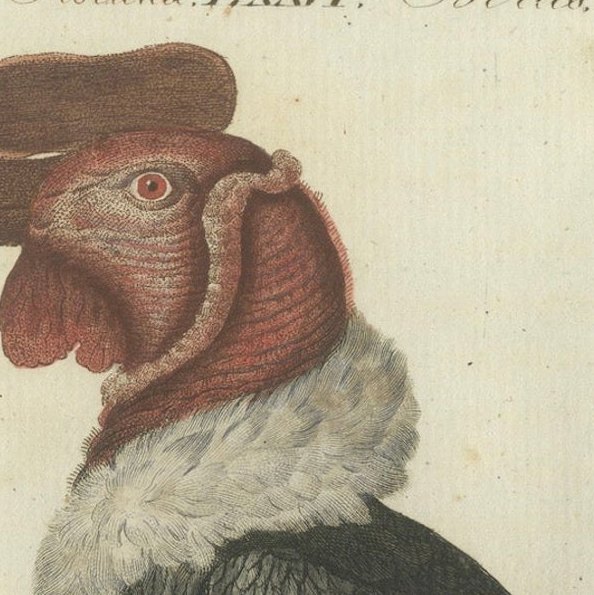
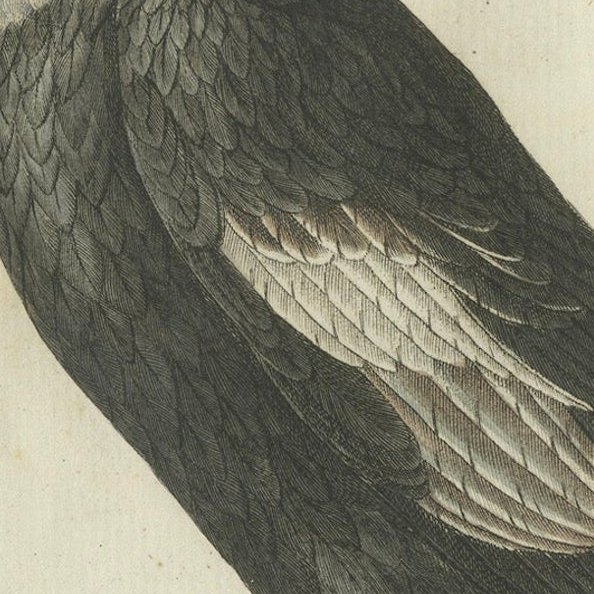
Framed and on the wall
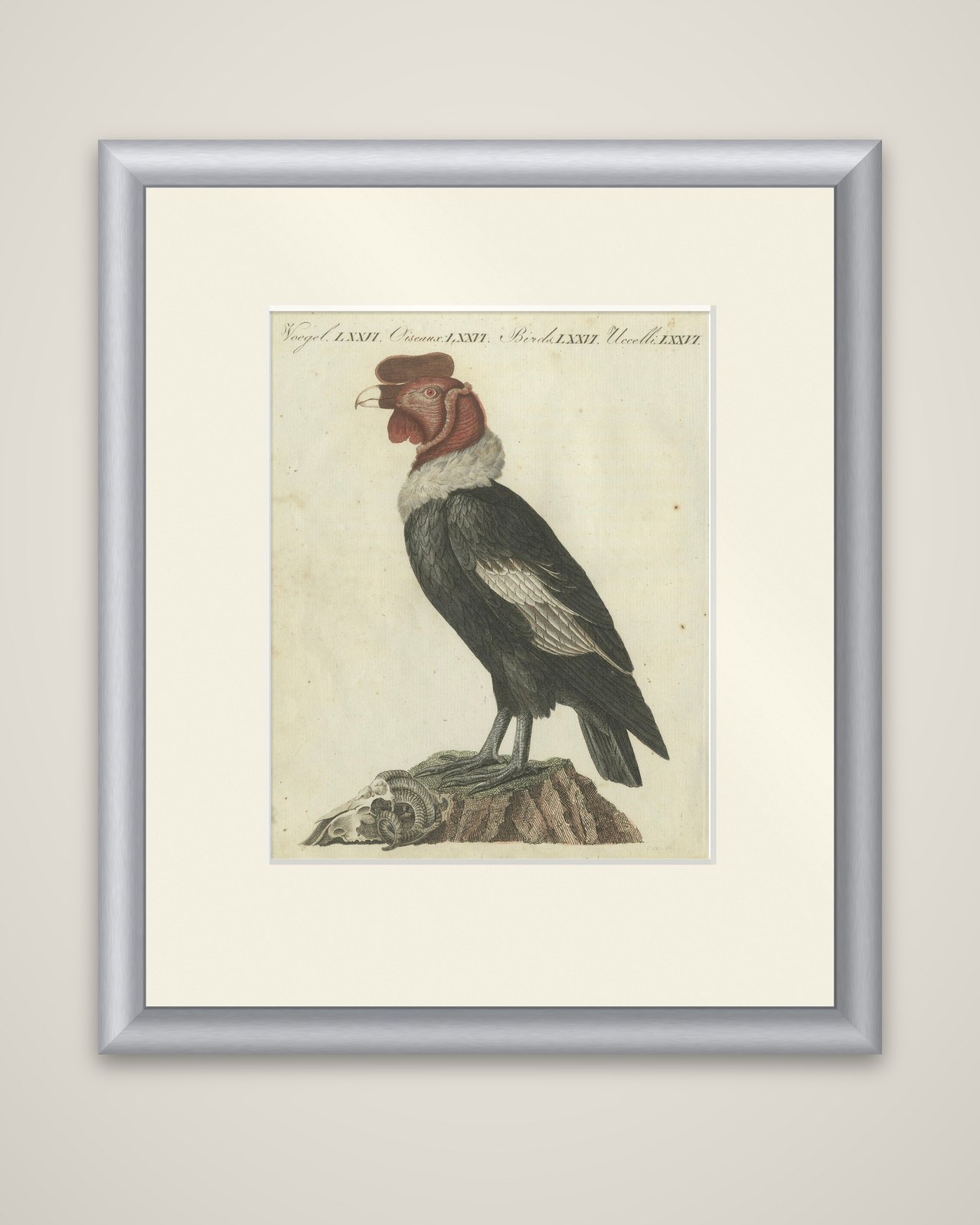

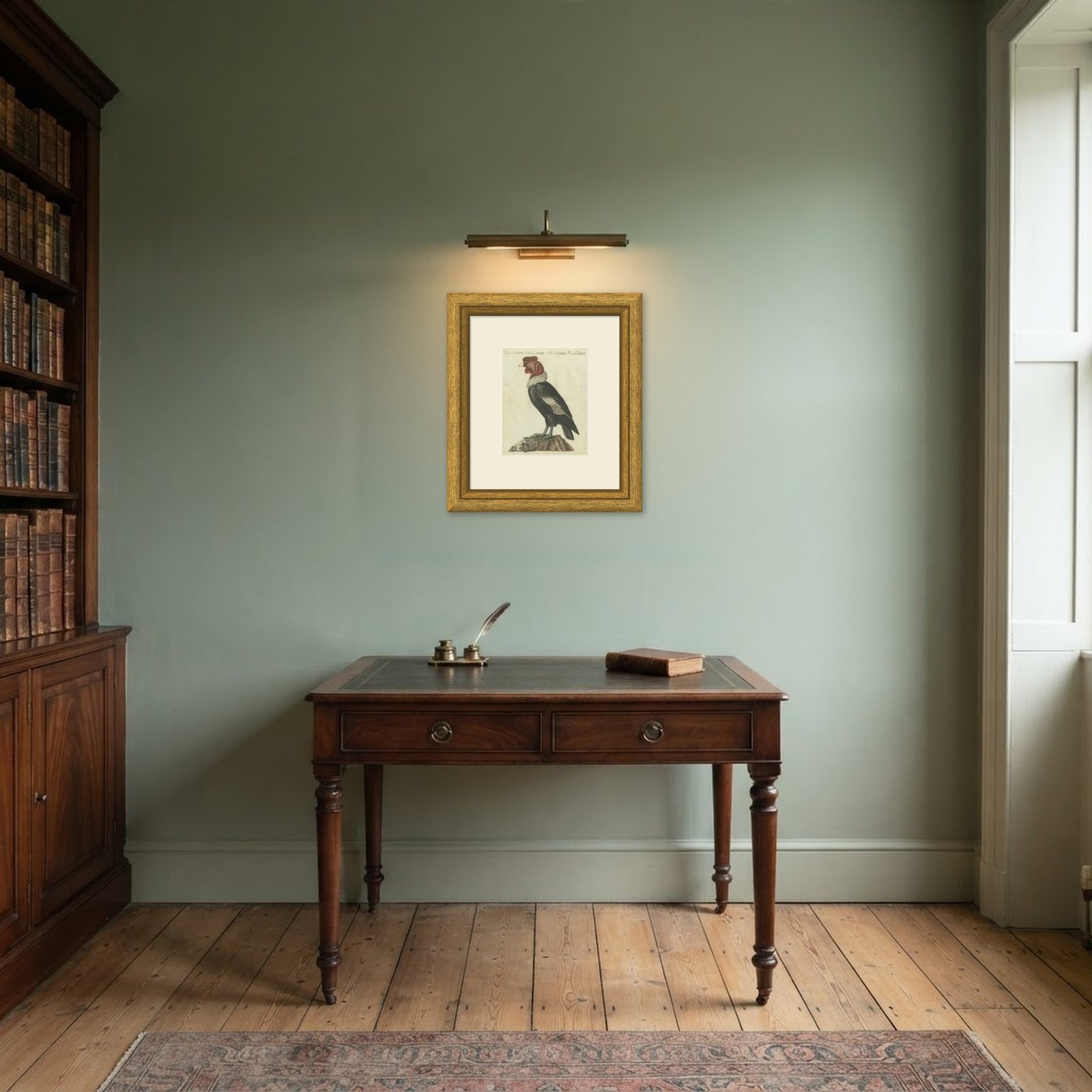
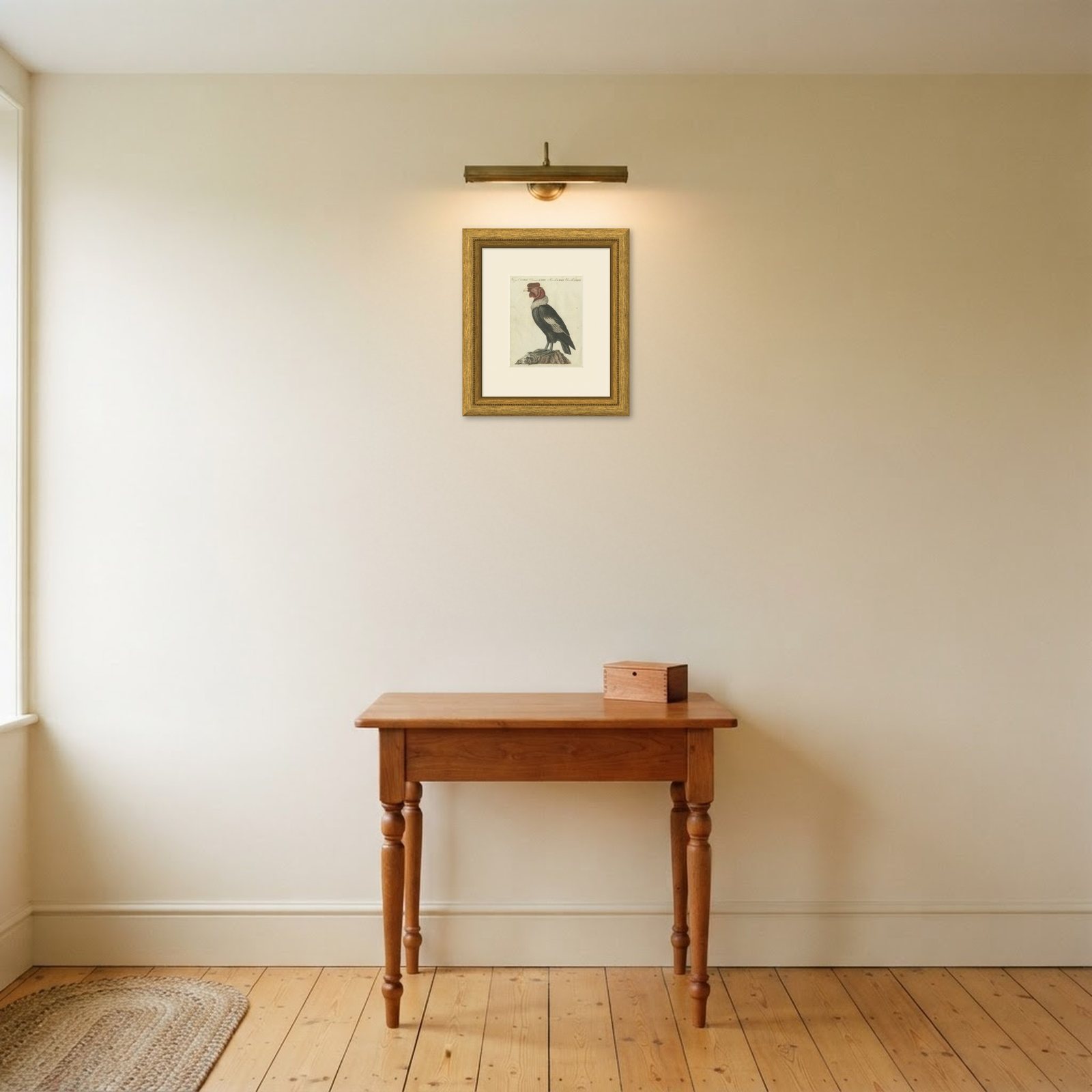
Frame and rooms are illustrations of how the print could look; the description says what is included.
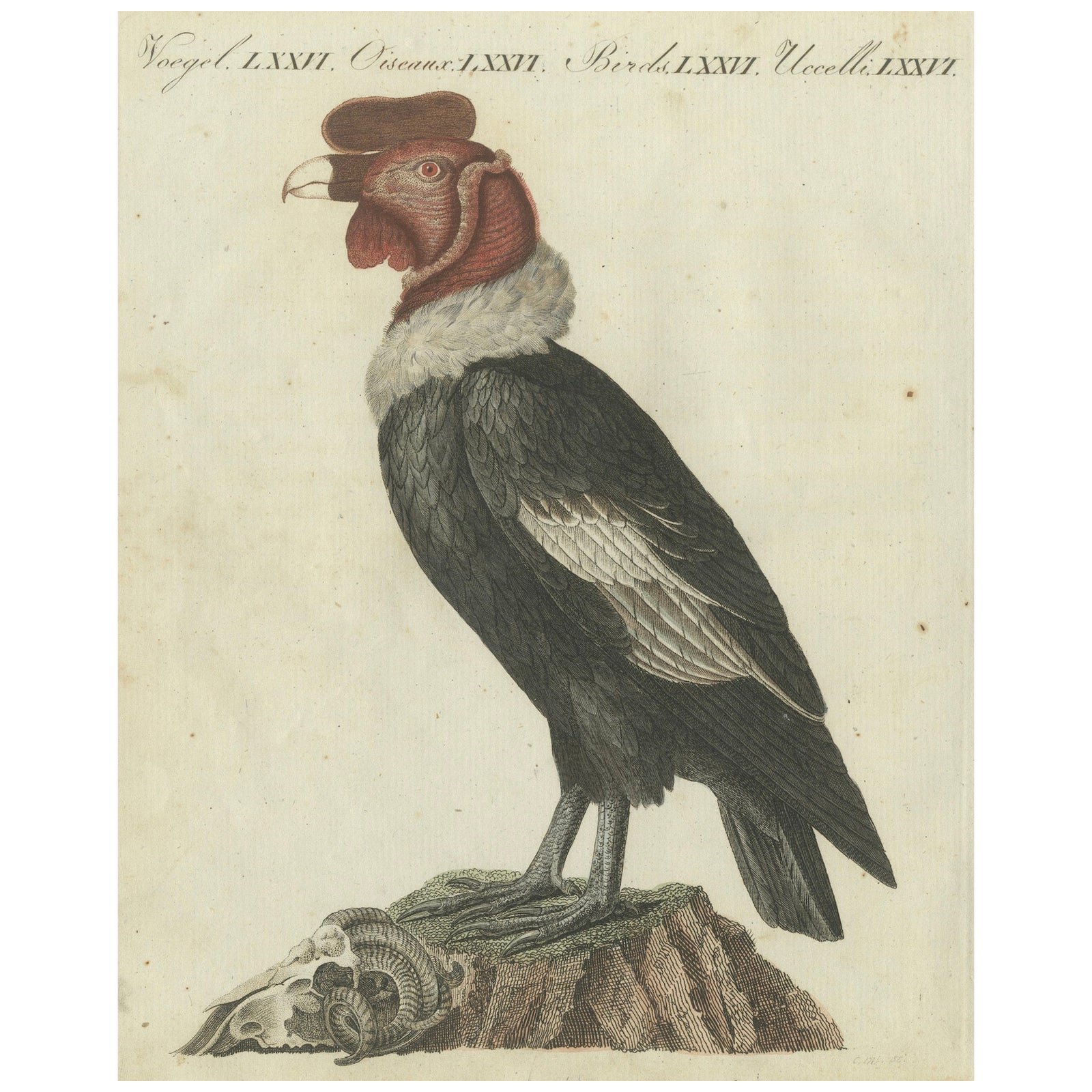
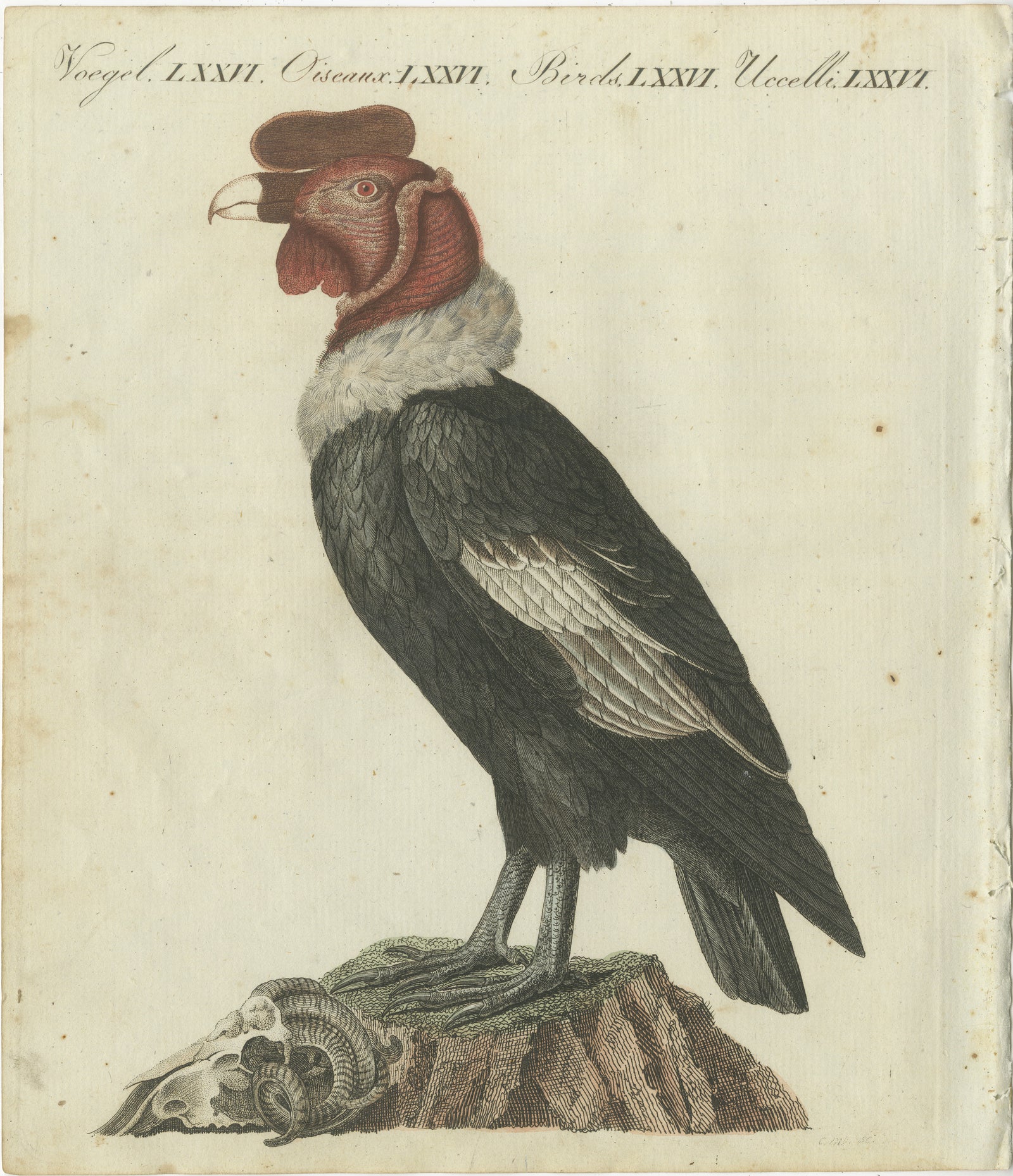
Andean Condor (Male) - Majestic Vultur gryphus Illustration by Bertuch, 1805
$350$24530% off (£190, €224)
Period original, not a reproduction.
Shipped from the Netherlands, flat or rolled, insured and tracked, worldwide. Returns accepted within 14 days.
- Date
- 1805
- Size
- 7.5 × 9.1 in (19 × 23 cm)
- Condition
- Good. The engraving is in good condition, with minor foxing and age-related toning. The edges exhibit slight wear consistent with its age.
- Period
- Early 19th century
- Artist or book
- Bertuch
- Section
- Birds
- Reference
- f_43181142
- Color
- Hand colored
What the condition grades mean
- Excellent
- Bright and clean, with no faults worth mentioning.
- Very good
- Only light signs of age, such as faint toning.
- Good
- Normal signs of age for a sheet of this period: toning, some foxing, small marks or neat old repairs.
- Fair
- Clear faults such as staining, tears or repairs, priced to match.
Every fault we see is written in the condition note, and the whole sheet is shown uncropped in the photos.
The Andean condor, Vultur gryphus, an original hand-colored copper engraving from Friedrich Johann Bertuch's Bilderbuch fuer Kinder (Picture Book for Children), Weimar, 1805. The plate is headed "Voegel LXXII. Oiseaux LXXII. Birds LXXII. Uccelli LXXII." in German, French, English and Italian.
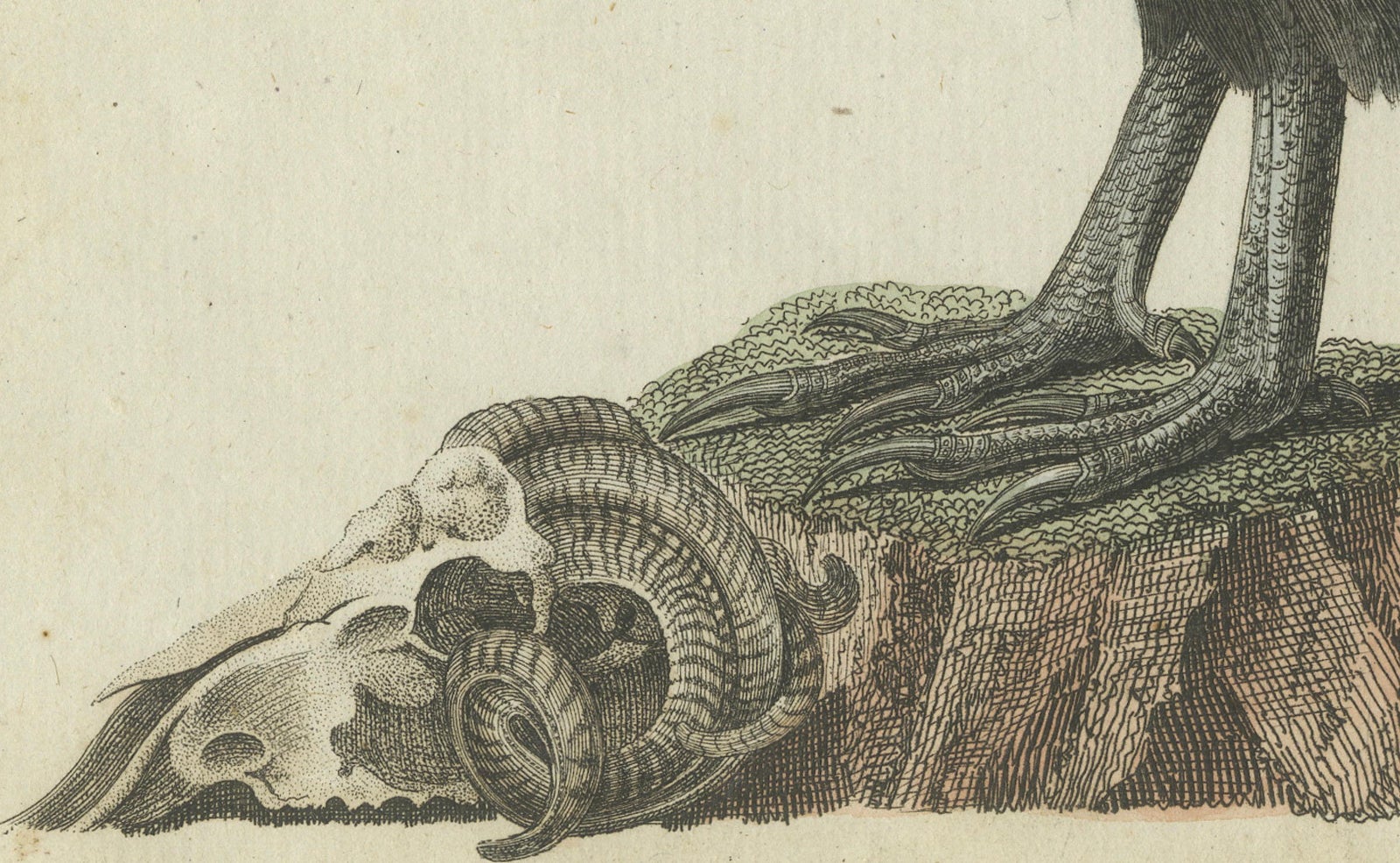
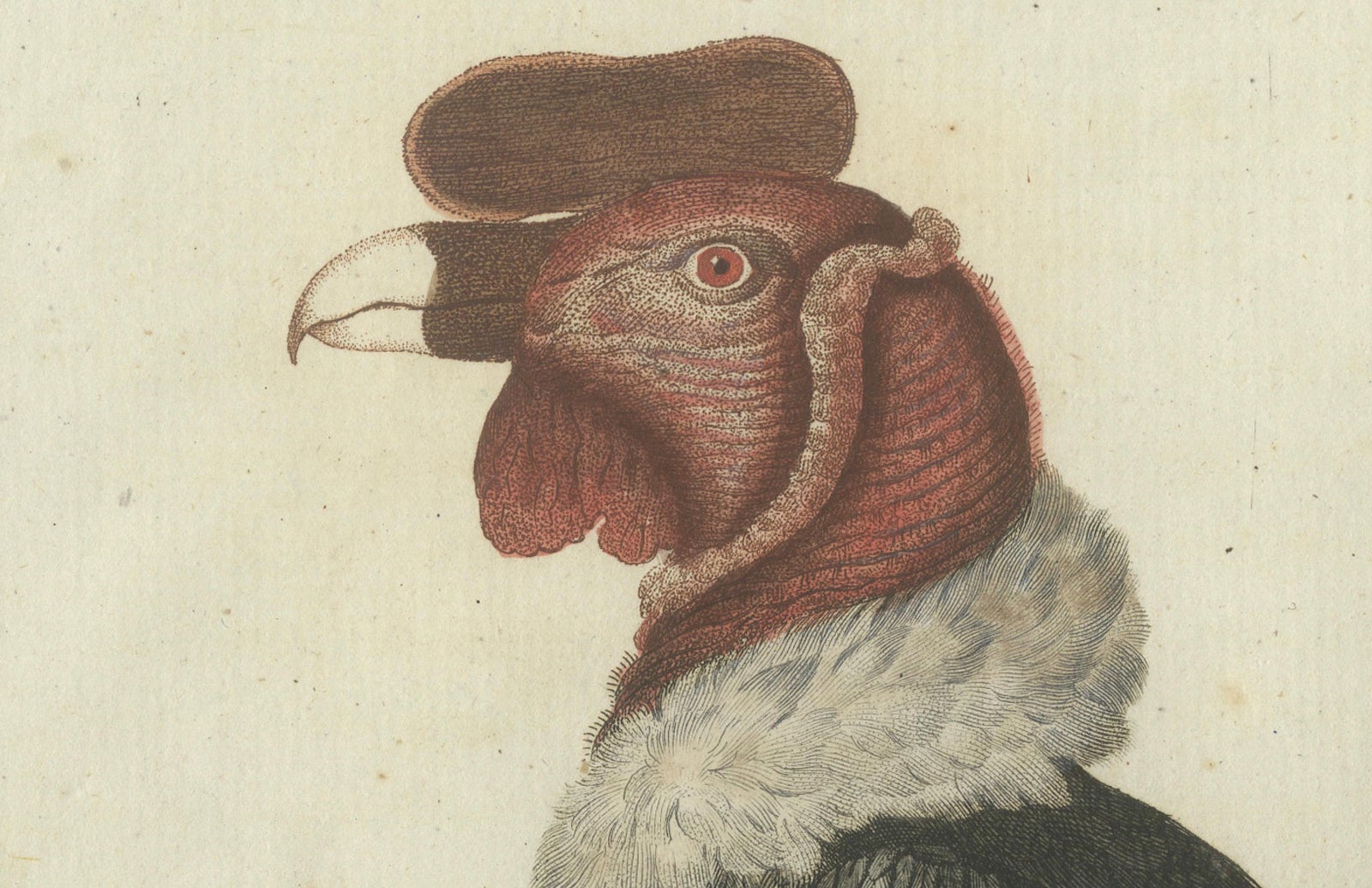
The male bird is drawn in profile, perched on a mossy rock and facing left. It has a bare red head and neck with a large fleshy comb and a wattle, a white ruff around the base of the neck, glossy black plumage and a white patch on the folded wing. The hooked bill and strong gray feet are drawn clearly, and the long wing feathers hang below the tail. At the foot of the rock lies the skull of a ram with its curled horn, a reminder of the carrion on which the bird feeds.
The Andean condor ranges along the mountains of South America, and it was among the first great birds of the Americas that European natural history books pictured at full size. Bertuch's picture book ran in twelve volumes from 1790 to 1830 and had nearly 1,200 plates.