Close-ups
Framed and on the wall
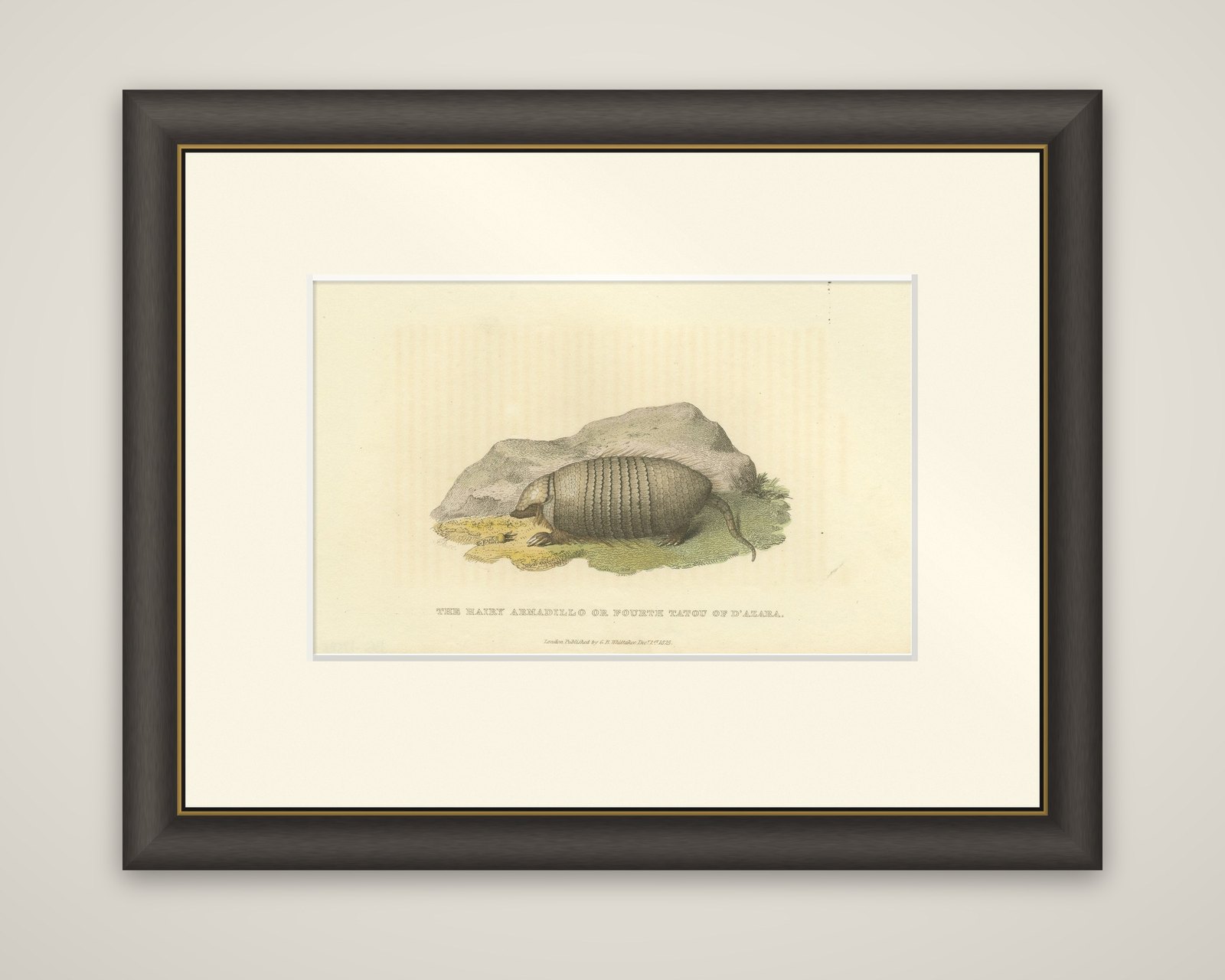


Frame and rooms are illustrations of how the print could look; the description says what is included.
An Original 1825 Illustration of the Large Hairy Armadillo by G.B. Whittaker
€240 ($270, £205, €240)
Period original, not a reproduction.
Shipped from the Netherlands, flat, insured and tracked, worldwide. Returns accepted within 14 days.
- Date
- 1825
- Size
- 5.8 × 9.4 in (14.7 × 24 cm)
- Condition
- Good. General age-related toning. Minor wear and soiling. Blank verso. Please study image carefully.
- Period
- Early 19th century
- Section
- Mammals
- Reference
- f_38713092
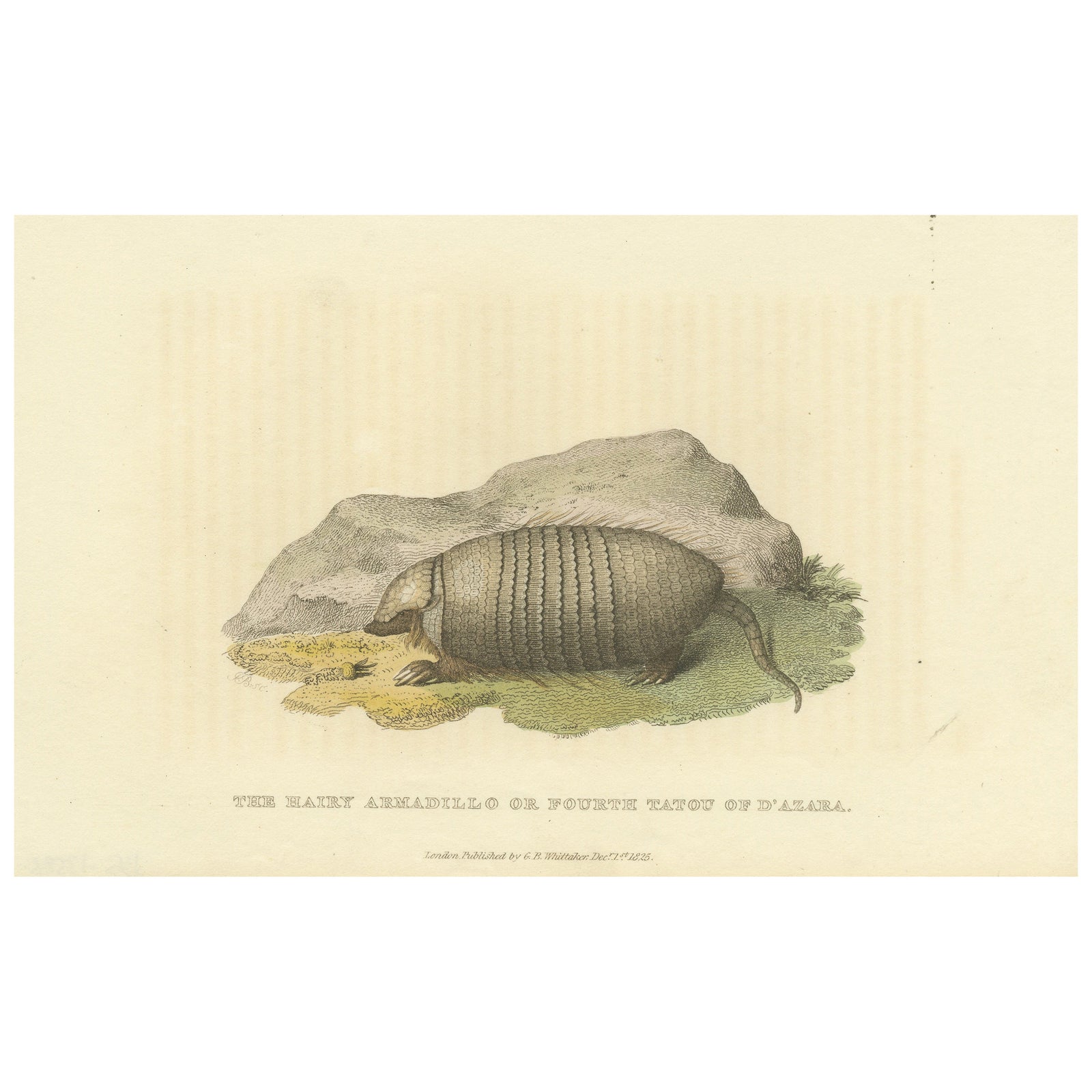
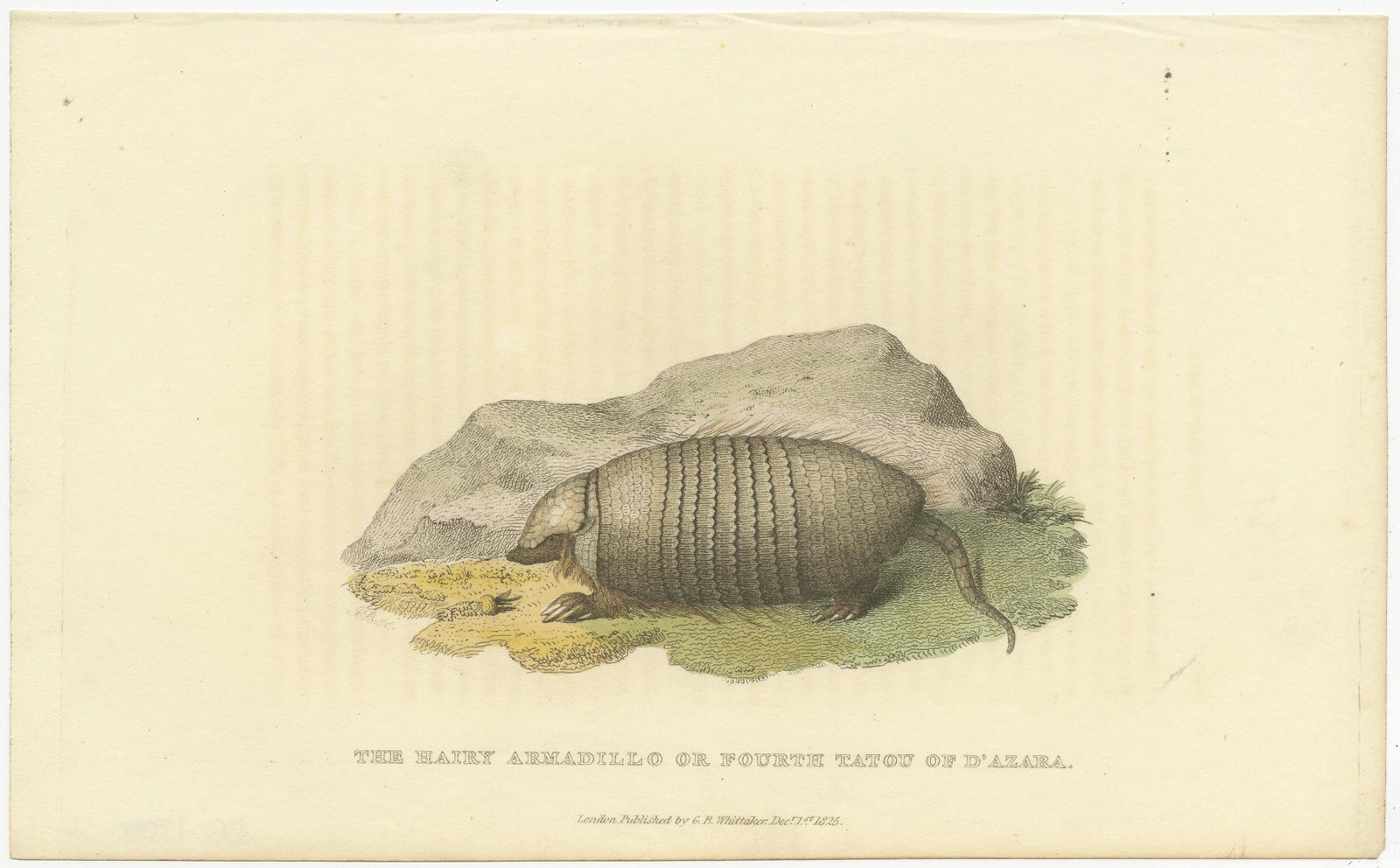
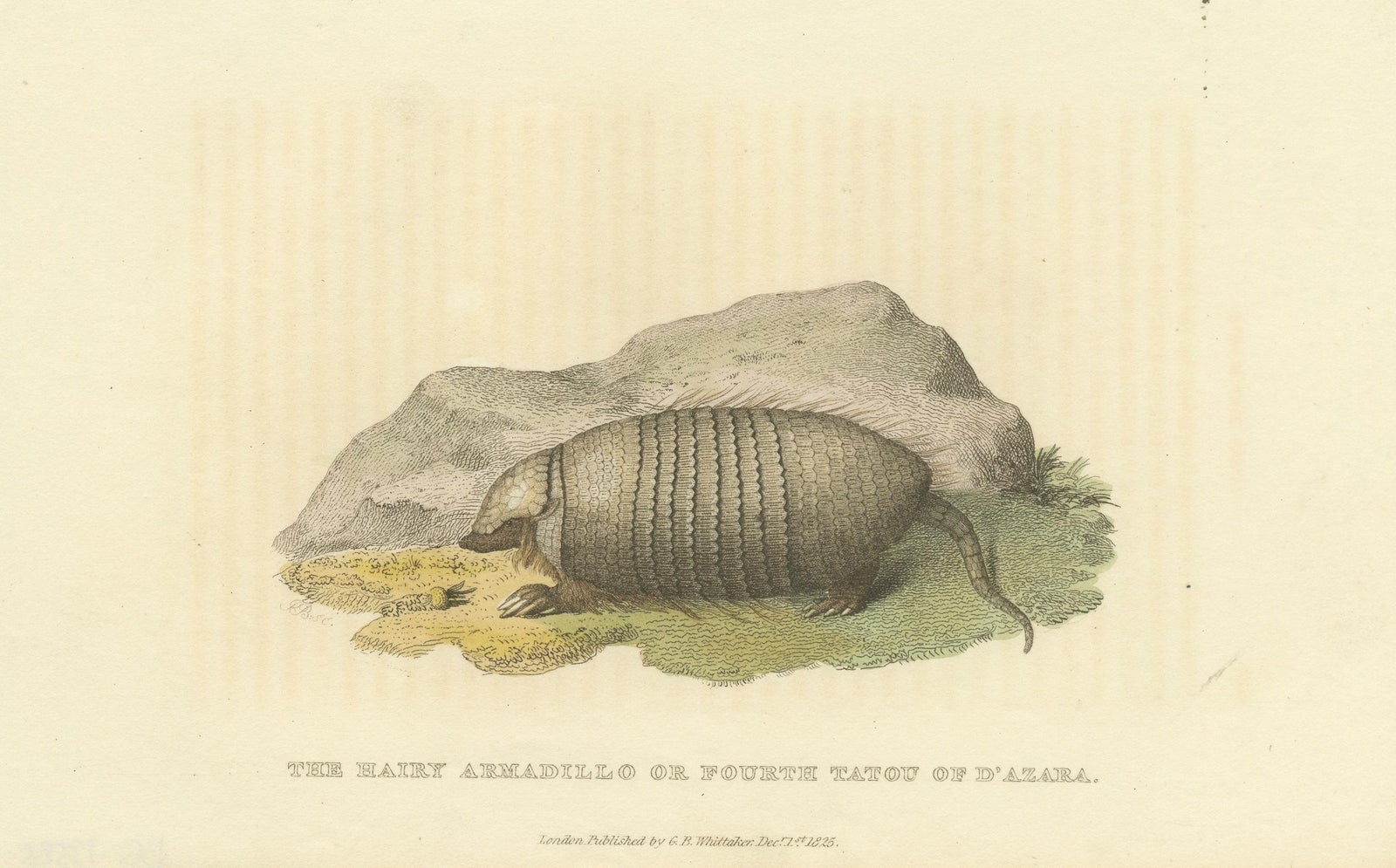
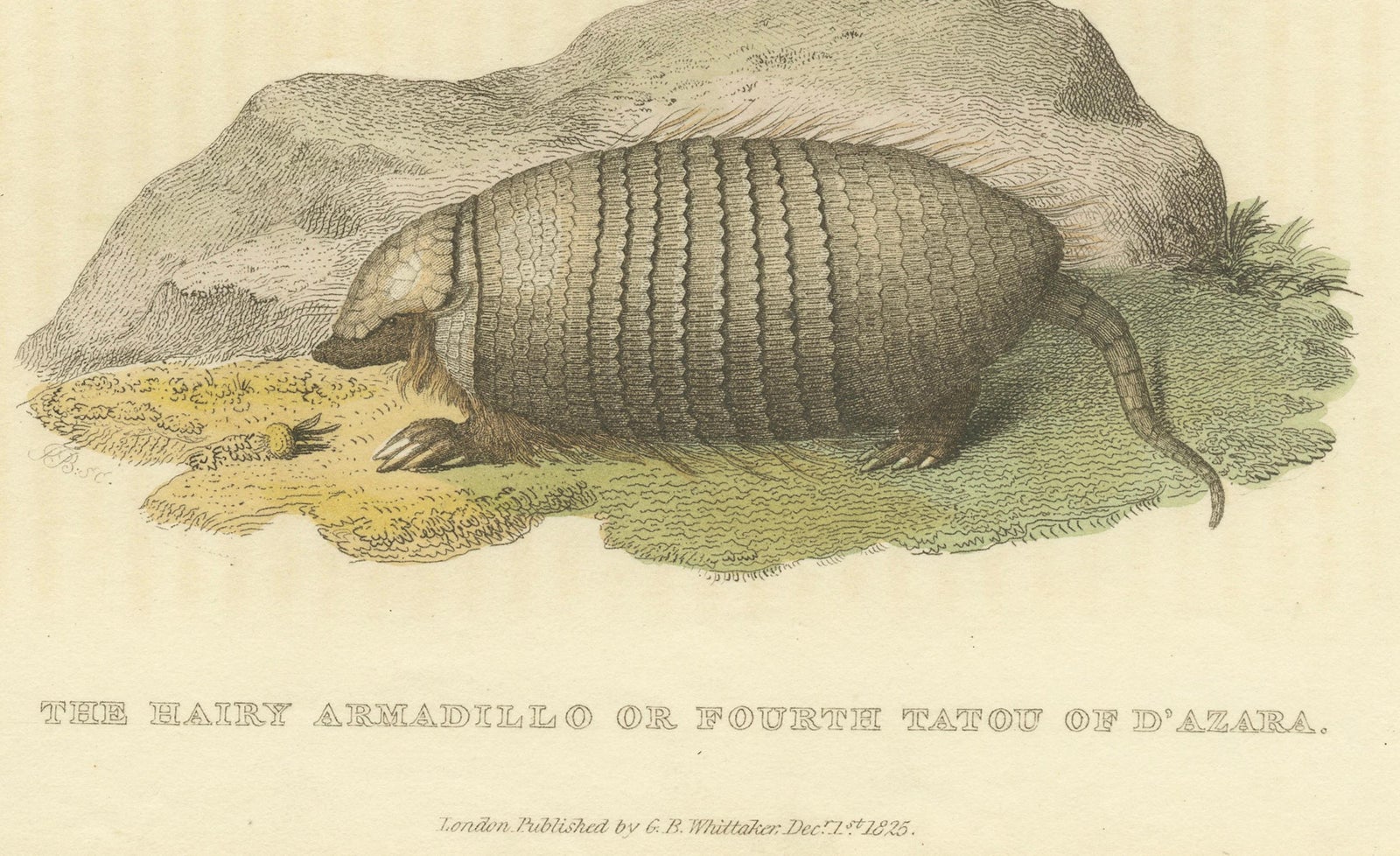
The hairy armadillo or fourth tatou of D'Azara, an original hand-colored engraving published in London by G.B. Whittaker on December 1, 1825. The caption "The Hairy Armadillo or Fourth Tatou of D'Azara." is engraved in capitals beneath the image, with the publisher's imprint below it.
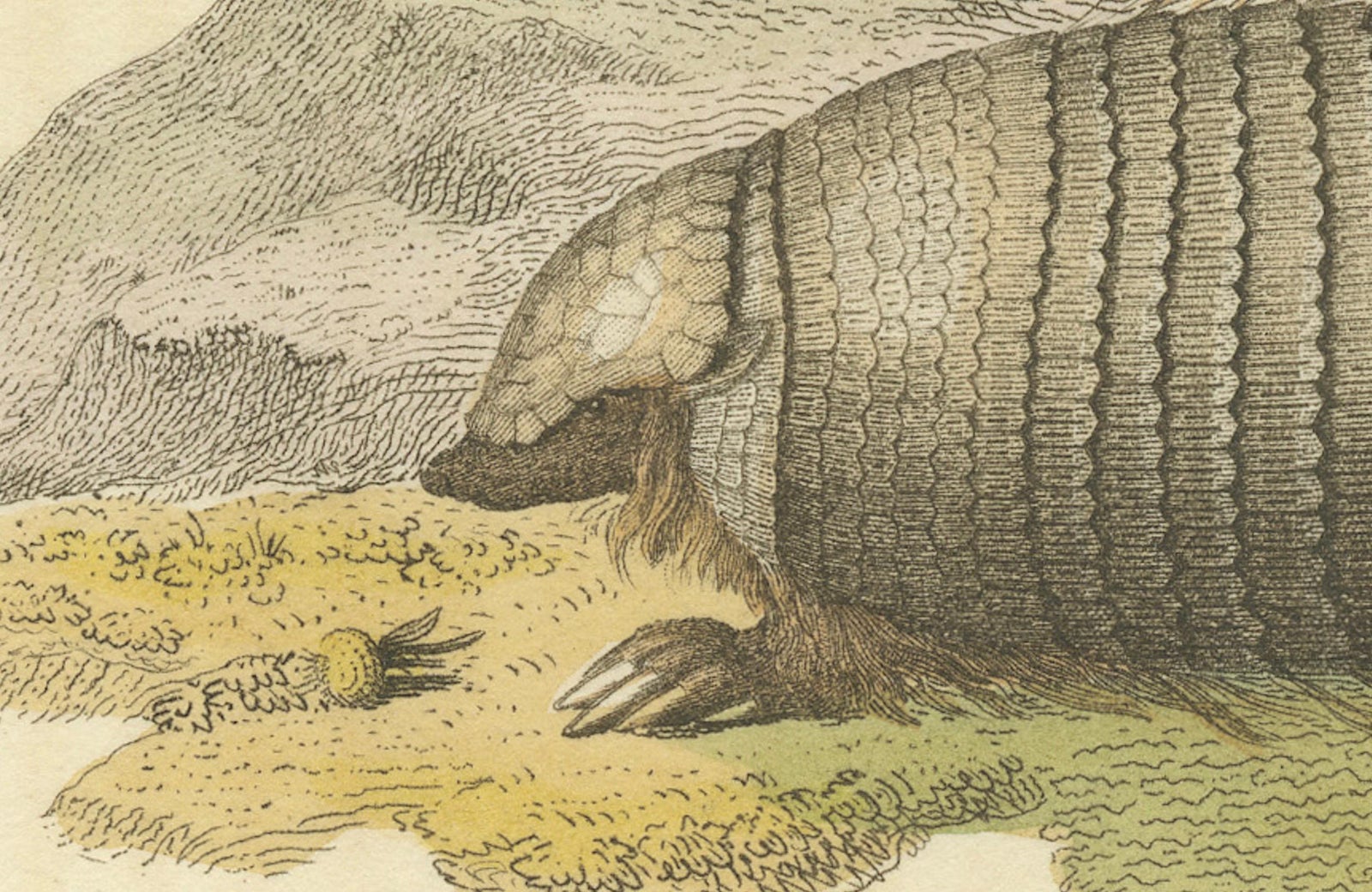
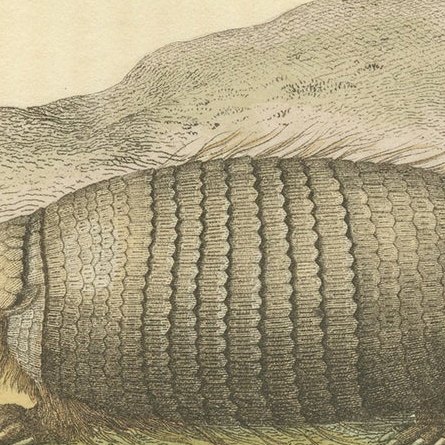
The animal is shown in profile, walking to the left along a mossy ground in front of a large gray boulder, its banded shell lit in tones of brown and gray and a long scaly tail trailing behind. Fine hairs project between the armor bands. A few blades of grass grow at the right.
The species, now called Chaetophractus villosus, lives on the plains of southern South America. D'Azara refers to Félix de Azara, the Spanish naturalist and surveyor whose accounts of the quadrupeds of Paraguay and the River Plate region described several armadillos by number, which is why this one is called the fourth tatou. George Byrom Whittaker was a London publisher active in the 1820s who issued natural history plates of this kind.