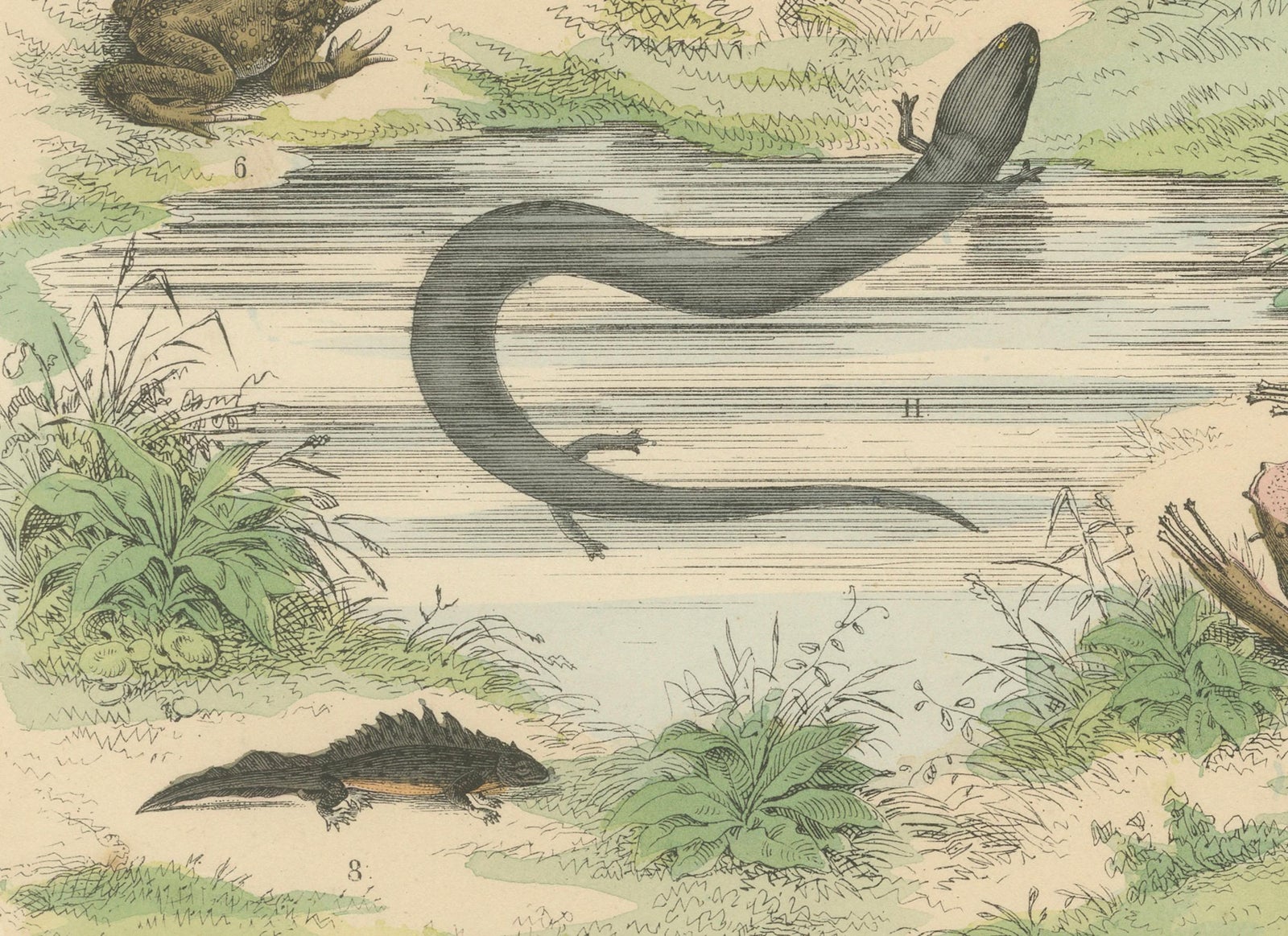
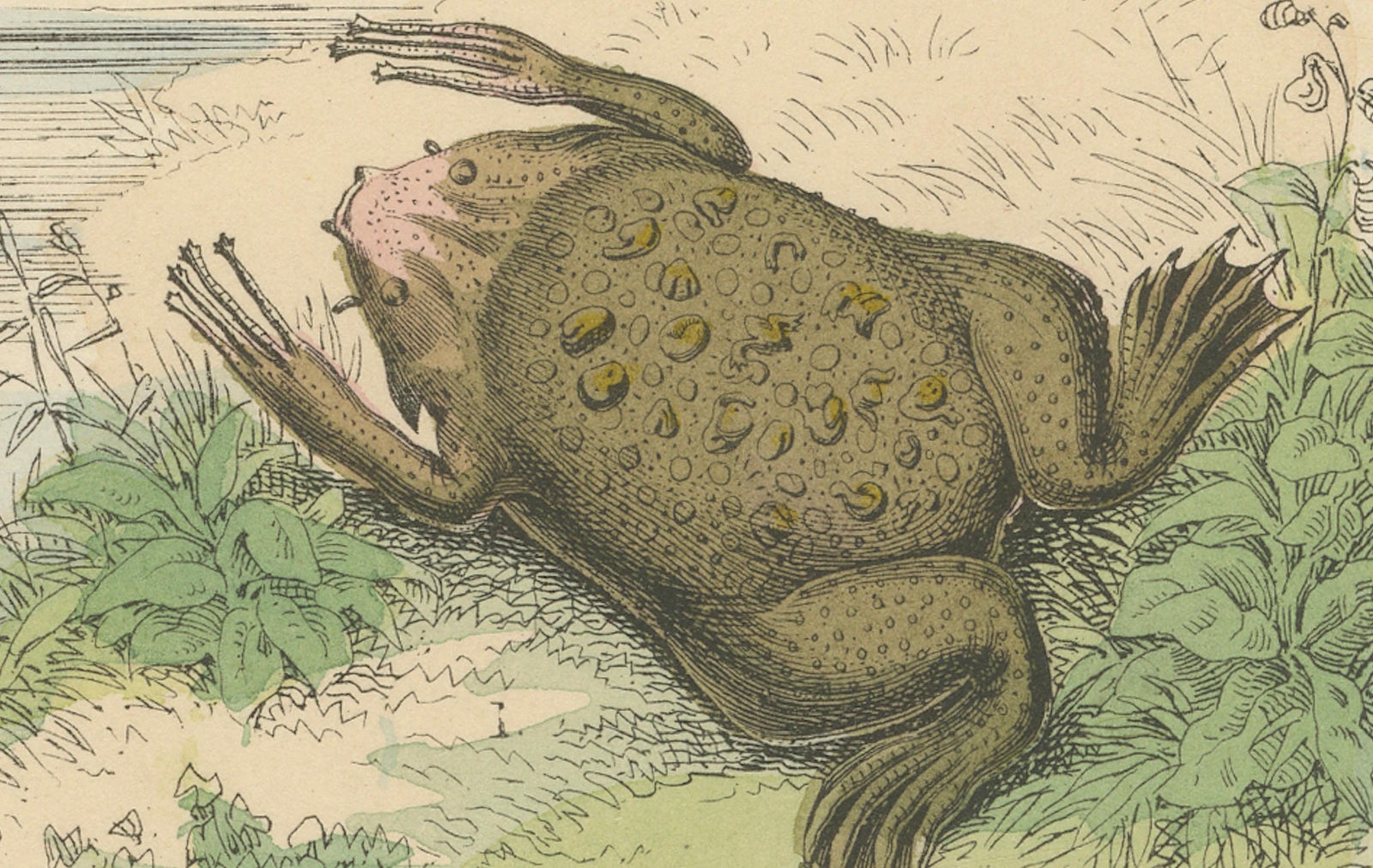
Close-ups
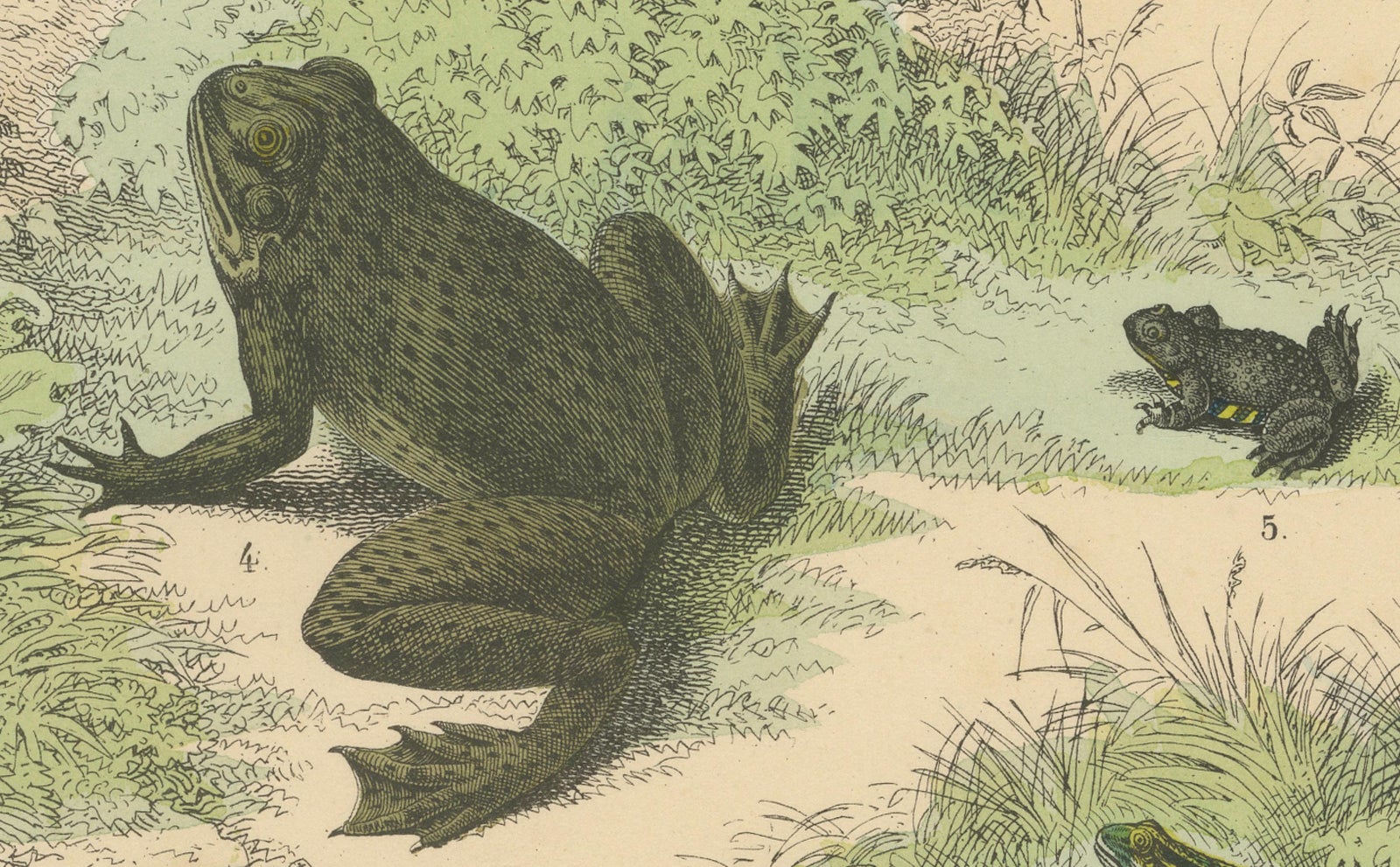
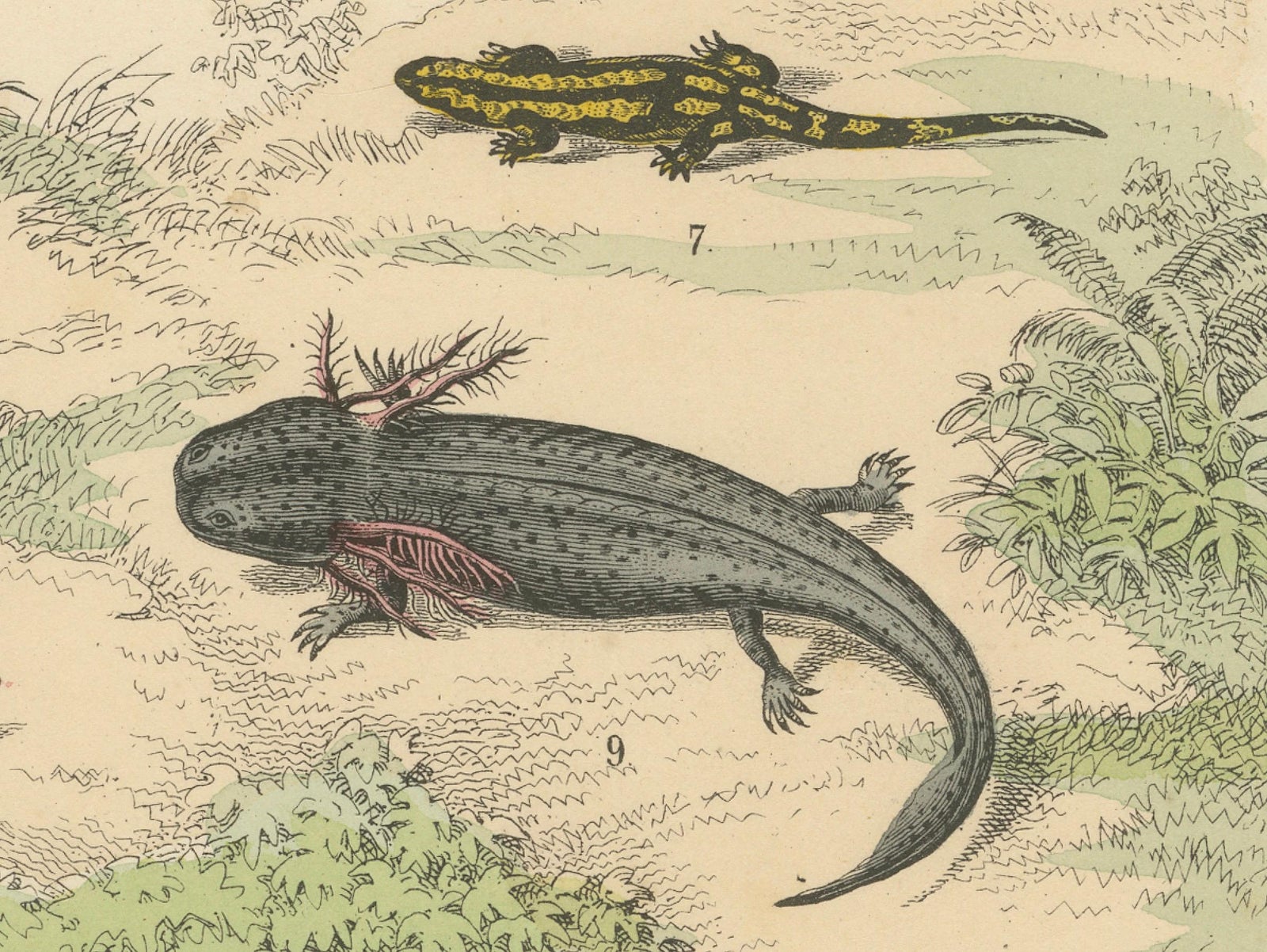
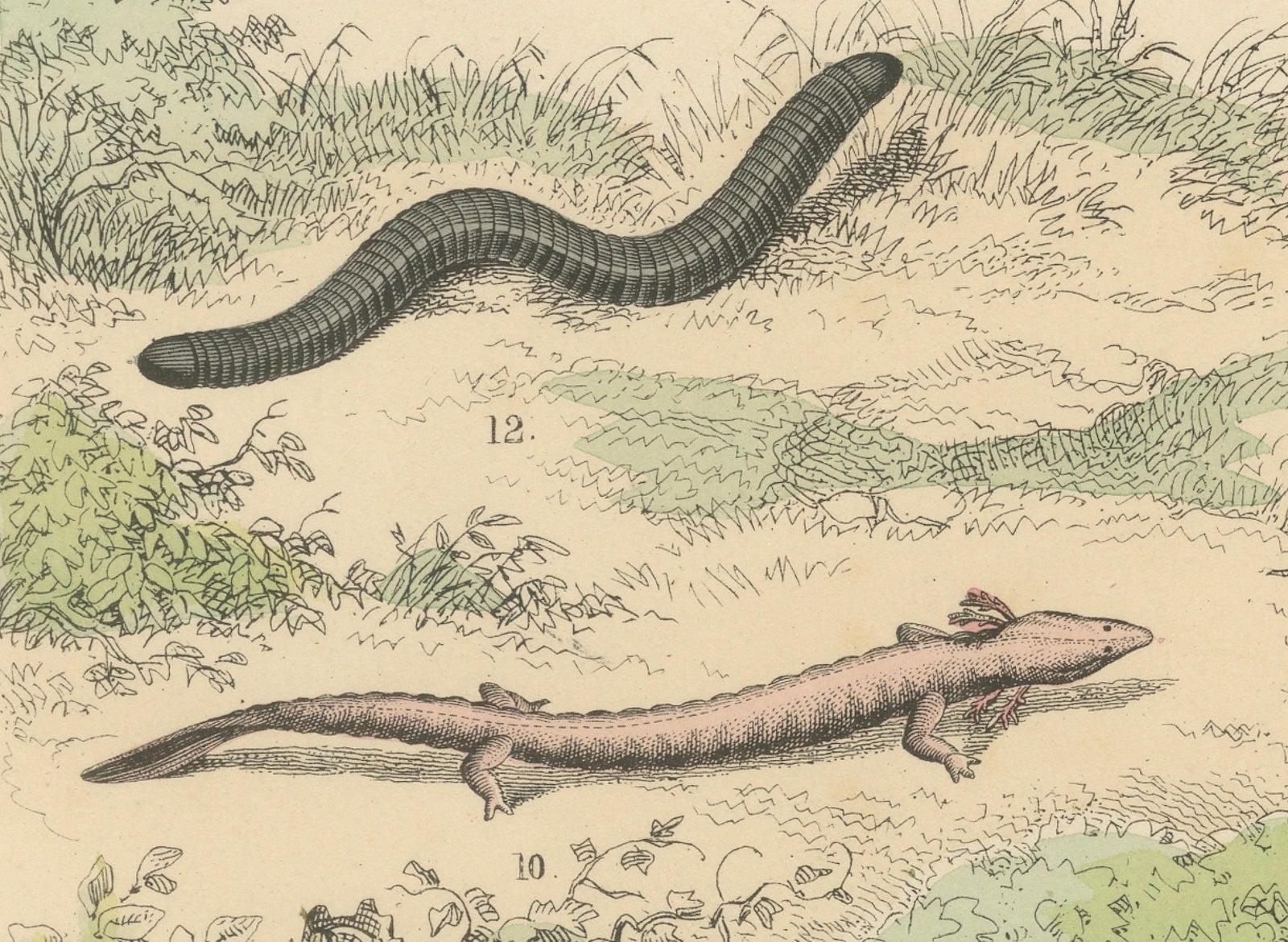
Framed and on the wall
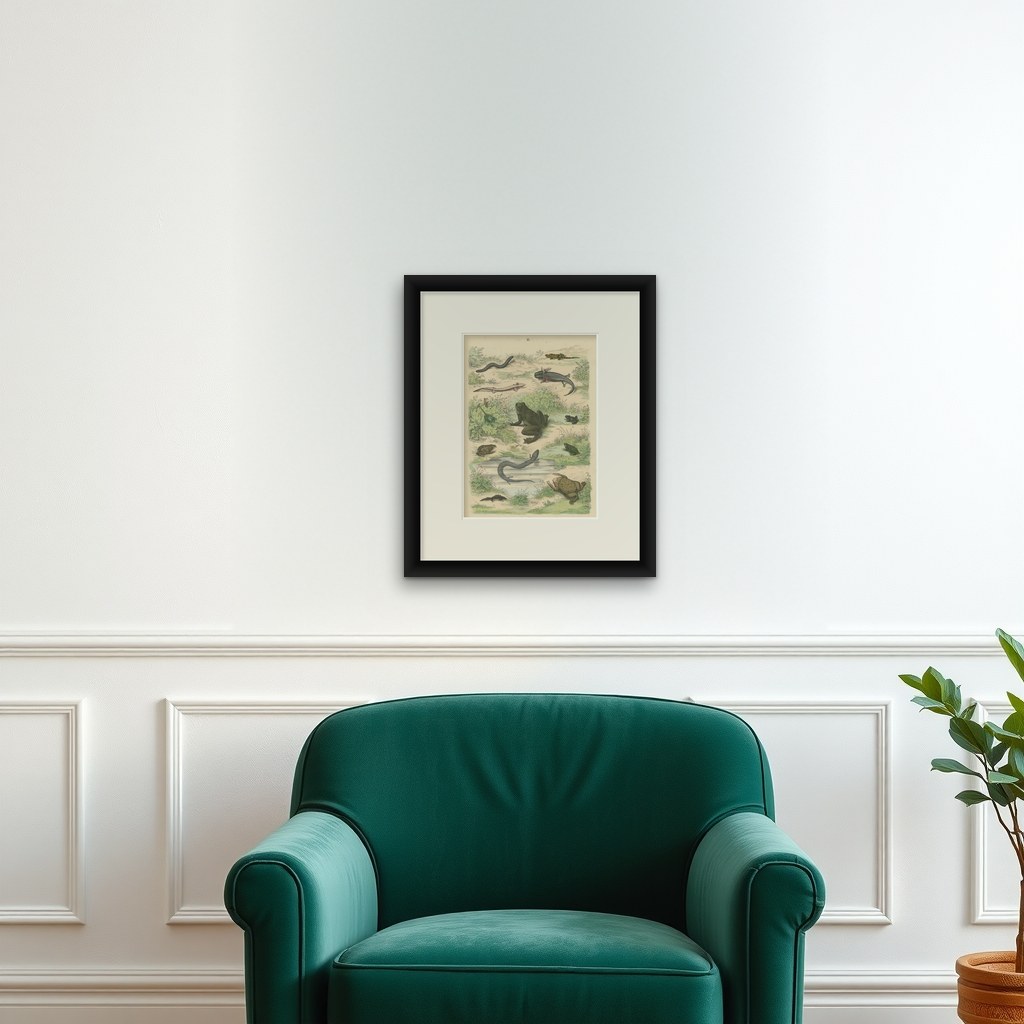

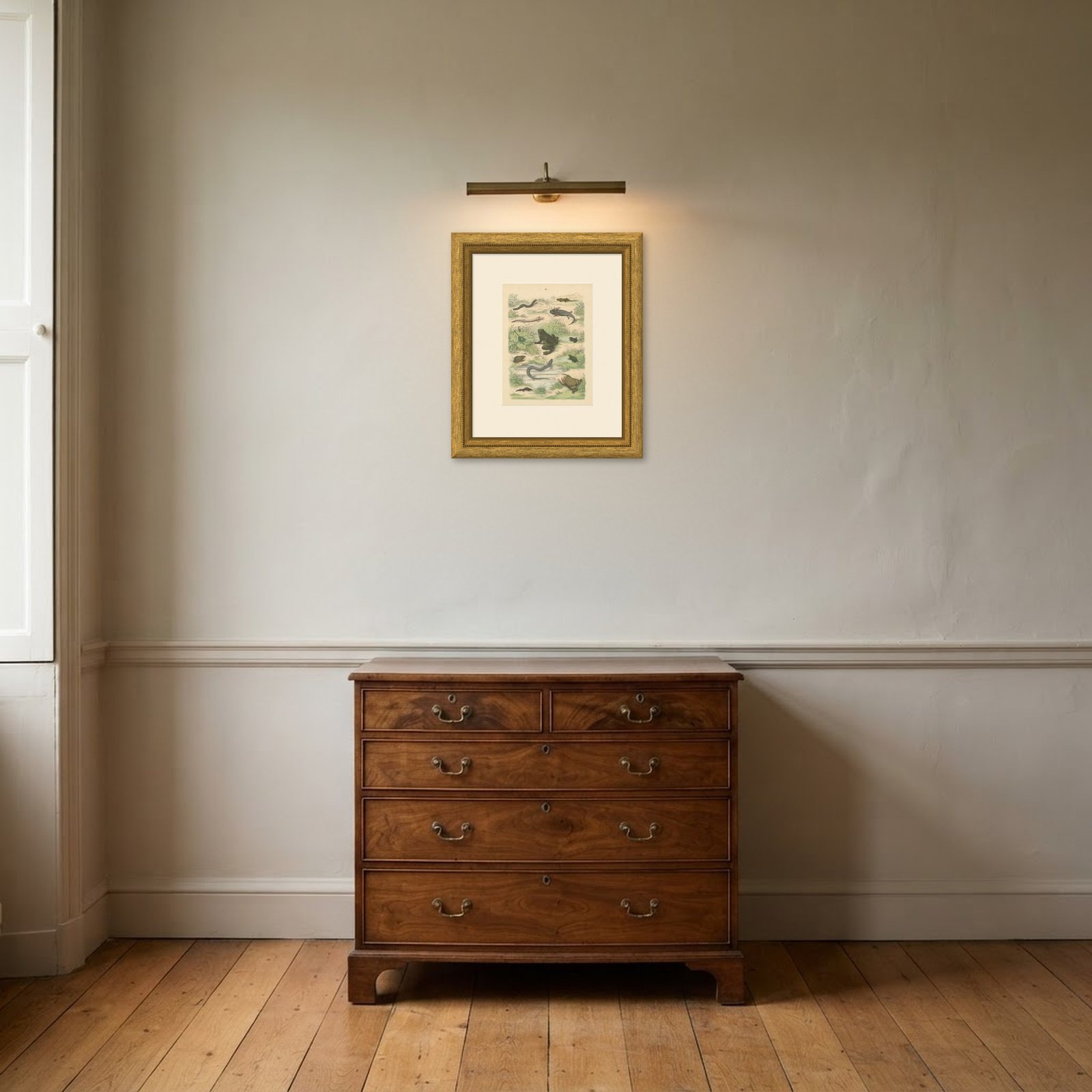
Frame and rooms are illustrations of how the print could look; the description says what is included.
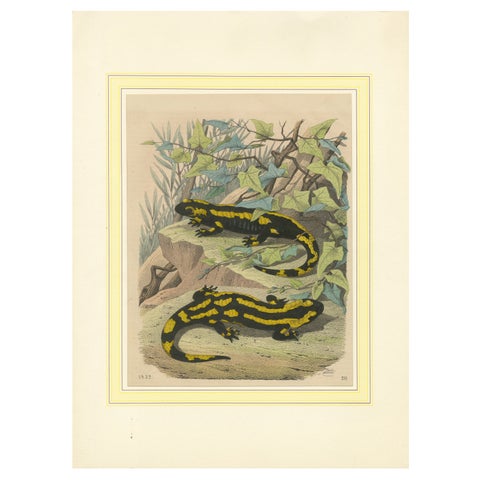
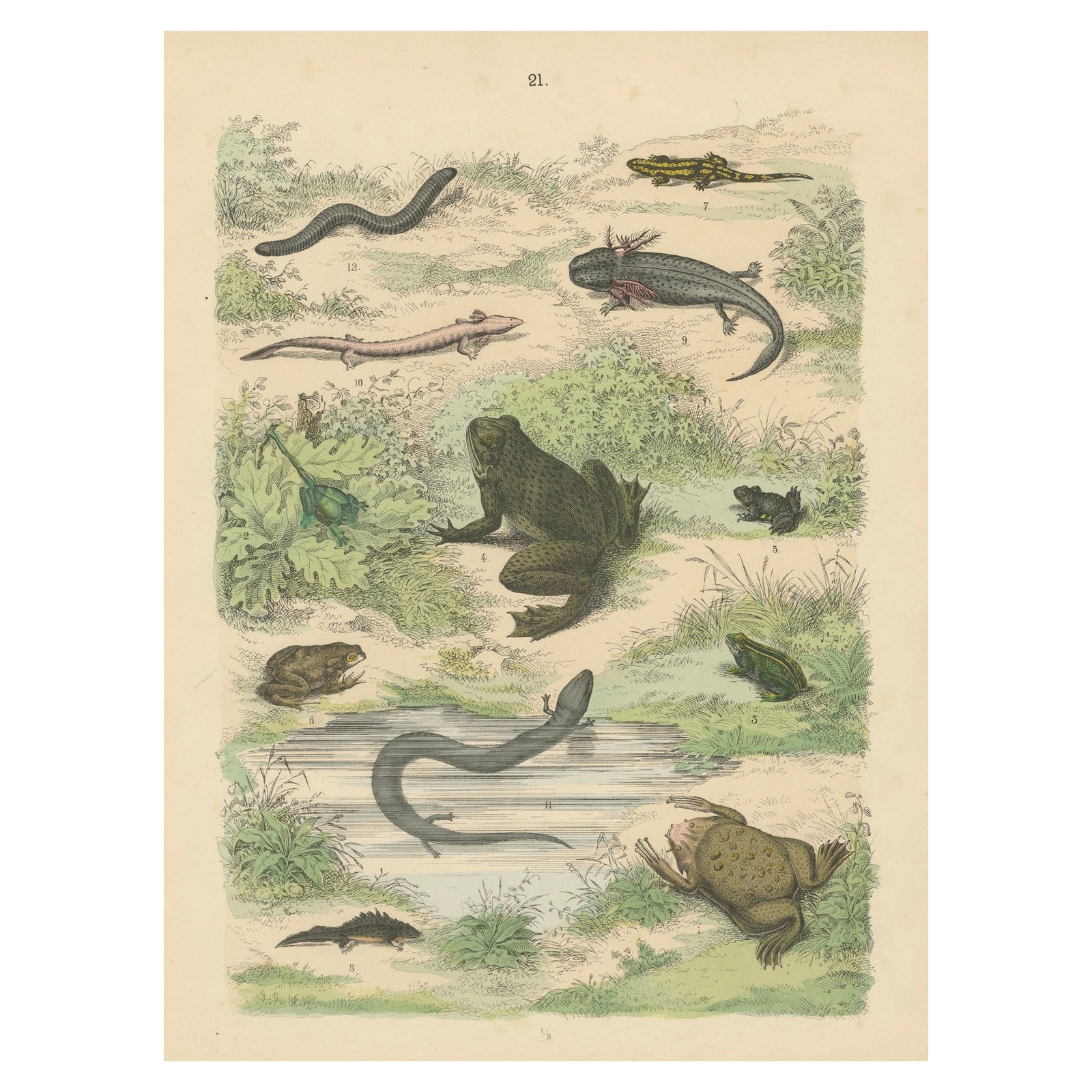
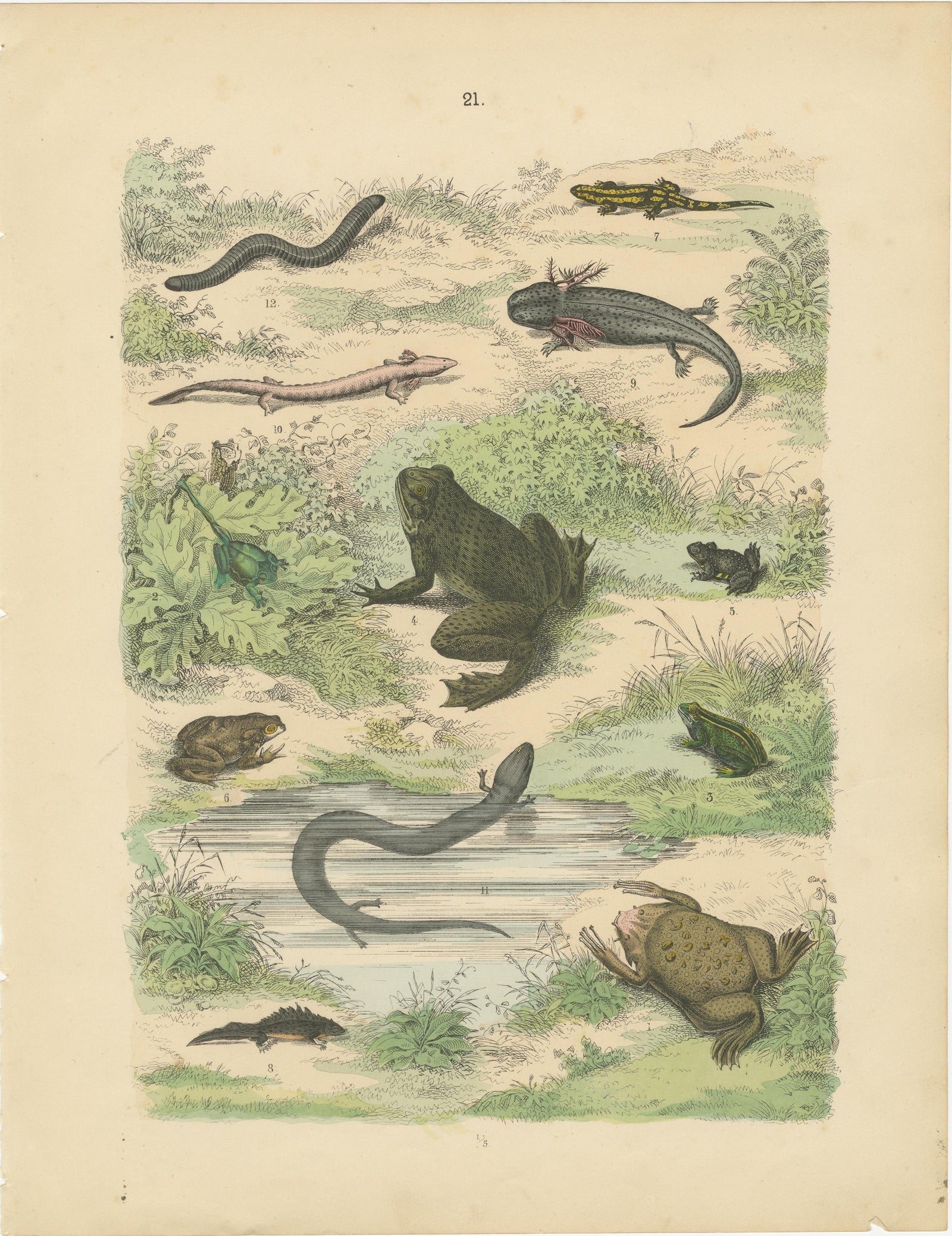
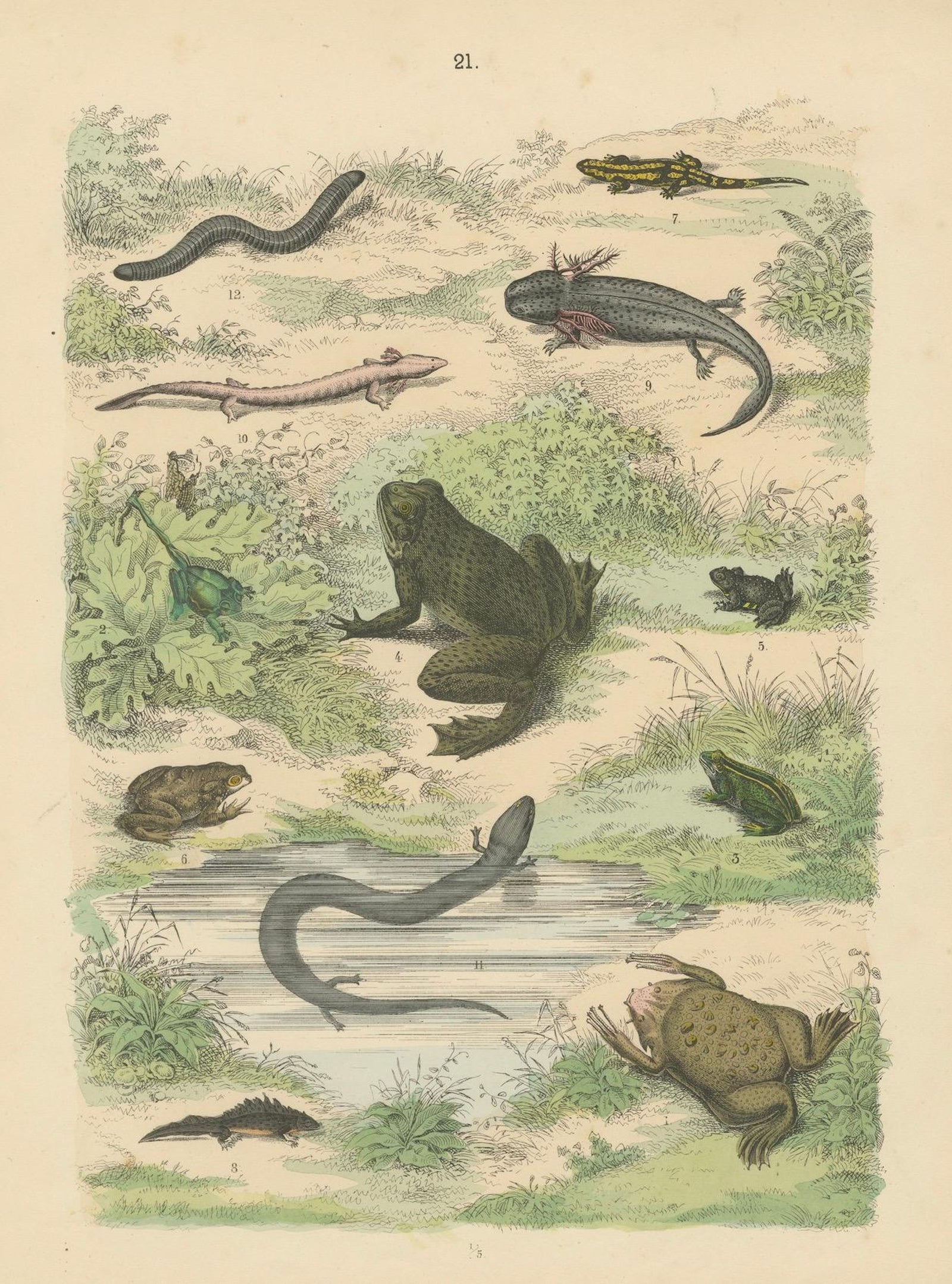
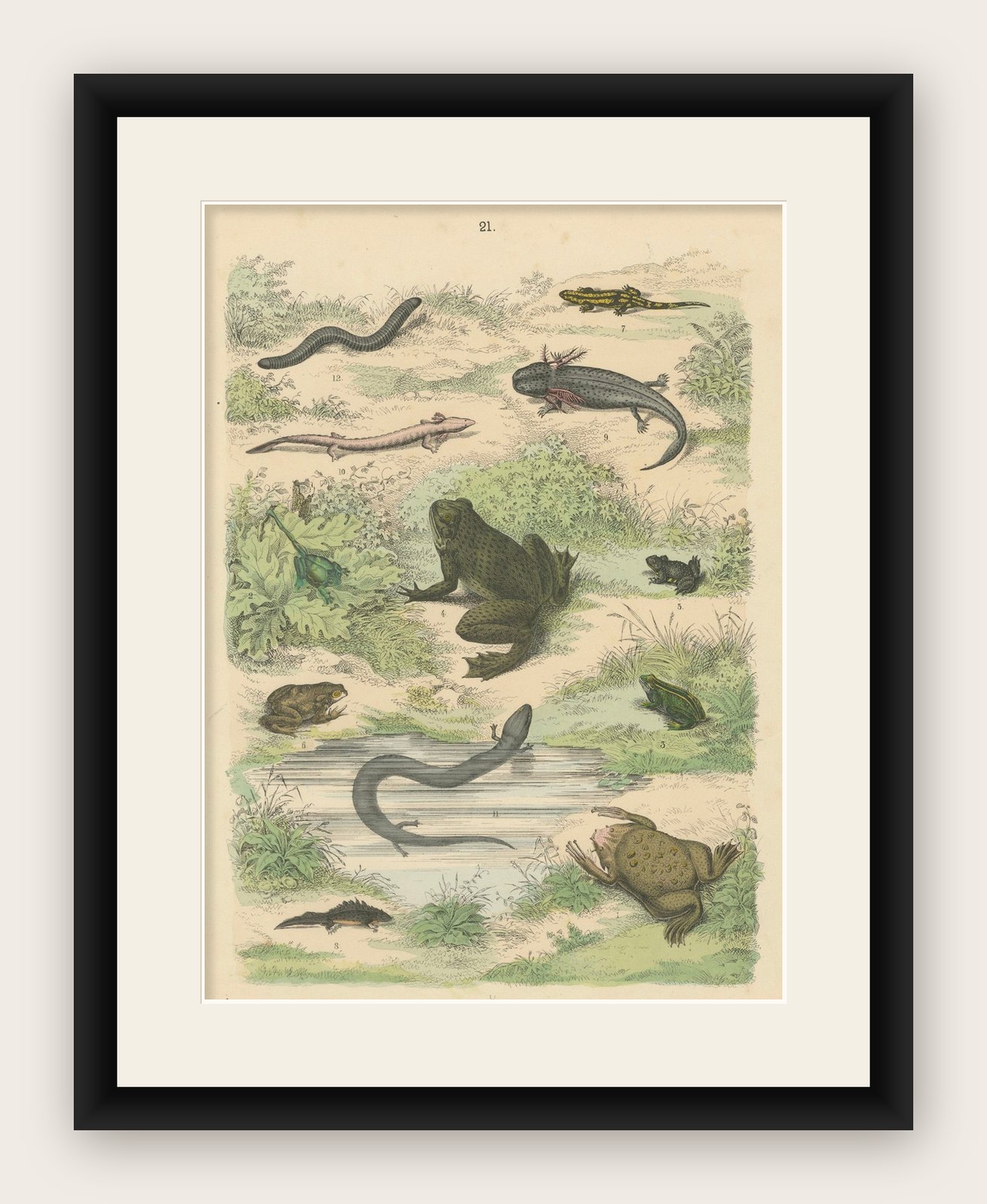
Amphibians Print: Frogs, Salamanders, Axolotl & Caecilian, Antique 1867
€180€12630% off ($140, £105, €126)
Period original, not a reproduction.
Shipped from the Netherlands, flat or rolled, insured and tracked, worldwide. Returns accepted within 14 days.
- Date
- 1867
- Size
- 11.2 × 8.7 in (28.5 × 22 cm)
- Condition
- Good. Good condition for its age, with slight overall toning and minor scattered foxing mainly in the margins. The paper remains strong with no tears or repairs, and the hand coloring is vivid and well-preserved.
- Period
- Late 19th century
- Section
- Reptiles and amphibians
- Reference
- f_45796332
- Color
- Hand colored
What the condition grades mean
- Excellent
- Bright and clean, with no faults worth mentioning.
- Very good
- Only light signs of age, such as faint toning.
- Good
- Normal signs of age for a sheet of this period: toning, some foxing, small marks or neat old repairs.
- Fair
- Clear faults such as staining, tears or repairs, priced to match.
Every fault we see is written in the condition note, and the whole sheet is shown uncropped in the photos.
Amphibians Print: Frogs, Salamanders, Axolotl & Caecilian, Antique 1867
This fascinating antique print depicts a variety of amphibians, including frogs, toads, salamanders, newts, axolotls, and caecilians, rendered in fine hand-colored engravings. It originates from the Atlas der Natuurlijke Geschiedenis voor scholen en huisgezinnen, adapted into Dutch by T.C. Winkler after Traugott Bromme, and published in Amsterdam by J.C. Loman in 1867. Created for educational use, this plate introduced 19th-century students to amphibian diversity across Europe, Asia, and the Americas.
The labeled figures include:
1. European eel-like amphibian (possibly an aquatic salamander)
2. Giant salamander (Andrias japonicus)
3. Green frog (Pelophylax esculentus)
4. Common frog (Rana temporaria)
5. European tree frog (Hyla arborea)
6. Common toad (Bufo bufo)
7. Fire salamander (Salamandra salamandra)
8. Alpine newt (Ichthyosaura alpestris)
9. Axolotl (Ambystoma mexicanum)
10. Olm or proteus (Proteus anguinus)
11. Amphiuma (Amphiuma means)
12. Caecilian (Gymnophiona species)
Produced using copper engraving with meticulous hand coloring, the print combines precise anatomical lines with rich naturalistic colors. Each amphibian is presented in naturalistic poses within stylised wetland, forest, or aquatic settings, highlighting their distinctive forms, limbs, skin textures, and adaptive features. Such plates were essential in schools and libraries for teaching zoology before photographic field guides were available.
Condition summary:
Good condition for its age, with slight overall toning and minor scattered foxing mainly in the margins. The paper remains strong with no tears or repairs, and the hand coloring is vivid and well-preserved.
Framing tips:
Frame this amphibian print in a dark wood, walnut, or black frame with a cream or off-white mount to enhance its detailed engravings and natural earthy tones. For traditional interiors, a gold frame adds antique warmth and character. UV-protective glass is recommended to preserve colors and prevent further toning. This antique natural history print will enrich any zoological collection, educational interior, or gallery wall with timeless scientific beauty and decorative charm.