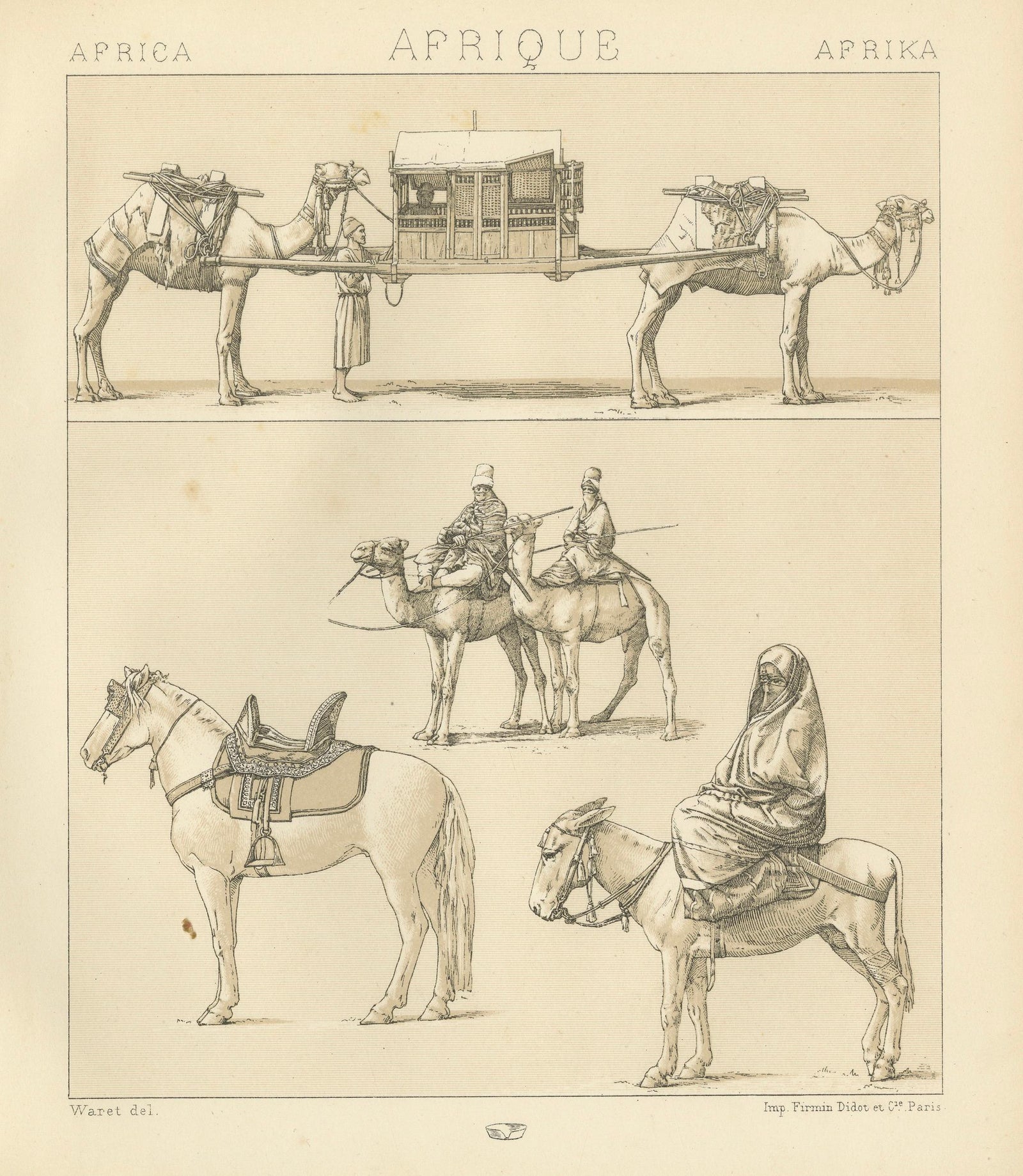
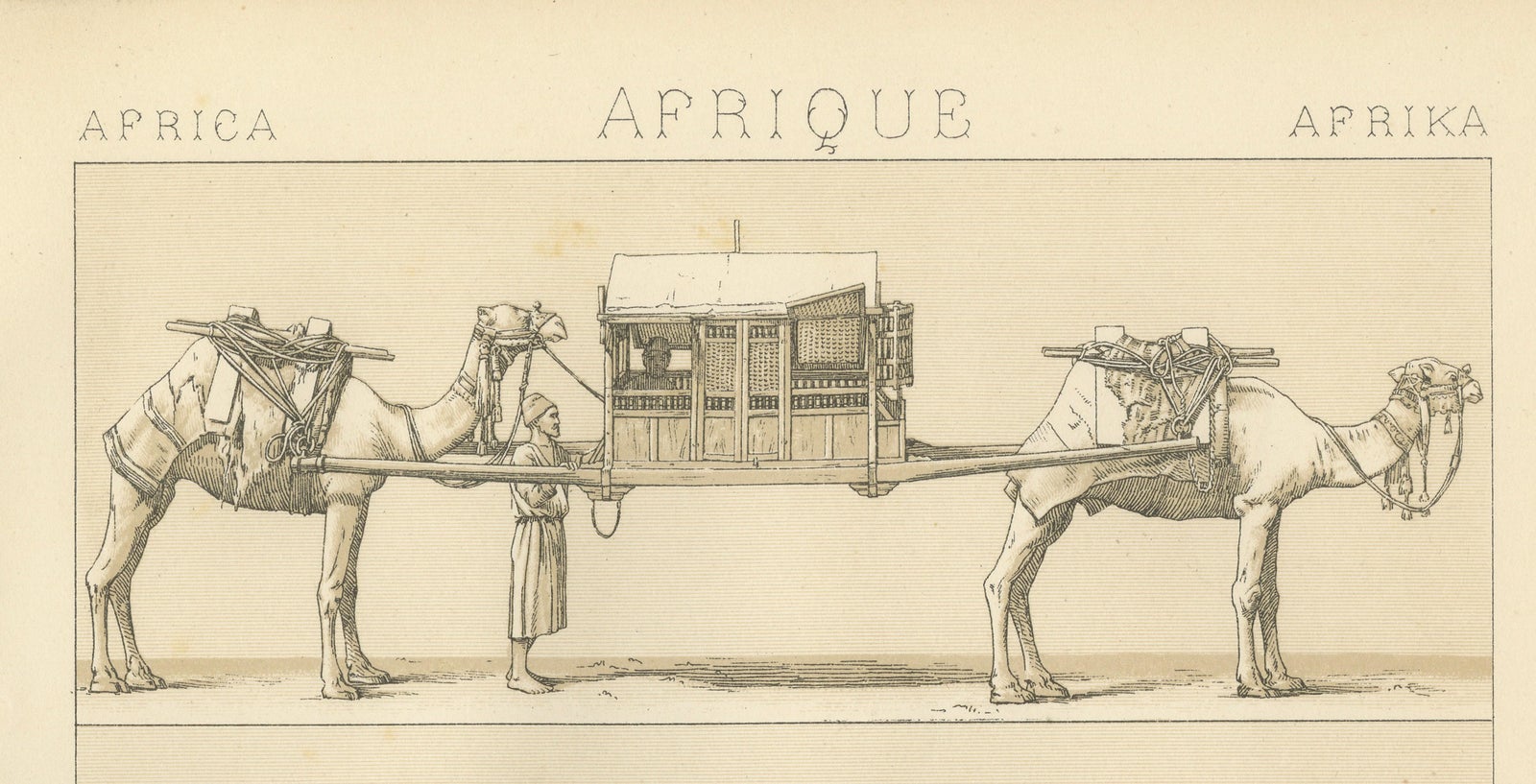
Close-ups
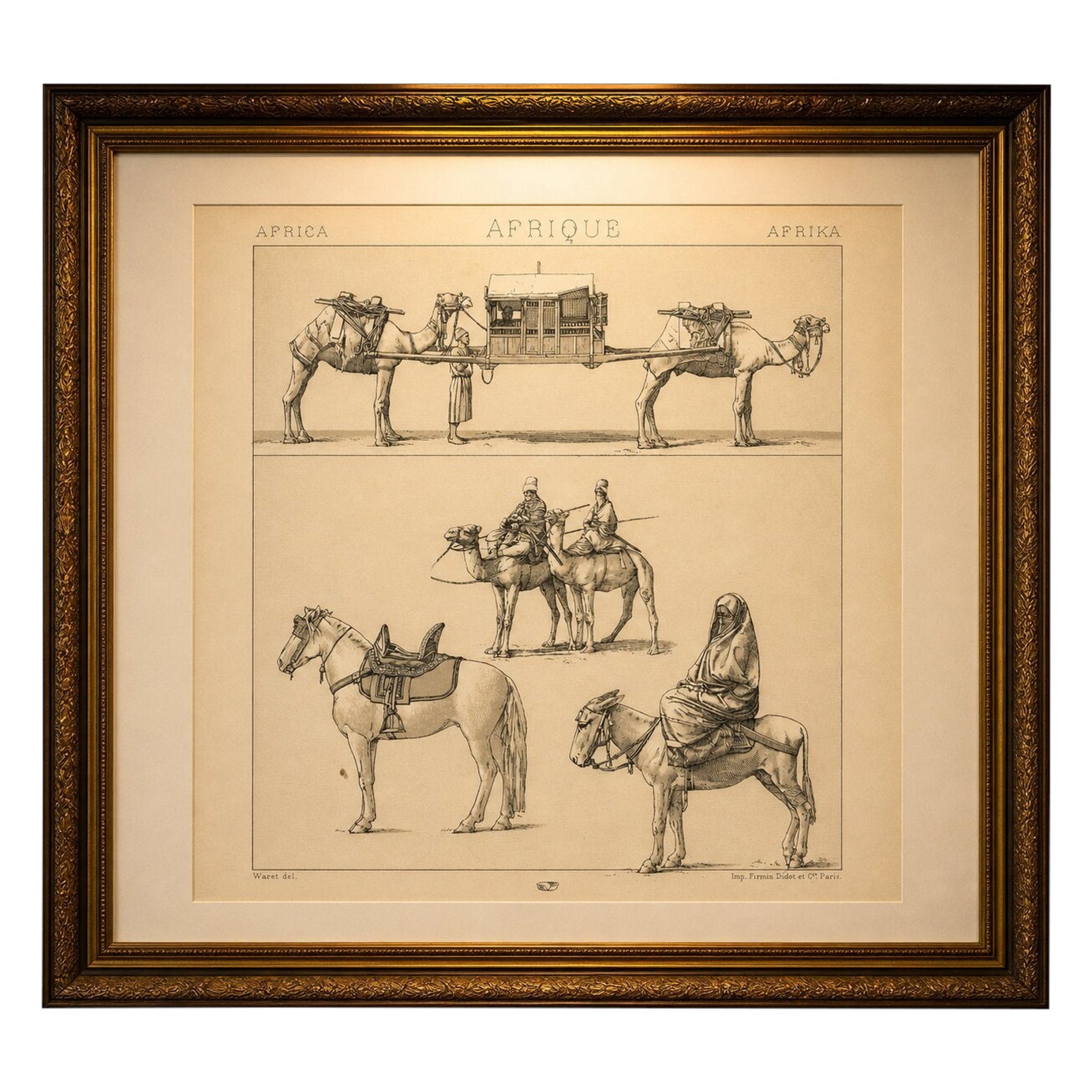
Framed and on the wall
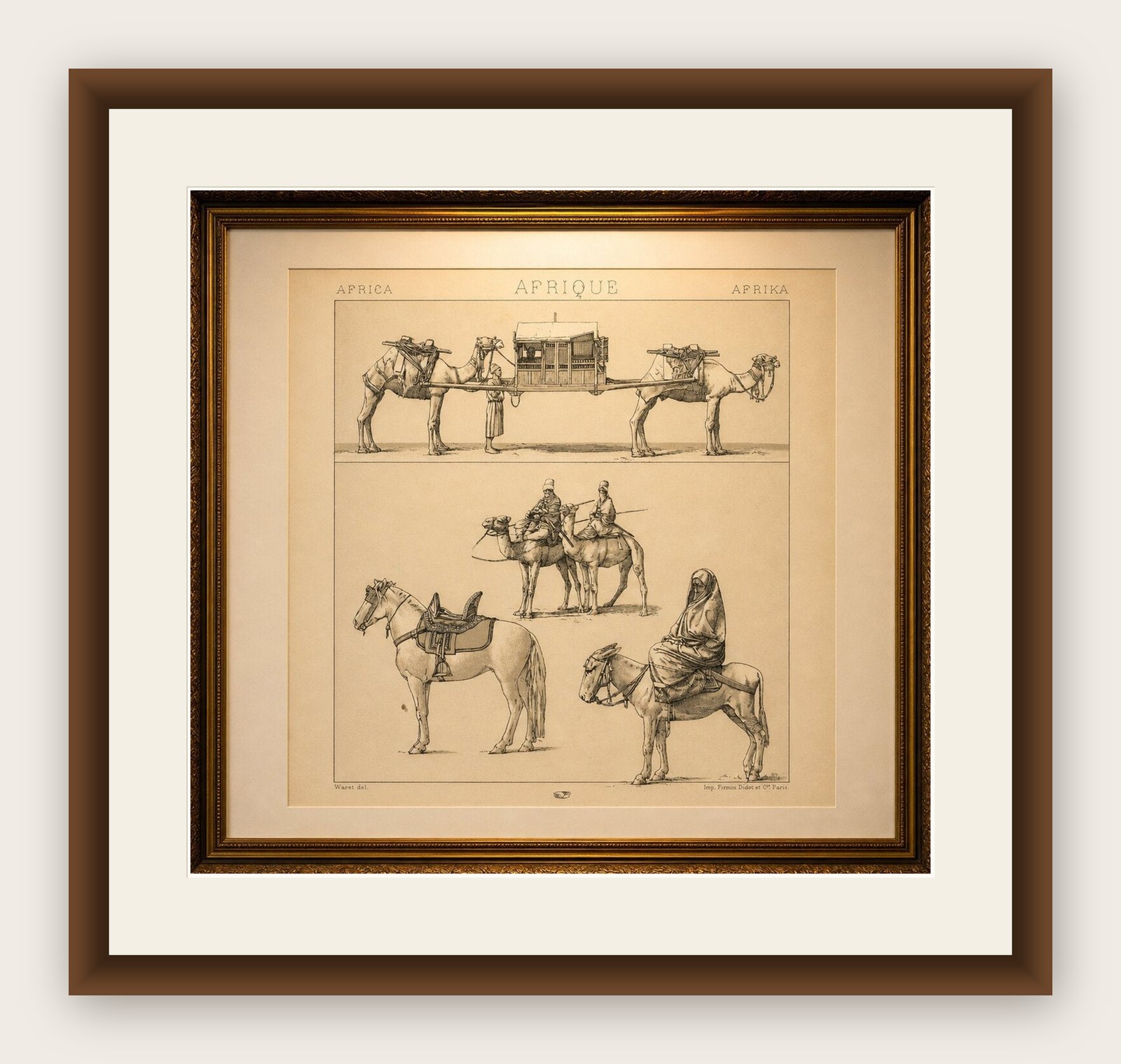


Frame and rooms are illustrations of how the print could look; the description says what is included.
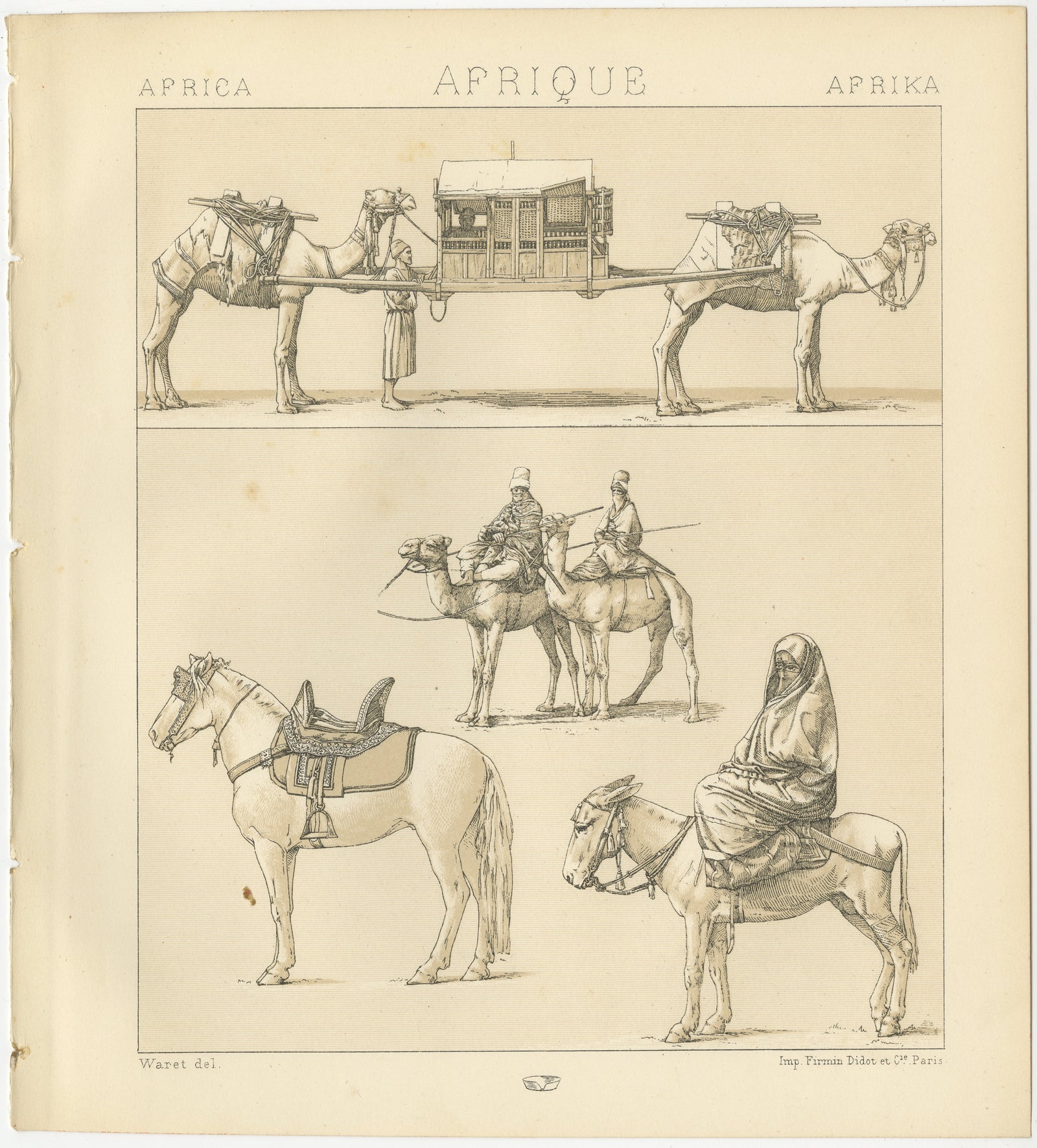
African Transport & Camel Litter, Racinet Afrique Plate, 1888
$155 (£120, €140)
Period original, not a reproduction.
Shipped from the Netherlands, flat, insured and tracked, worldwide. Returns accepted within 14 days.
- Date
- 1888
- Size
- 7.3 × 8.2 in (18.6 × 20.8 cm)
- Condition
- Good. Good condition overall. Light age toning and occasional spotting, mainly in the margins. Some minor edge wear consistent with age. Image remains clean with fine, well-preserved detail.
- Period
- Late 19th century
- Section
- Mammals
- Reference
- f_49983002
African Transport & Camel Litter, Racinet Afrique Plate, 1888
A rare and highly detailed chromolithograph from 1888, drawn from Albert Racinet’s celebrated Le Costume Historique, published in Paris by Firmin-Didot. This plate offers a refined and visually compelling study of traditional modes of transport and equestrian culture across North Africa and the Saharan regions.
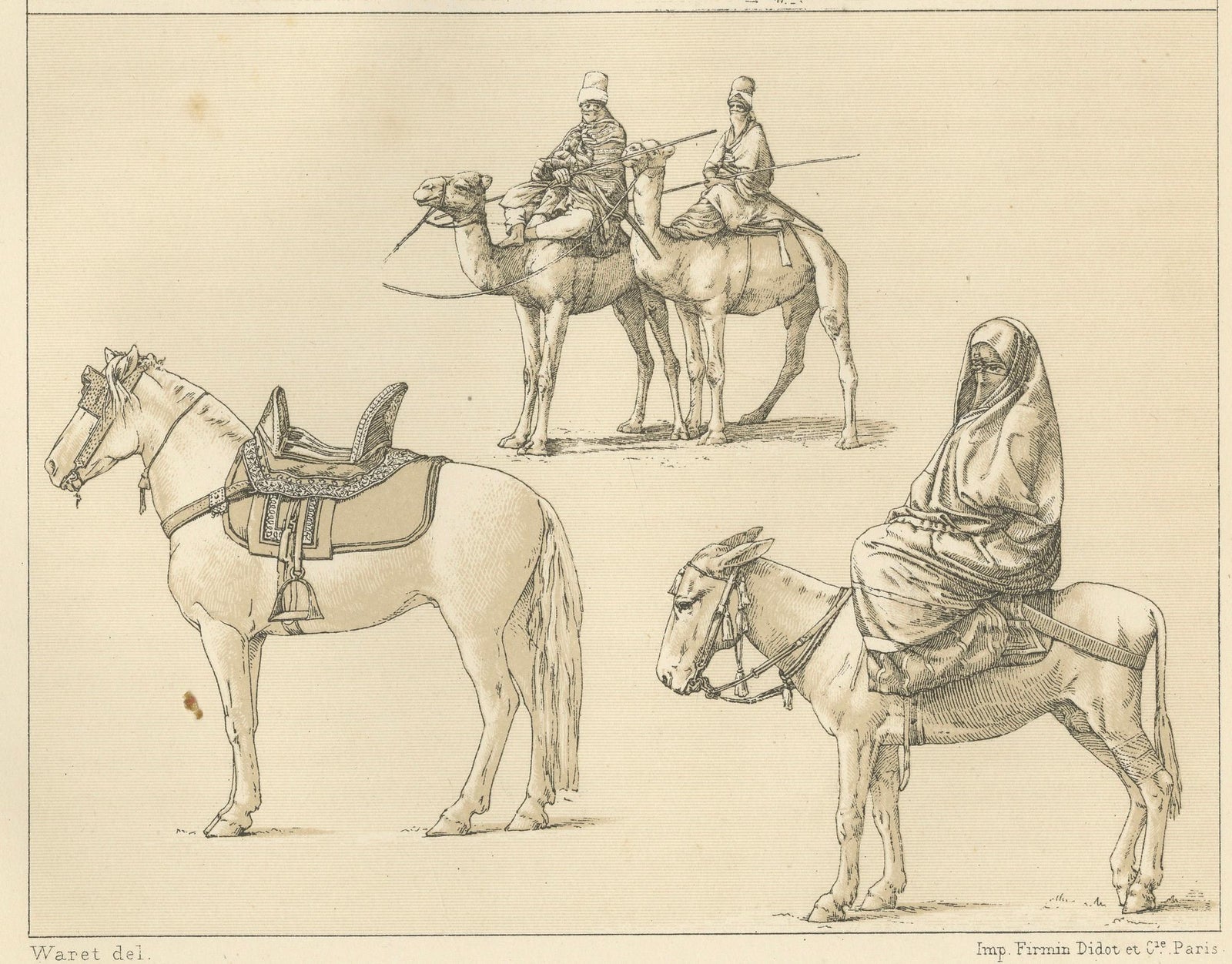
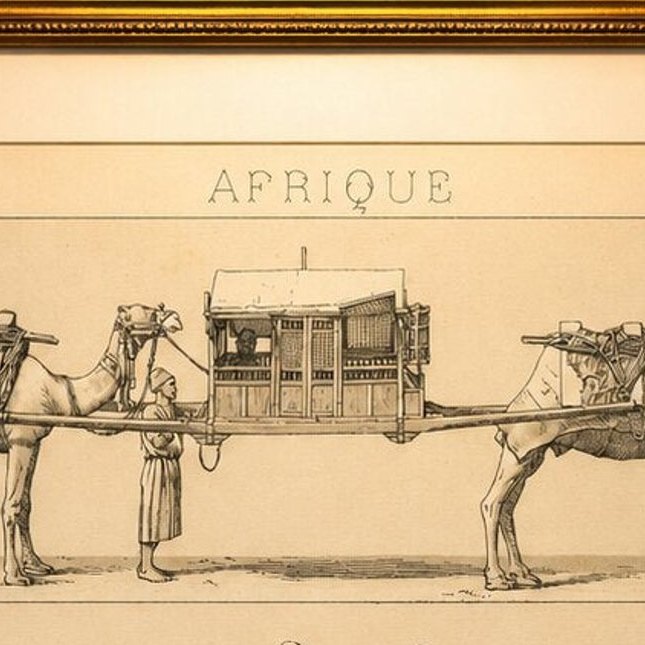
The composition is structured in three distinct scenes, each illustrating a different aspect of movement and travel in the desert environment. At the top, an elaborate camel litter, known as a shibriya, is shown suspended between two camels, a form of transport historically reserved for women or high-ranking individuals, providing both privacy and comfort during long desert journeys. The architectural quality of the wooden structure and its balanced suspension reflect a sophisticated understanding of both design and function.
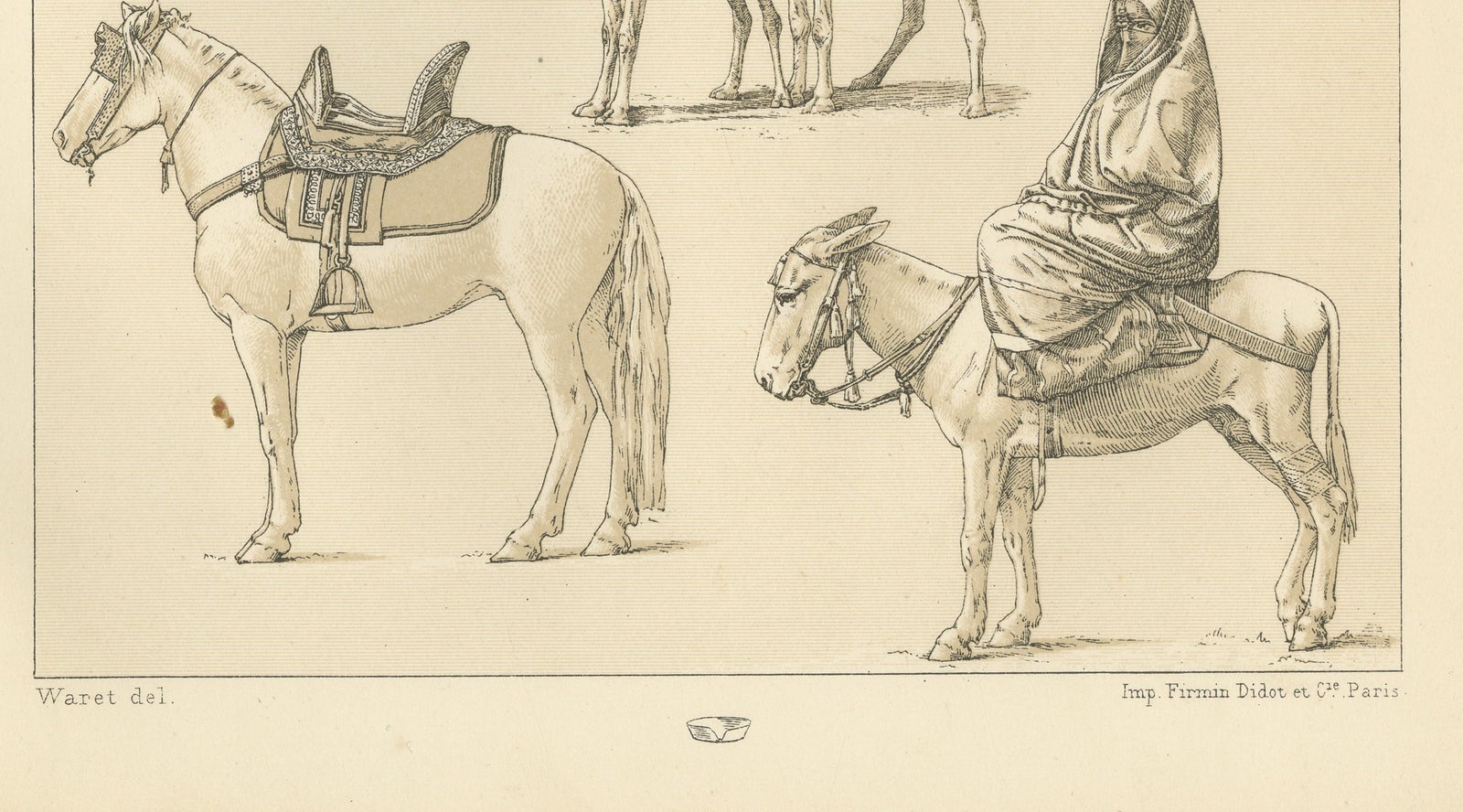
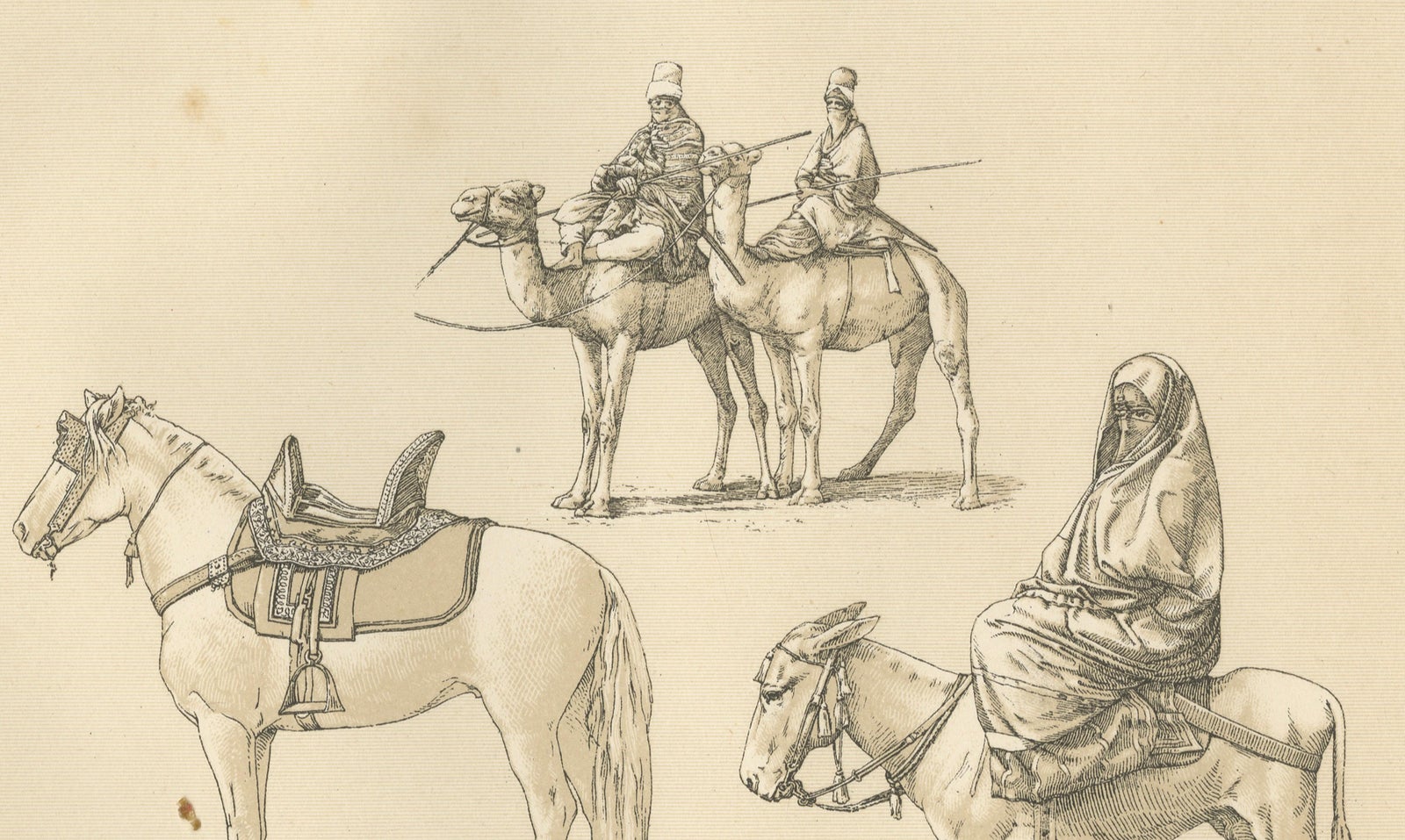
The central scene depicts mounted riders on dromedaries, likely representing Tuareg or Bedouin travelers. Their posture, attire, and equipment emphasize mobility and endurance, while the saddles and harnesses are rendered with notable precision, highlighting adaptations for long-distance desert travel.
Below, two further studies complete the composition: a finely equipped horse displaying traditional North African saddle craftsmanship, and a cloaked rider in a burnous seated on a donkey, offering a quieter, more intimate view of regional transport.
Executed after Waret, whose name appears on the plate, the print combines ethnographic observation with Racinet’s characteristic decorative clarity. The restrained palette and precise linework reflect the high quality of late 19th-century chromolithography, transforming documentary subject matter into an elegant and collectible work of art.
This piece holds strong appeal for collectors of ethnographic material, Orientalist imagery, and equestrian subjects, while also functioning as a refined decorative print with narrative depth.
Condition:
Good condition overall. Light age toning and occasional spotting, mainly in the margins. Some minor edge wear consistent with age. Image remains clean with fine, well-preserved detail.
Framing tips:
Ideal with a wide ivory mat and a dark wood or subtle gilt frame. The horizontal composition lends itself well to placement above a desk, console, or mantel, where the narrative scenes can be appreciated in full.
Special note: This is an original antique engraving, not a reproduction. All items we offer are authentic period works of art over 100 years old. The print is sold unframed; any framed images are shown for presentation and interior inspiration only and may not always be to scale.
Technique: Chromolithograph
Maker: Albert Racinet (after Waret), Paris, circa 1888