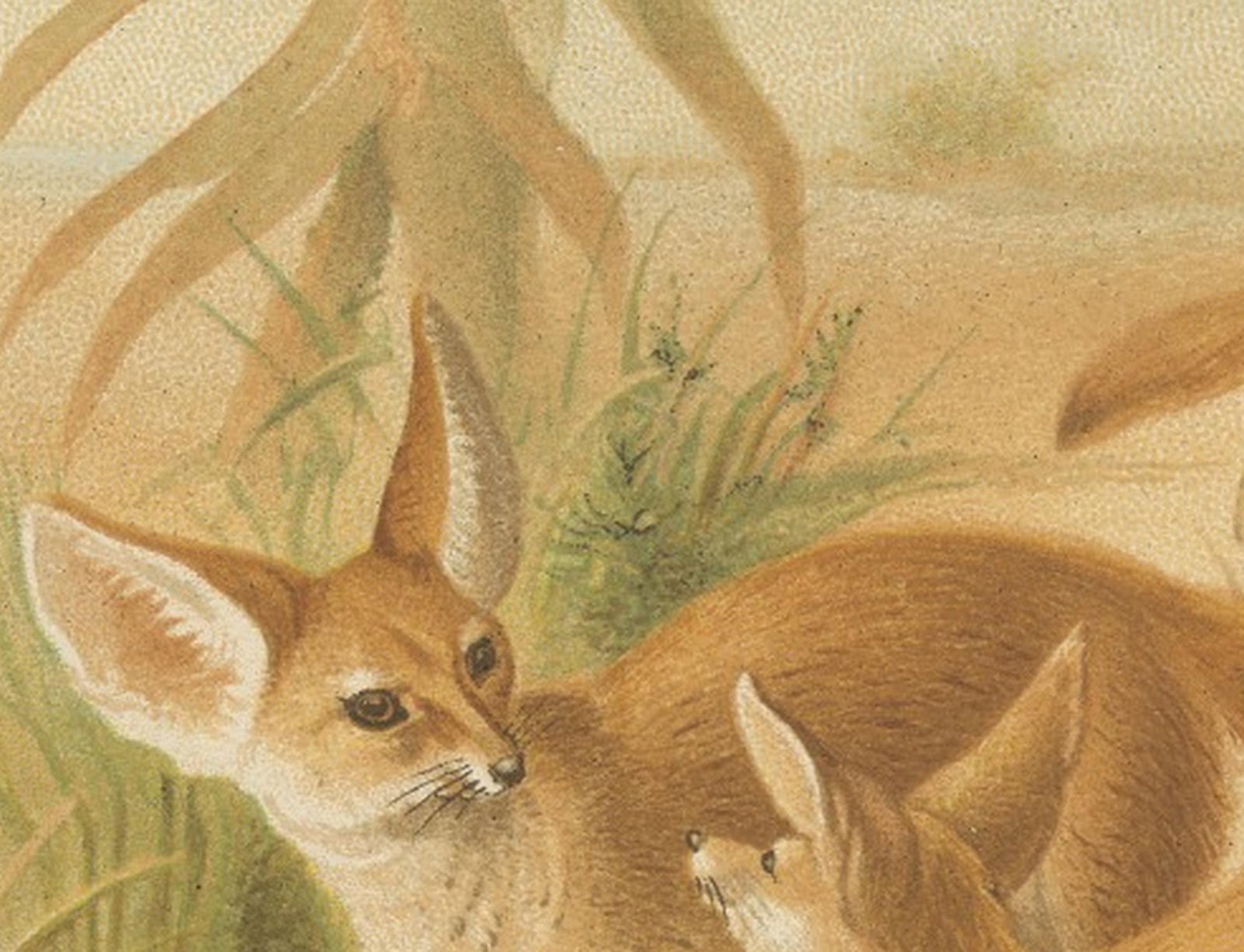
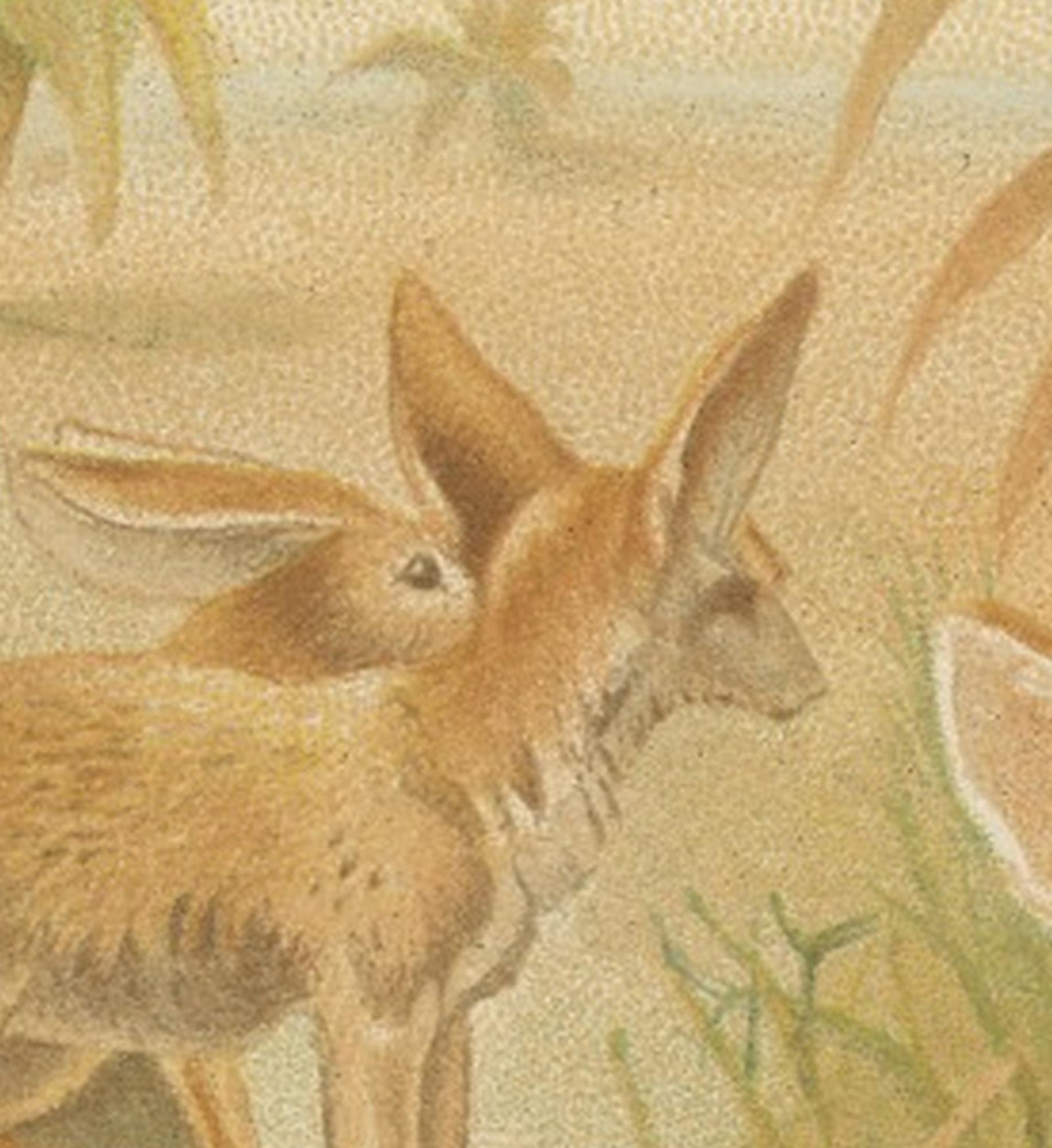
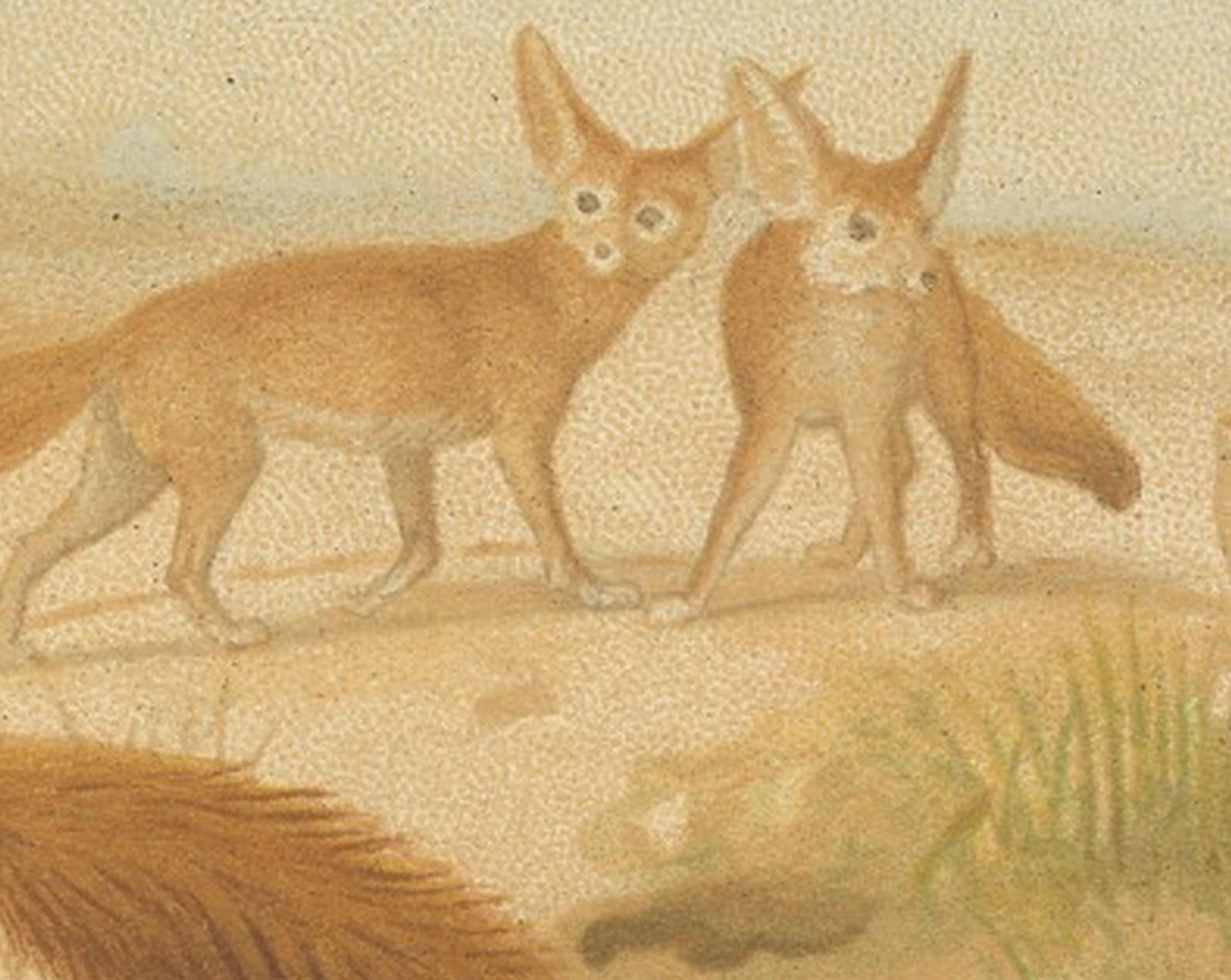
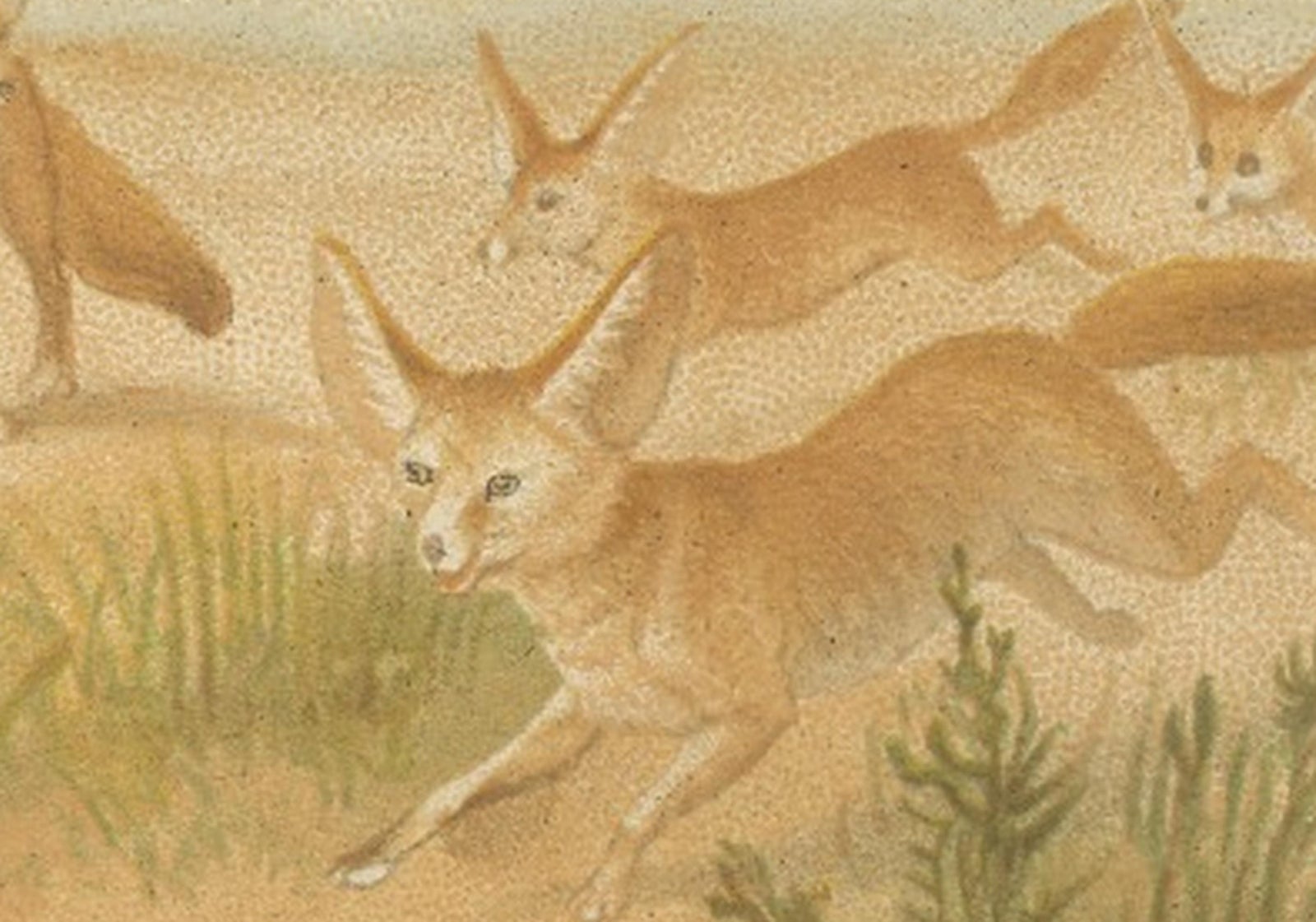
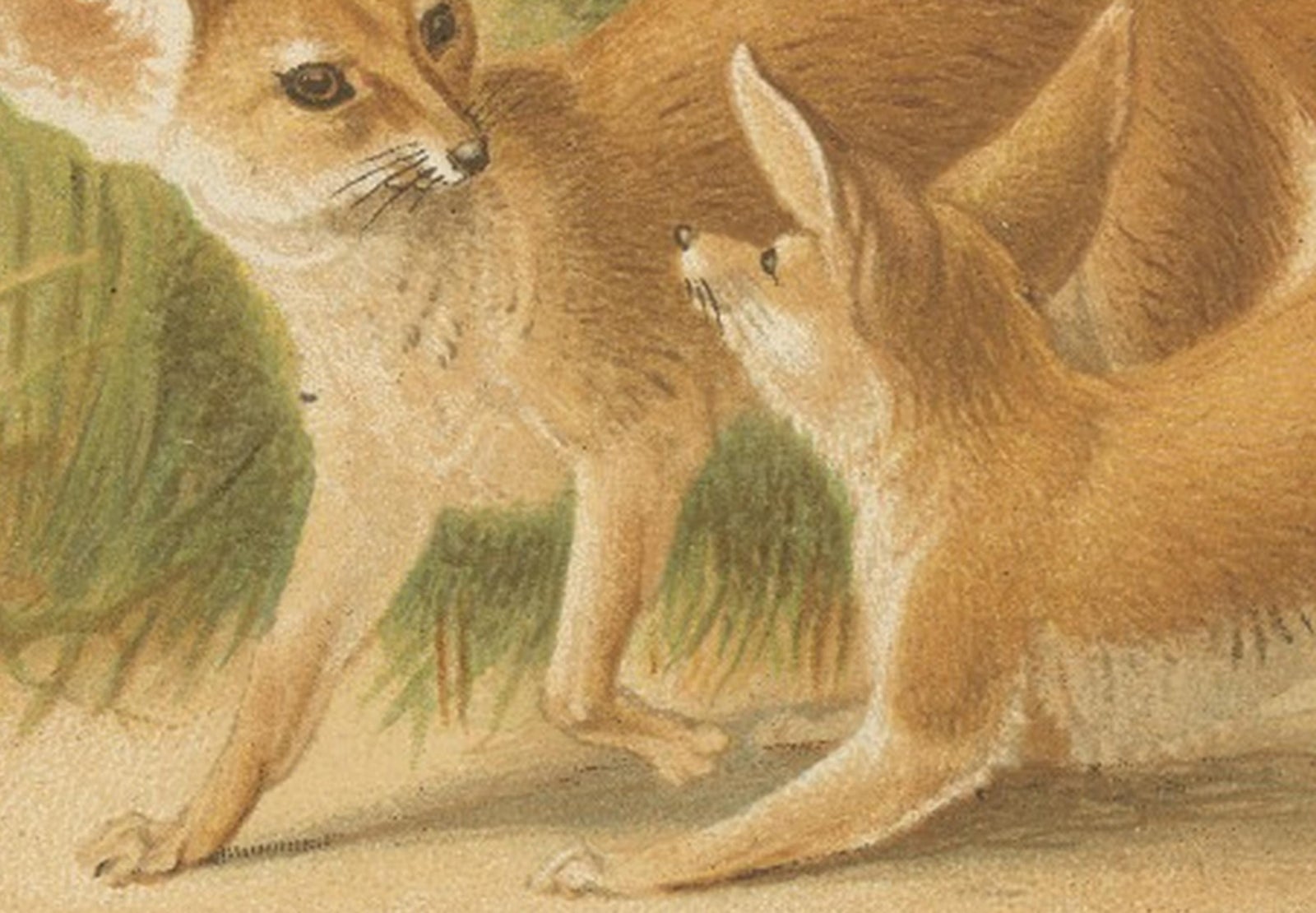
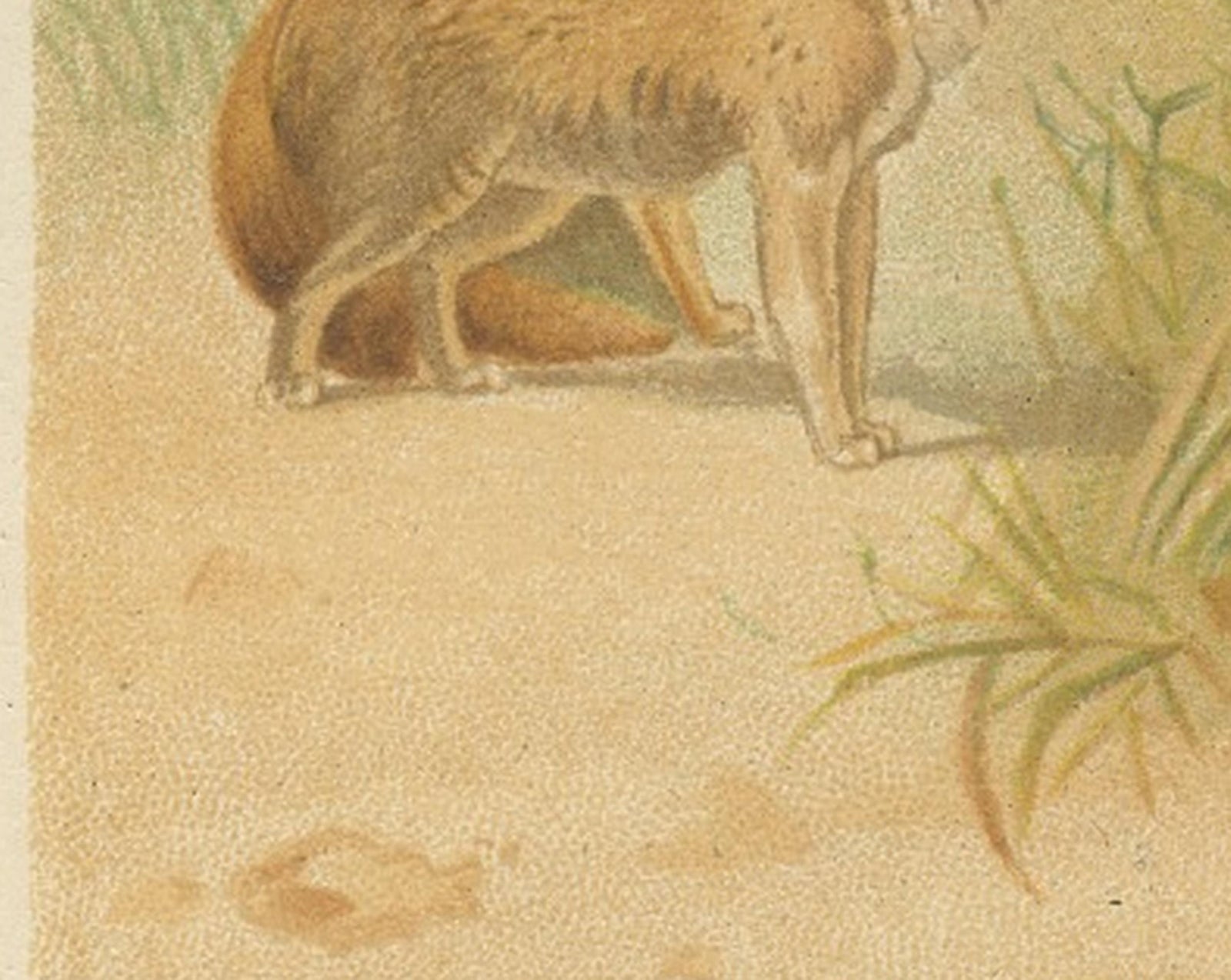
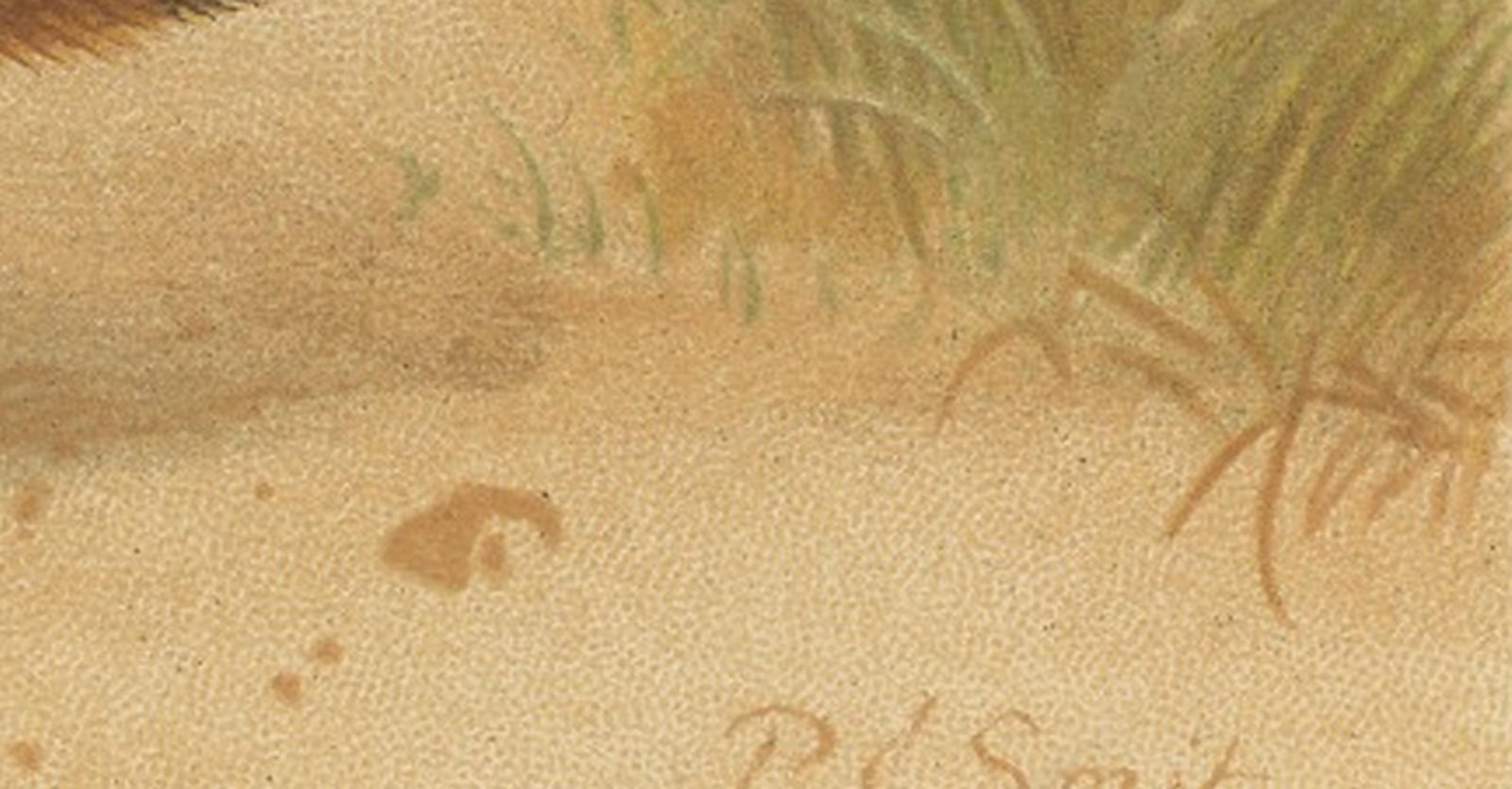
Close-ups
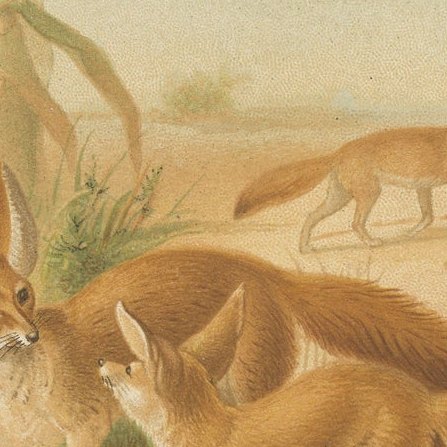
Framed and on the wall
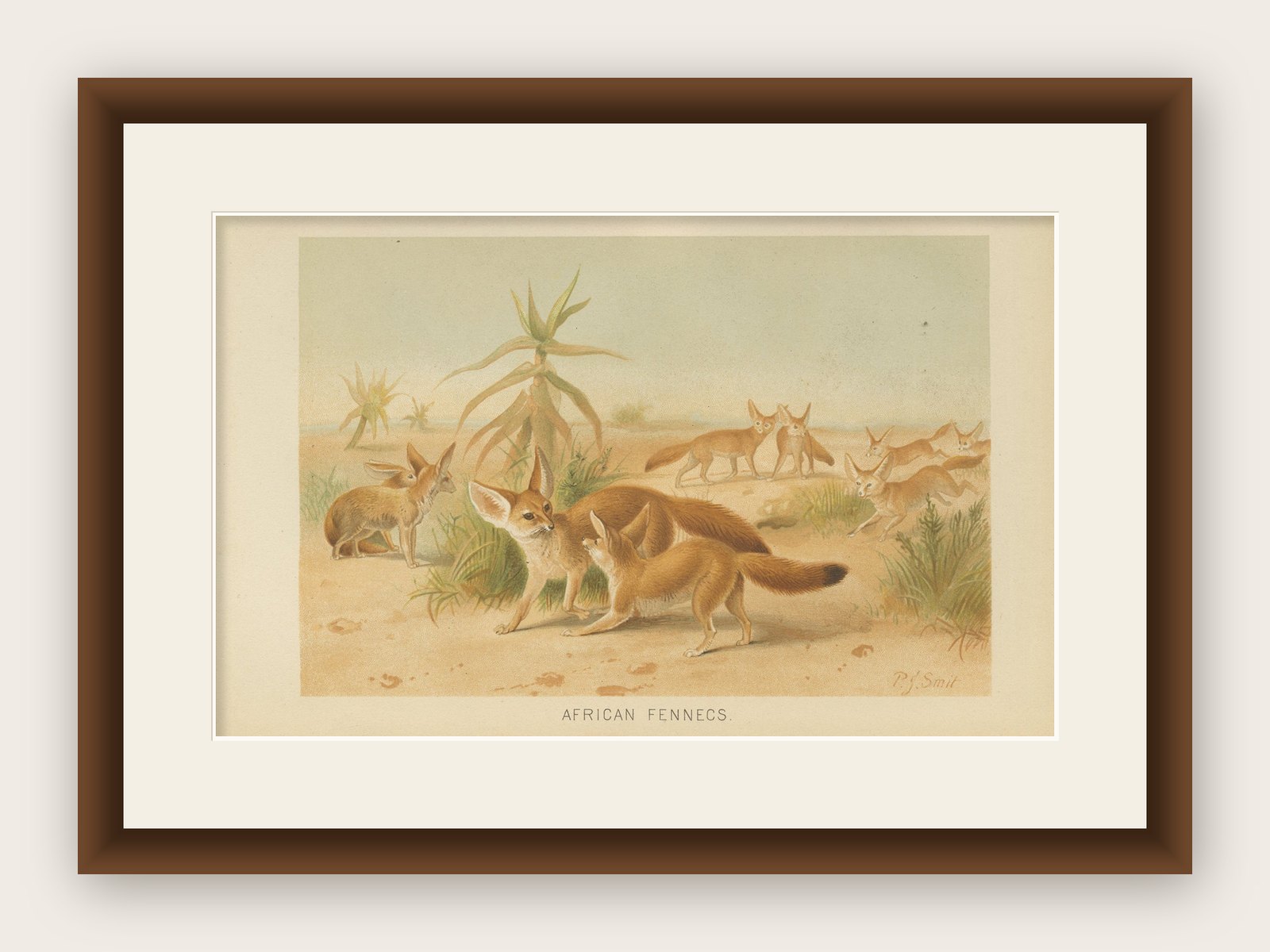

Frame and rooms are illustrations of how the print could look; the description says what is included.
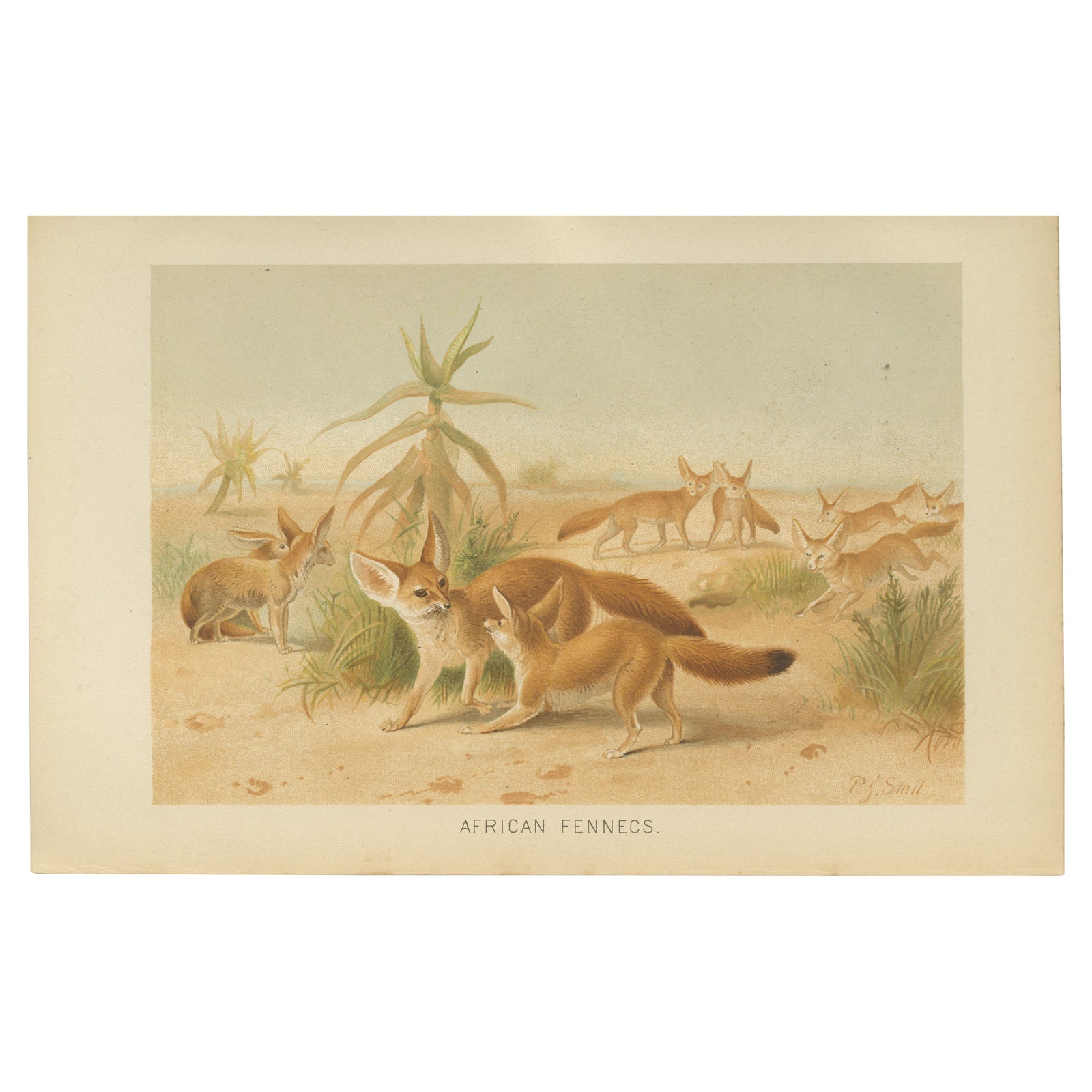
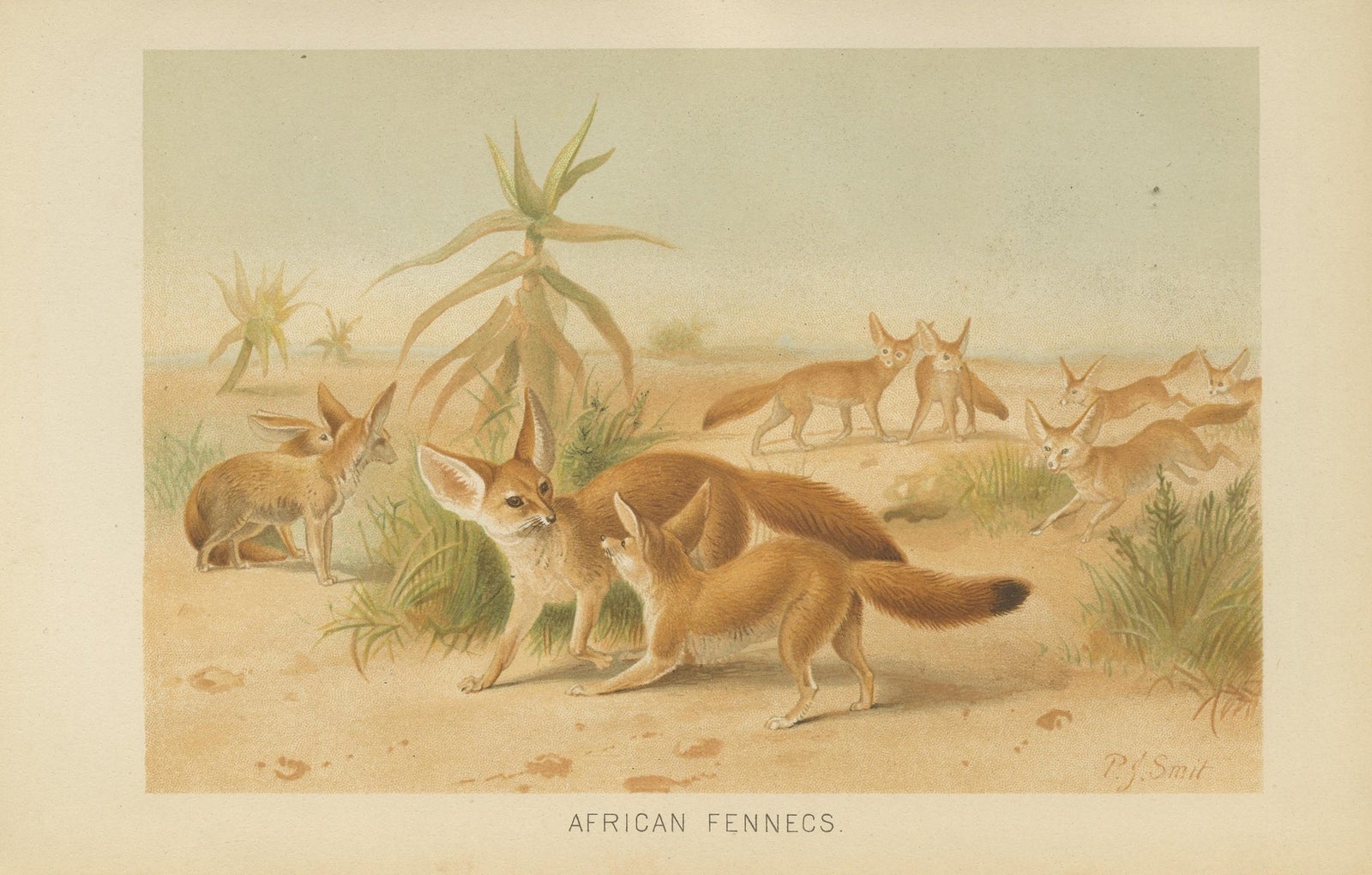
African Fennecs, Antique Desert Fox Chromolithograph, 1894
£160£11030% off ($145, €133)
Period original, not a reproduction.
Shipped from the Netherlands, flat or rolled, insured and tracked, worldwide. Returns accepted within 14 days.
- Date
- 1894
- Size
- 6.7 × 10 in (17 × 25.5 cm)
- Condition
- Good. Good antique condition with gentle toning to the paper and minor scattered spotting in the margins. Strong, even color within the image.
- Period
- Late 19th century
- Section
- Mammals
- Reference
- f_48639832
- Color
- Printed color
What the condition grades mean
- Excellent
- Bright and clean, with no faults worth mentioning.
- Very good
- Only light signs of age, such as faint toning.
- Good
- Normal signs of age for a sheet of this period: toning, some foxing, small marks or neat old repairs.
- Fair
- Clear faults such as staining, tears or repairs, priced to match.
Every fault we see is written in the condition note, and the whole sheet is shown uncropped in the photos.
African Fennecs, Antique Desert Fox Chromolithograph, Royal Natural History
This lively chromolithograph shows a group of African fennec foxes in a desert setting, animated by alert postures and expressive ears that define the species. The composition balances scientific clarity with decorative charm, making it one of the most engaging small-mammal plates from the series.
Published in 1894 as part of The Royal Natural History, this plate reflects the Victorian fascination with exotic fauna and the expanding reach of zoological knowledge. The original artwork is attributed to P. J. Smit, whose animal studies were widely admired for their warmth and accuracy.
The soft sandy tones and open background give the image a light, airy quality that works particularly well in contemporary interiors, children’s rooms, or curated gallery walls focused on natural history.
Condition report:
Good antique condition with gentle toning to the paper and minor scattered spotting in the margins. Strong, even color within the image.
Framing tips:
Excellent in a light wood or pale walnut frame with a generous mat. For a more graphic effect, consider a slim black frame with museum-style spacing.
Technique: Chromolithograph
Maker: After P. J. Smit, London, 1894