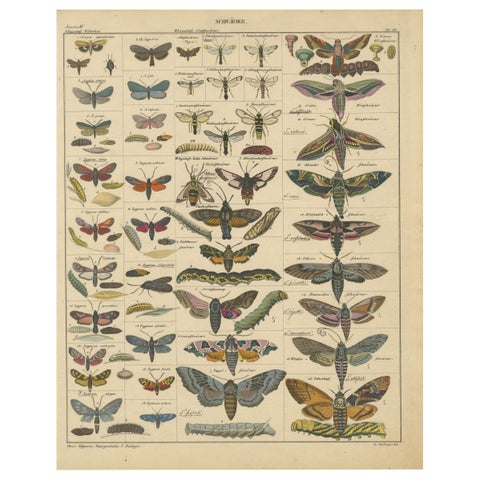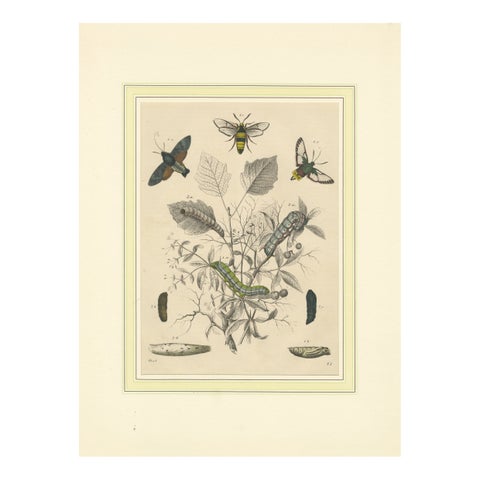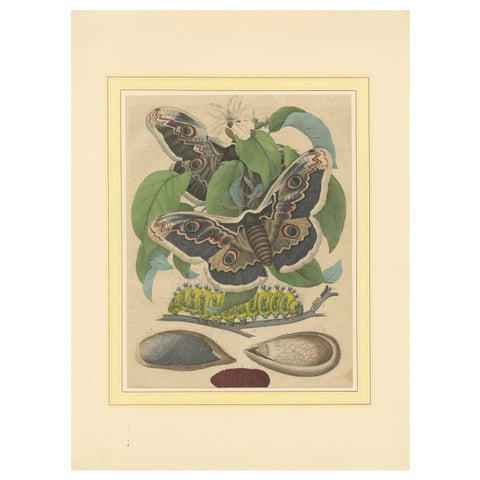
Close-ups
Framed and on the wall
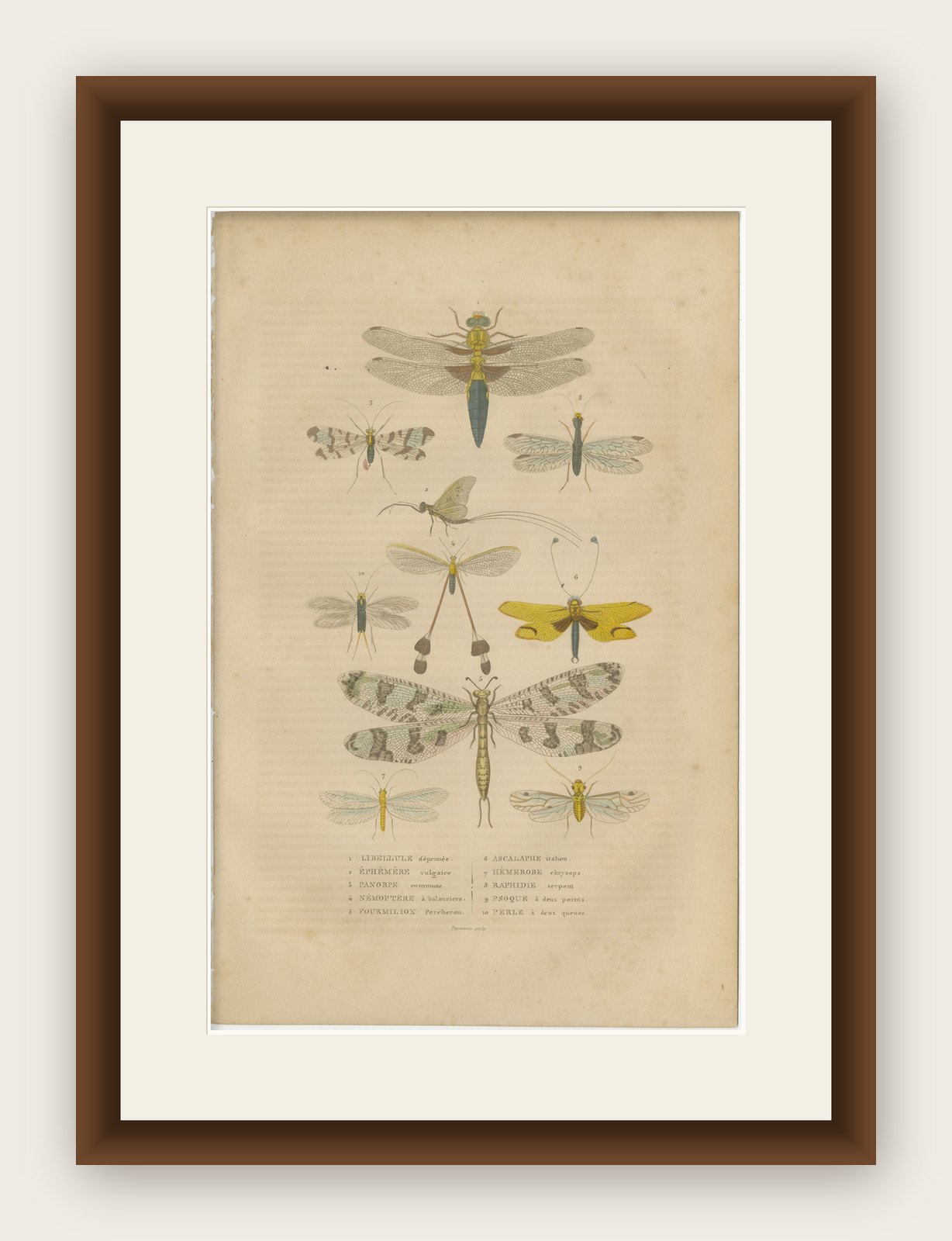


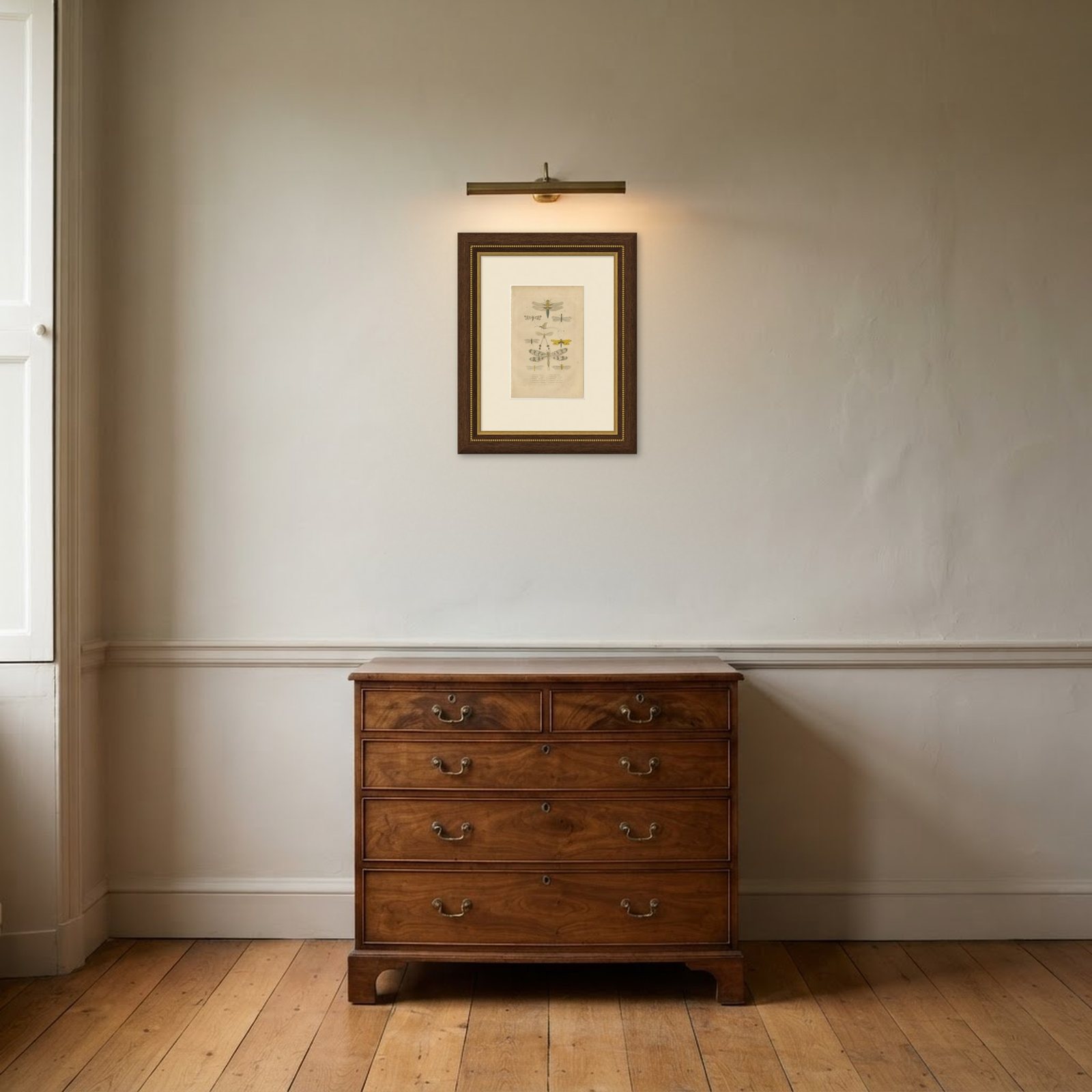
Frame and rooms are illustrations of how the print could look; the description says what is included.
A Study of Winged Insects: An Entomological Collection from the 18th Century
$285$20030% off (£150, €182)
Period original, not a reproduction.
Shipped from the Netherlands, flat or rolled, insured and tracked, worldwide. Returns accepted within 14 days.
- Date
- Not stated
- Size
- 10.4 × 6.7 in (26.5 × 17 cm)
- Condition
- Good. Light browning and some light spots due to aging and handling. Light offset from a opposite text plate in the original book. Please study scan carefully.
- Section
- Insects and butterflies
- Reference
- f_37751112
- Color
- Hand colored
What the condition grades mean
- Excellent
- Bright and clean, with no faults worth mentioning.
- Very good
- Only light signs of age, such as faint toning.
- Good
- Normal signs of age for a sheet of this period: toning, some foxing, small marks or neat old repairs.
- Fair
- Clear faults such as staining, tears or repairs, priced to match.
Every fault we see is written in the condition note, and the whole sheet is shown uncropped in the photos.
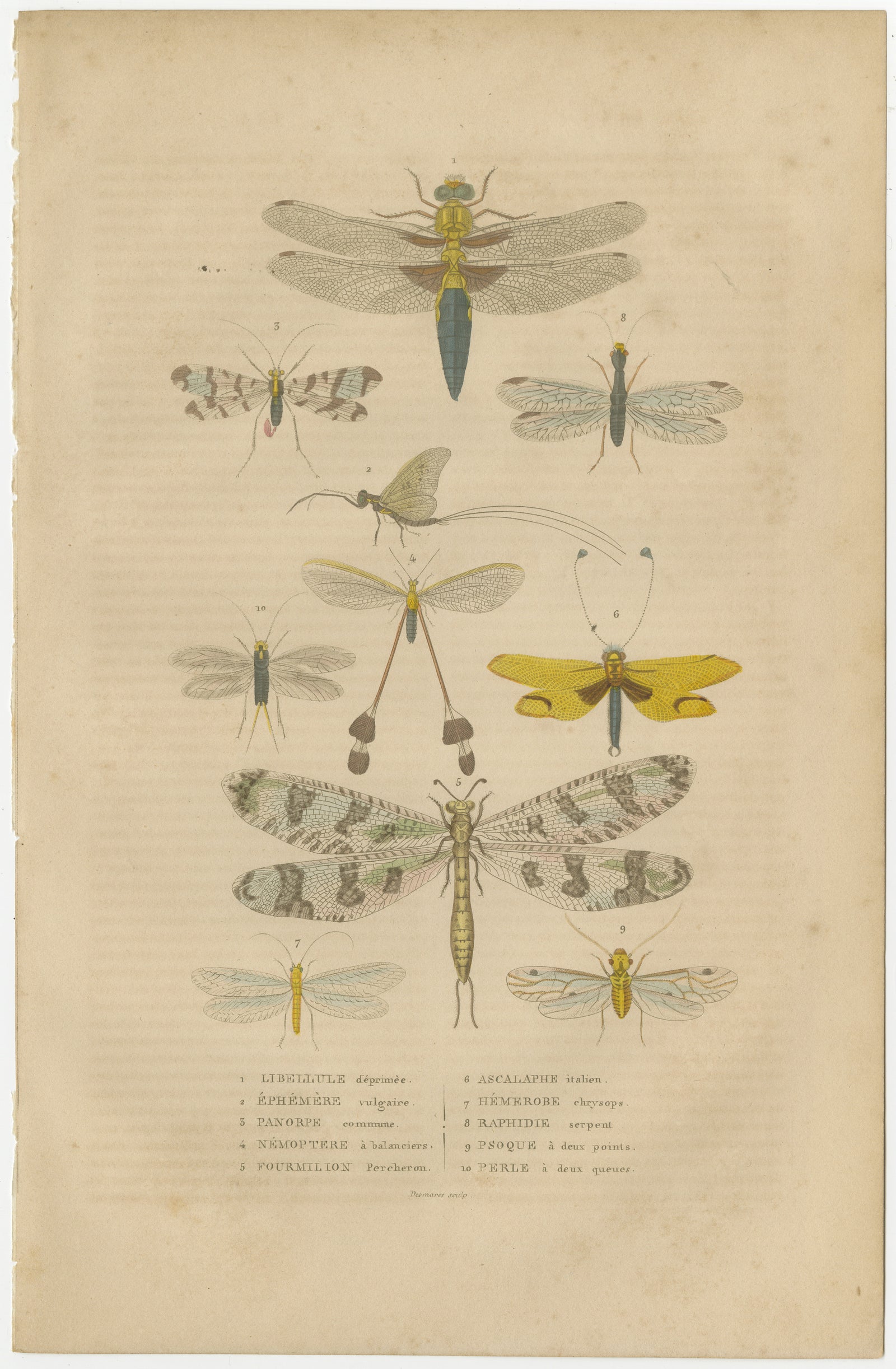
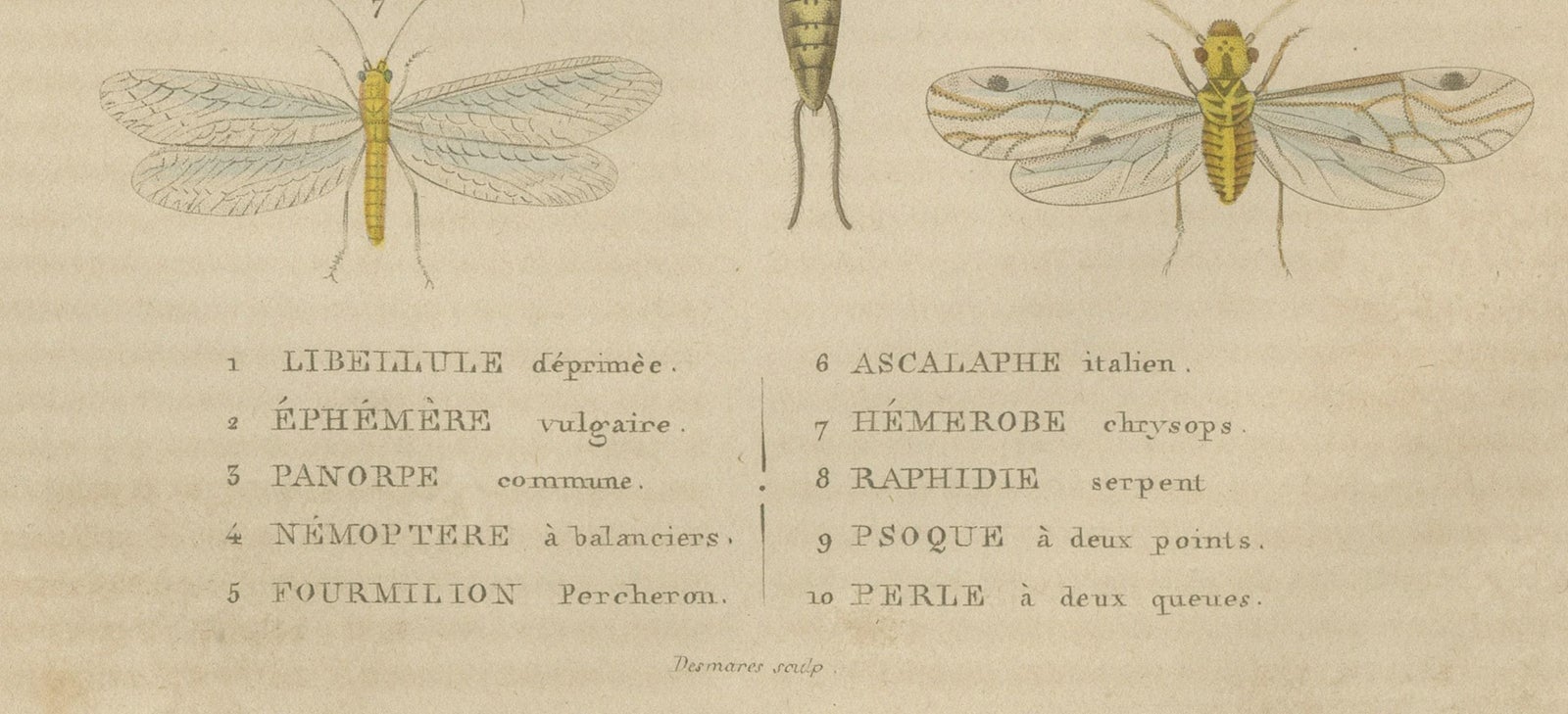
This original hand-colored antique print shows a variety of flying insects, commonly found in entomological reference works. Each insect is labeled with a number, and corresponding names are provided at the bottom of the image. Here are the names of the insects as labeled in the image:
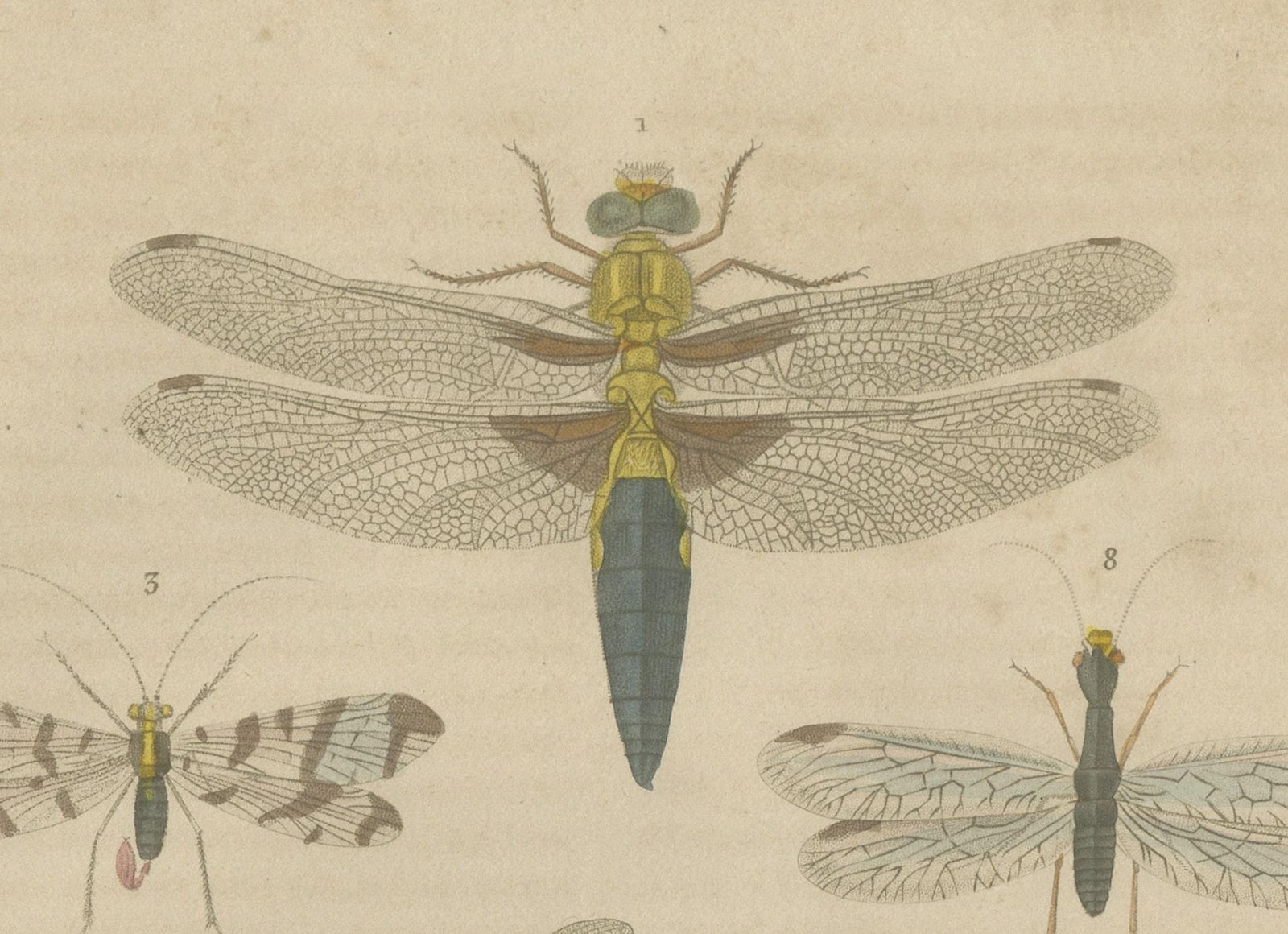
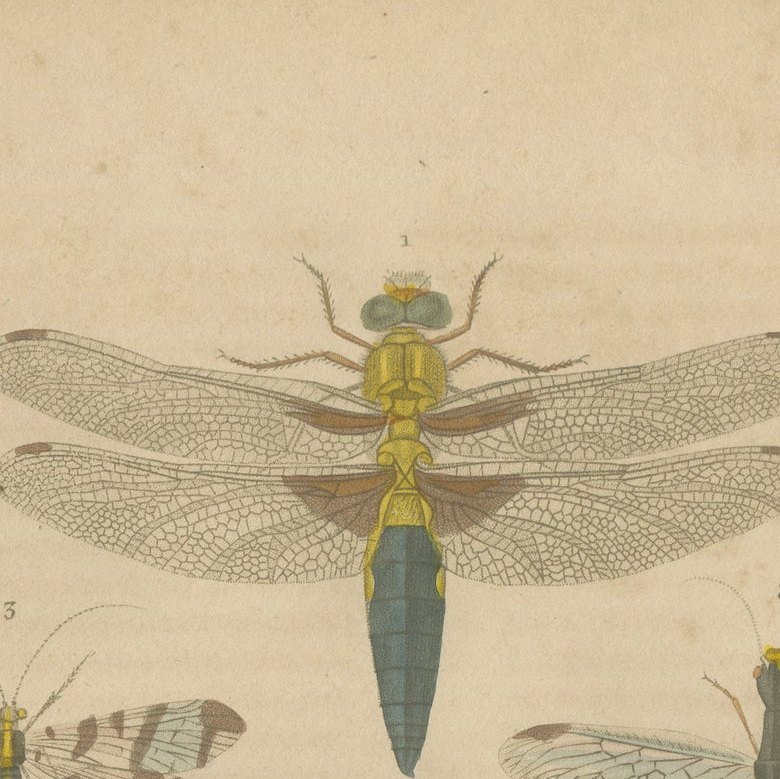
1. Libellule déprimée - This likely refers to a species of dragonfly, known for their large eyes and two pairs of strong, transparent wings.
2. Éphémère vulgaire - Commonly known as mayflies, these insects are characterized by their short lifespans and delicate wings.
3. Panorpe commune - This is likely a scorpionfly, recognizable by their elongated faces and the males' curled tails that resemble a scorpion's stinger.
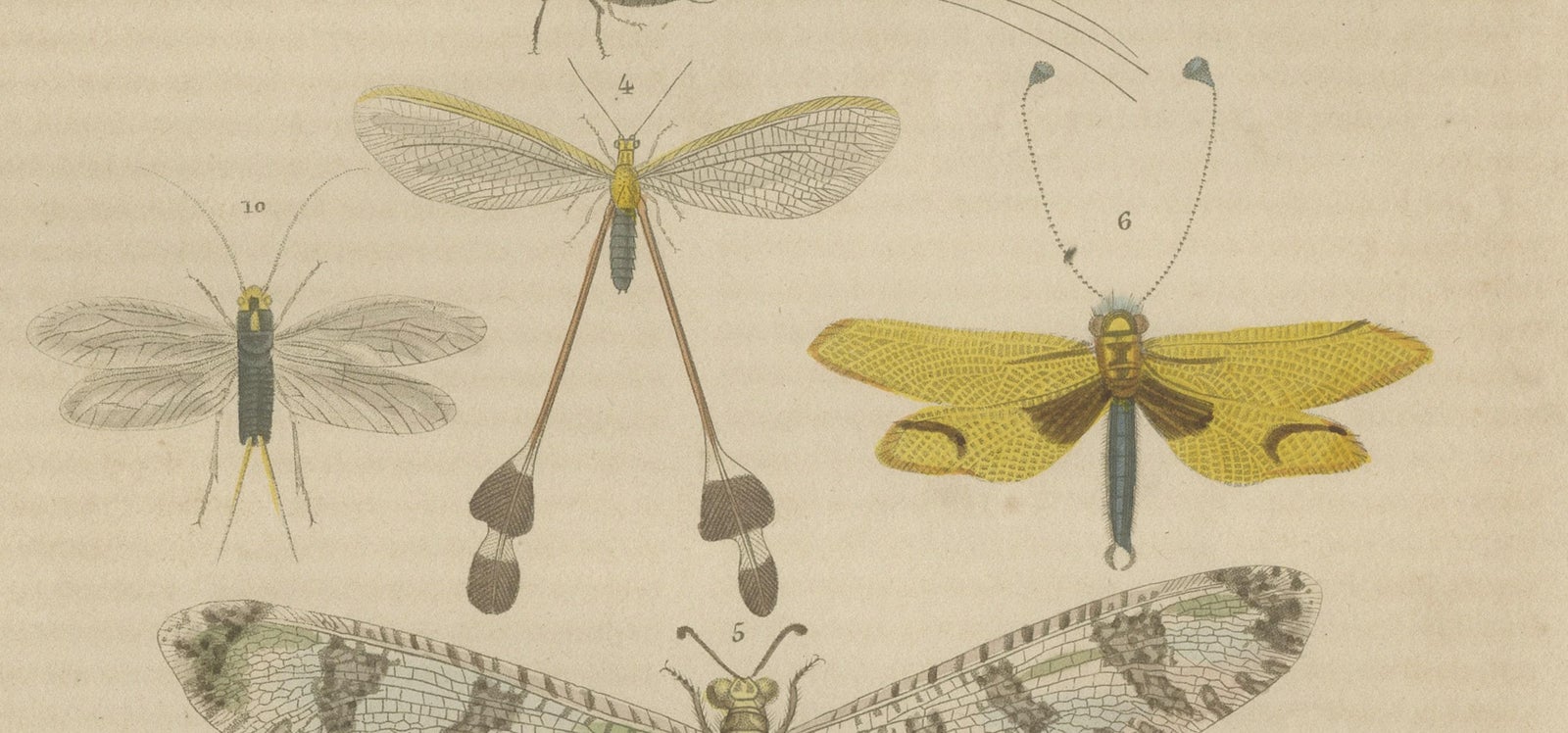
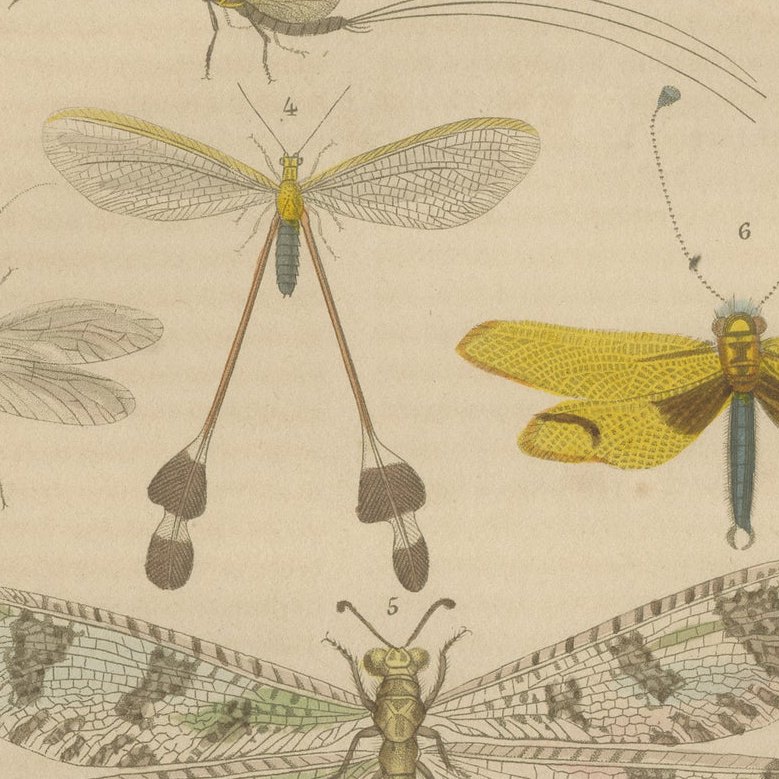
4. Névroptère à balanciers - This could refer to an insect within the Neuroptera order, possibly a lacewing, known for their intricate wing venation and long antennae.
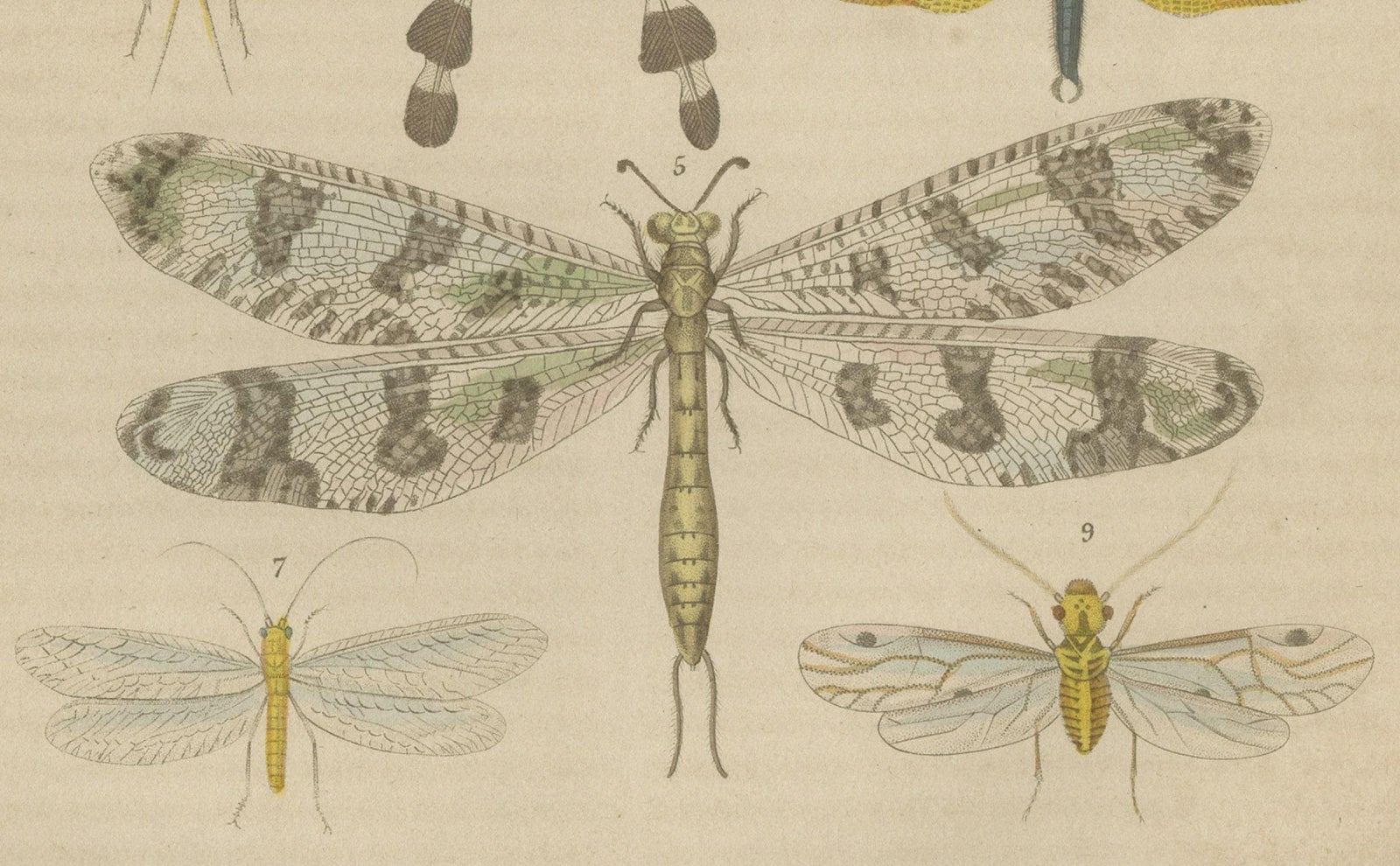
5. Fourmilion - Also known as antlions, these insects are known for the predatory habits of their larvae, which create pits in sand to trap ants.
6. Ascalaphe italien - This is another insect from the Neuroptera order, perhaps a species of owlflies, which are known for their clubbed antennae and large eyes.
7. Hémérobe chrysopa - Commonly called green lacewings, these insects are beneficial as they feed on aphids and other garden pests.
8. Raphidie serpent - Likely referring to snakeflies, they have elongated prothoraxes and are predatory insects.
9. Psocque à deux points - This could refer to a species of bark lice or booklice, known for living in bark or old books.
10. Pérlide à deux queues - This is likely a stonefly, which is found near clean, fast-running water and has two tail-like appendages.
The print is a typical representation of entomological studies from the 18th and 19th centuries, where detailed illustrations were crucial for the study and classification of insects. The style suggests it may have been created for a scientific book or collection. The labels are in French, and the terms used may be either outdated or using older nomenclature, as common names and scientific understanding of these species have evolved.
This print not only serves as a scientific record but also as a work of art, reflecting the dual interests of the Victorian era in both natural history and illustration. It is a remarkable piece that would be a significant addition to any collection of natural history art or an elegant decorative piece for those with a taste for the historic and the natural world.
The style of the illustration is reminiscent of 19th-century scientific prints, which were often used in natural history books to document various species.
More info on the book in which it was published:
The 'Dictionnaire Classique des Sciences Naturelles' by Pierre Auguste Joseph Drapiez stands as a remarkable testament to 19th-century natural sciences. Published in Brussels in 1845, this work represents an expansive collation of knowledge, building upon the pioneering works of Buffon, Daubenton, Lacepede, Cuvier, de Jussieu, and other influential naturalists.
The prints within this compendium likely showcase a rich amalgamation of artistic precision and scientific accuracy. Drapiez, himself a Belgian naturalist, would have aimed for detailed representations of flora, fauna, and scientific phenomena, mirroring the illustrative styles prevalent during his time. Given the era's emphasis on illustration, these prints were likely engraved meticulously, possibly portraying intricate anatomical details or lifelike depictions of the natural world.
With Drapiez's background in natural history, the prints might bear testament to his commitment to scientific authenticity, aiming to educate and inspire scholars and enthusiasts alike. These engravings would have complemented the text, offering visual aids that elucidate the concepts and specimens discussed in the volume.
Overall, the prints of 'Dictionnaire Classique des Sciences Naturelles' likely serve as both artistic representations and invaluable scientific resources, encapsulating the essence of 19th-century natural history exploration and documentation.