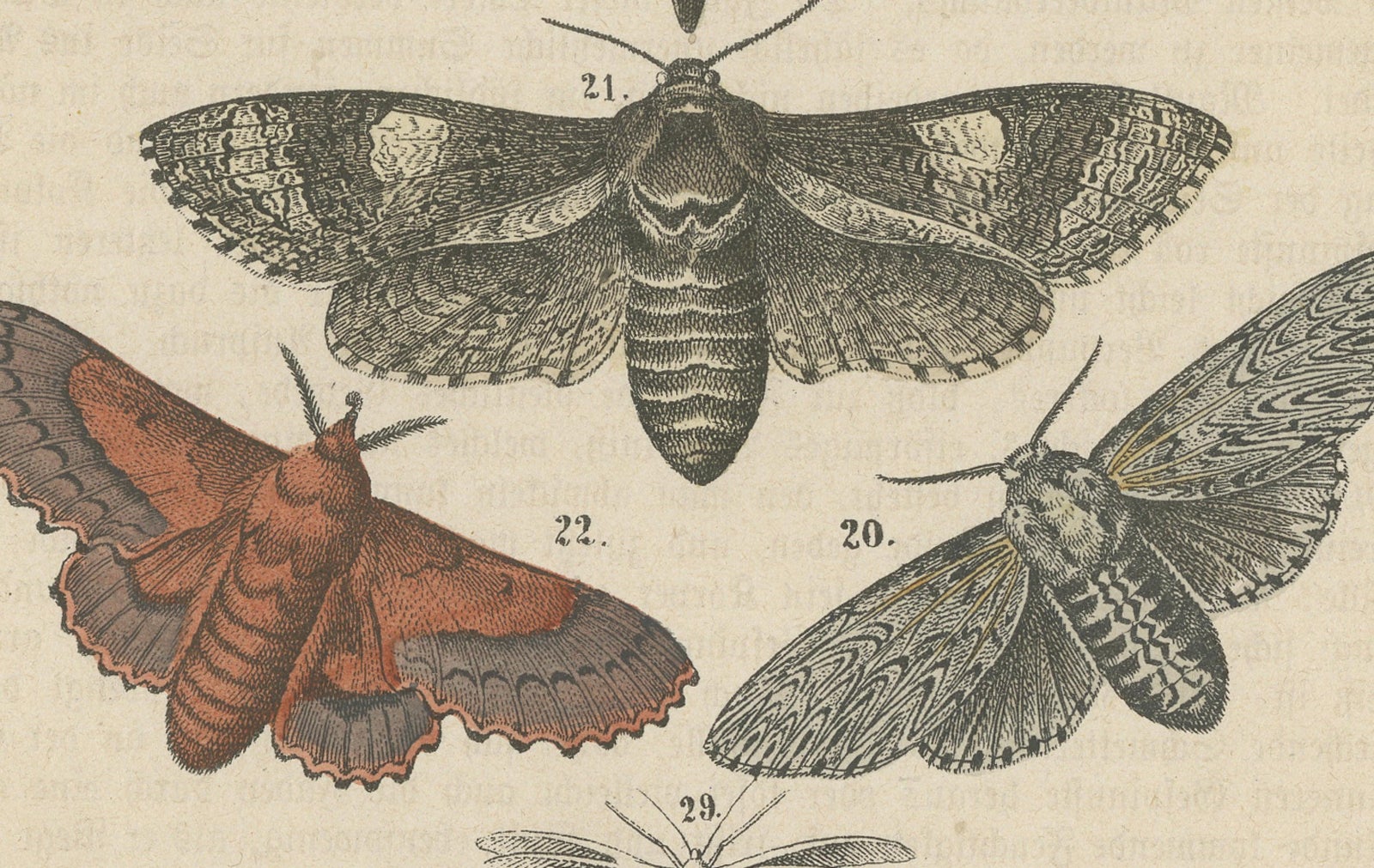
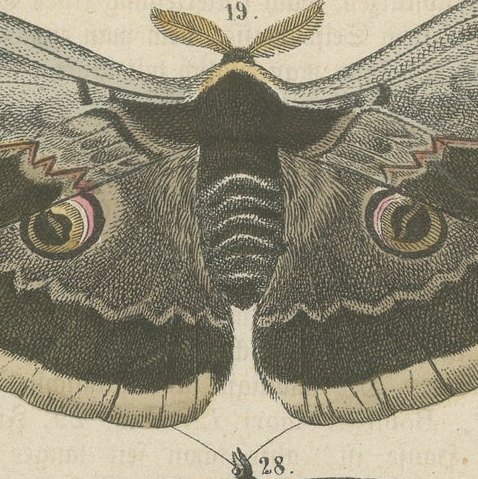
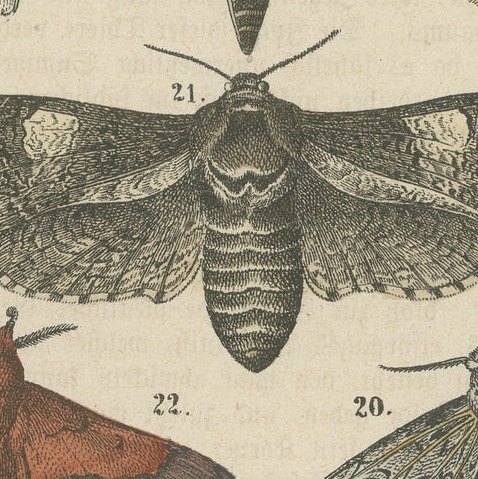
Close-ups
Framed and on the wall
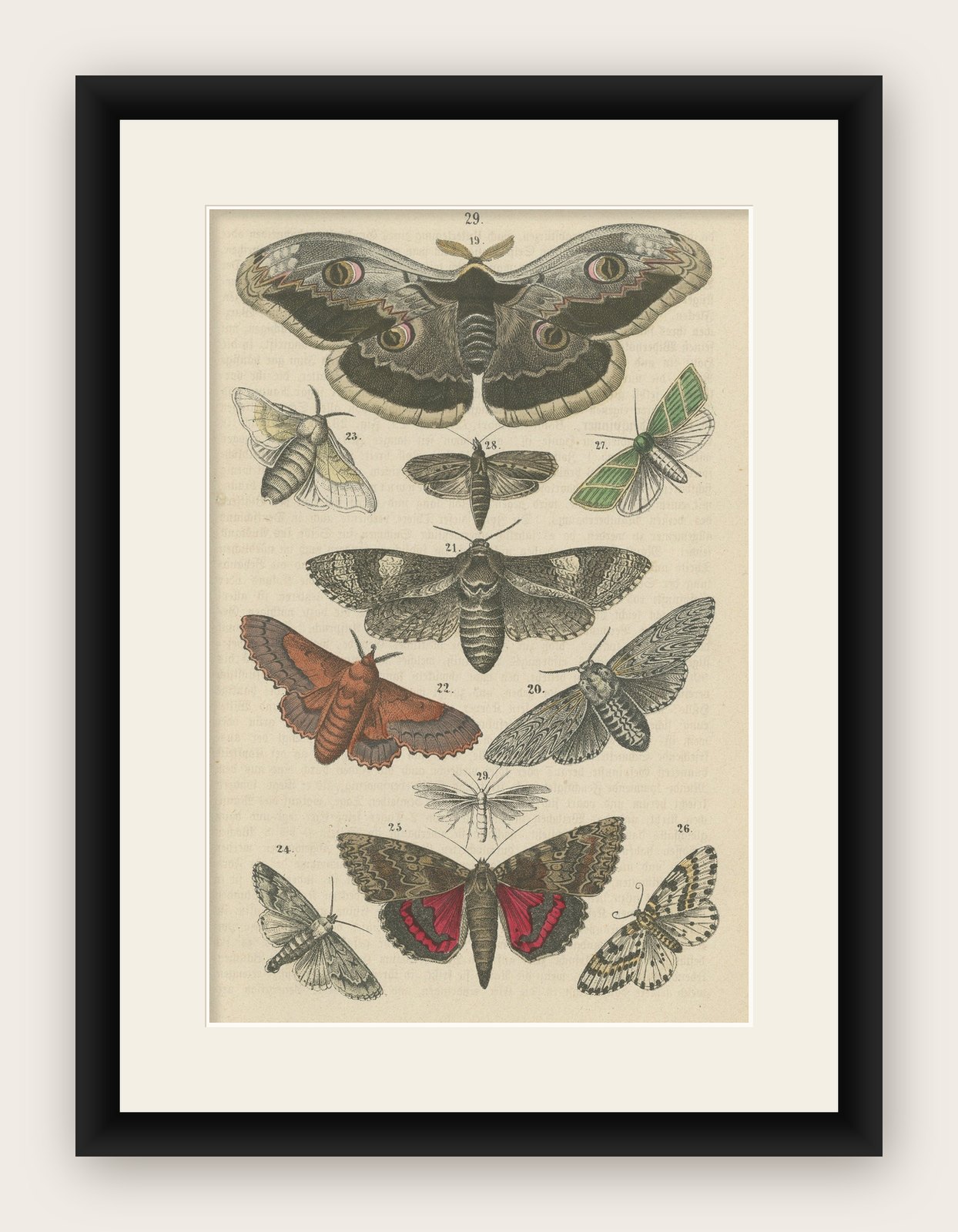
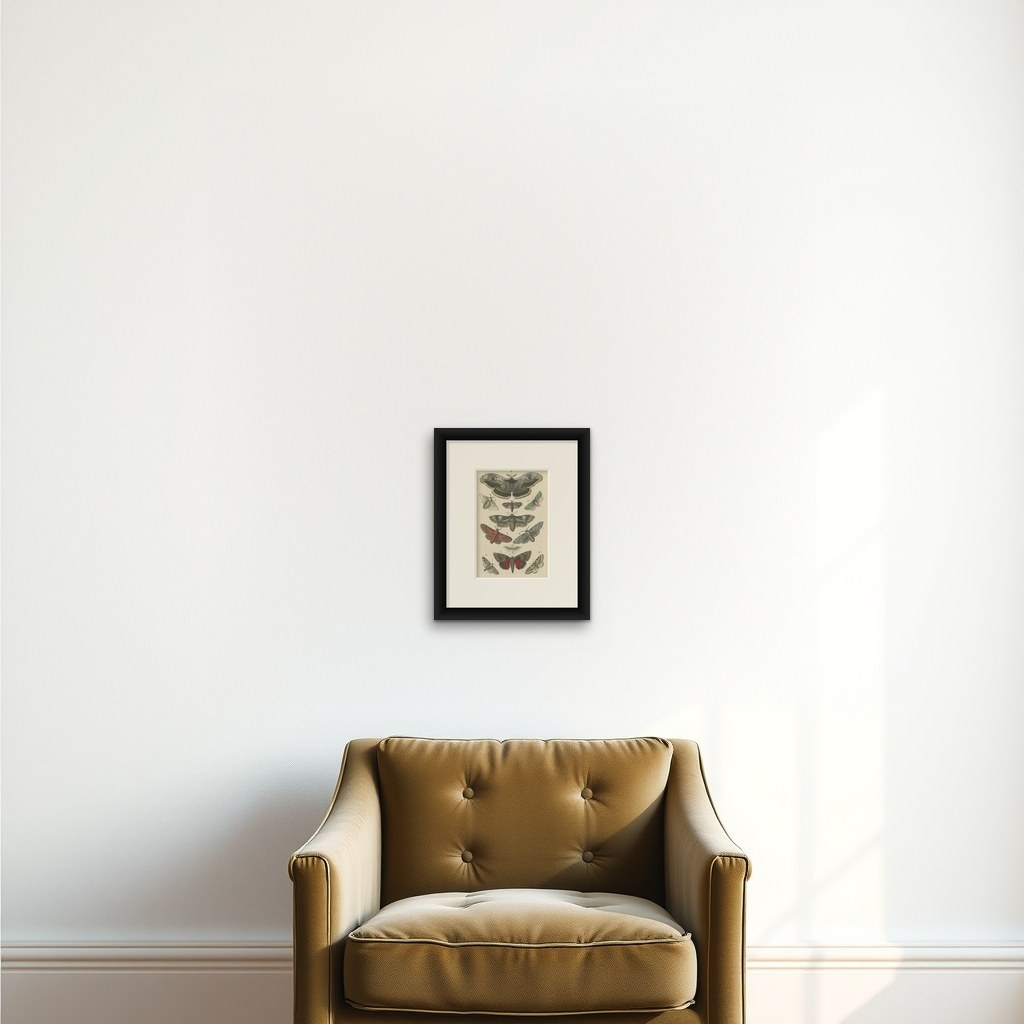

Frame and rooms are illustrations of how the print could look; the description says what is included.
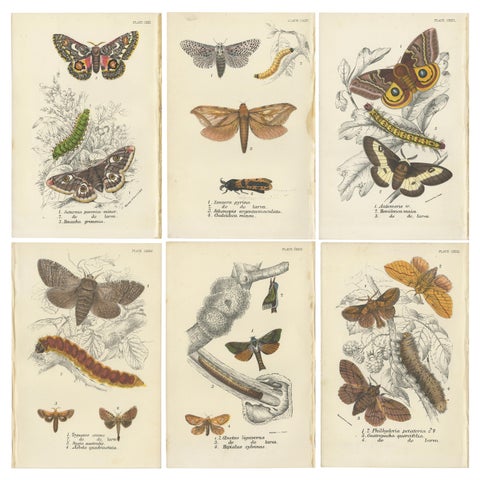
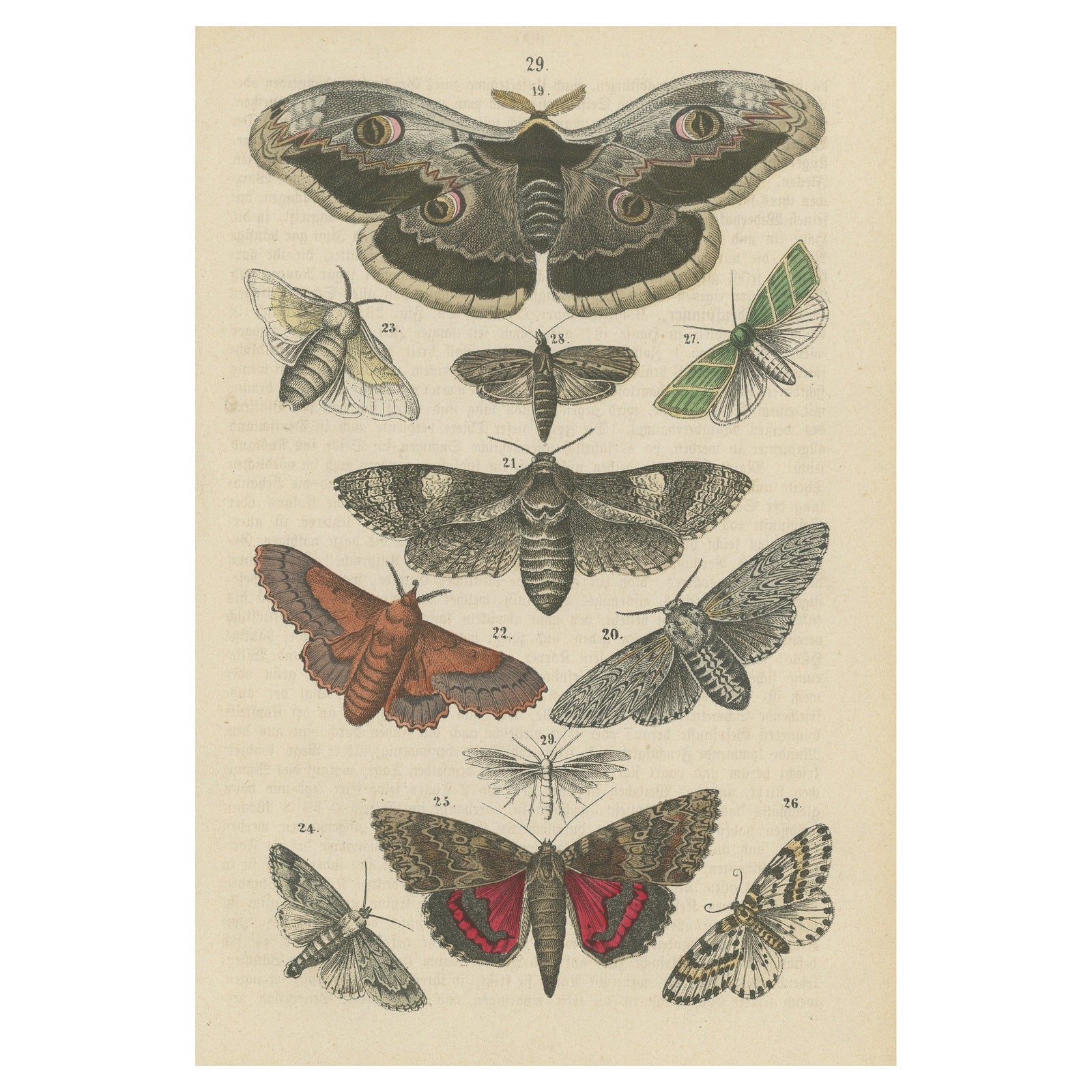
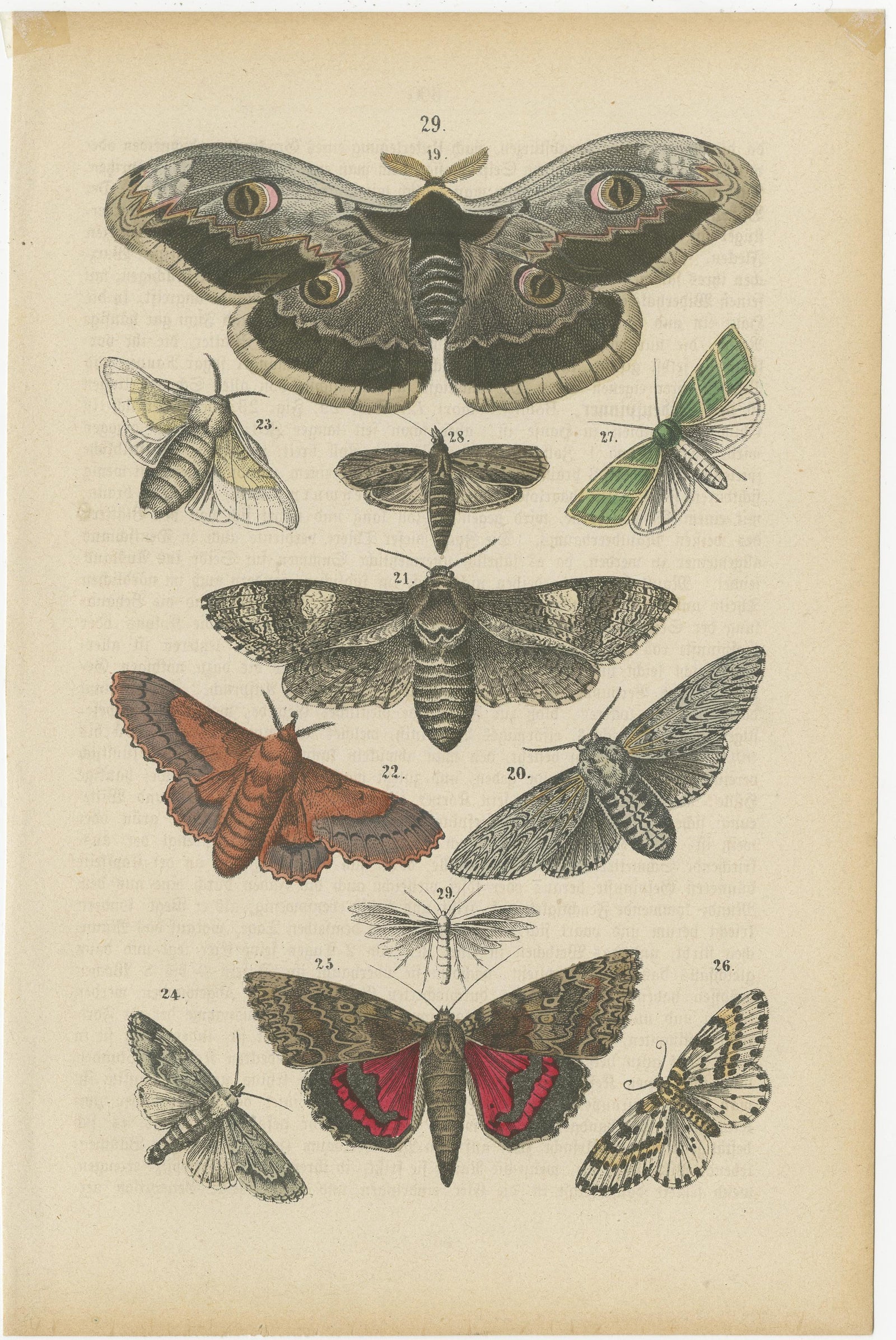
A Study in Wings: Hand-Colored Lepidoptera of the 19th Century, c.1895
£110 ($145, €130)
Period original, not a reproduction.
Shipped from the Netherlands, flat, insured and tracked, worldwide. Returns accepted within 14 days.
- Date
- 1895
- Size
- 8.8 × 5.8 in (22.3 × 14.7 cm)
- Condition
- Fair. Age-related toning. Tape residu on top margin, blank verso. Please study image carefully.
- Period
- Late 19th century
- Section
- Insects and butterflies
- Reference
- f_39014732
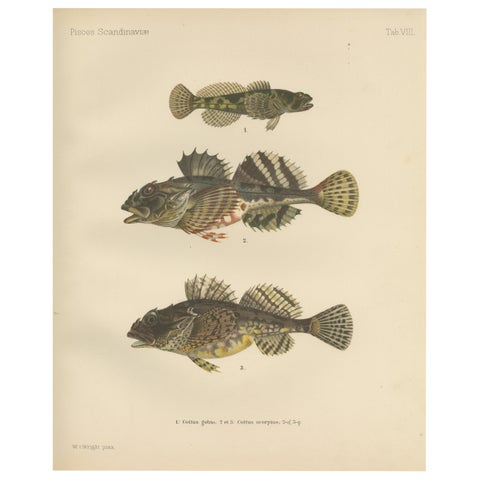
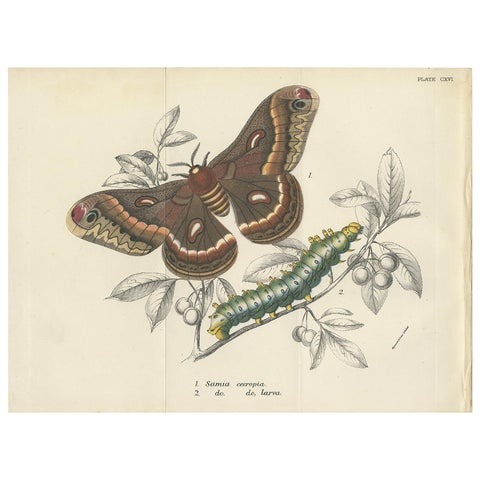
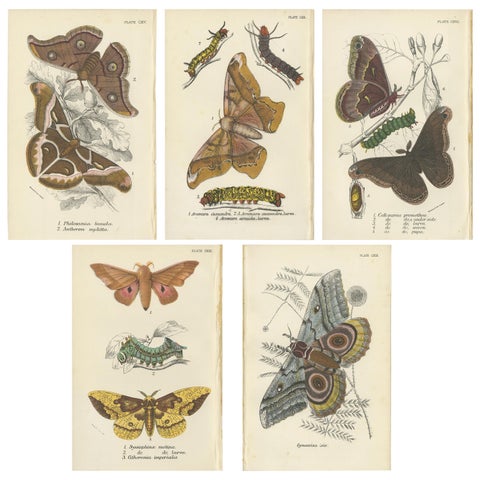
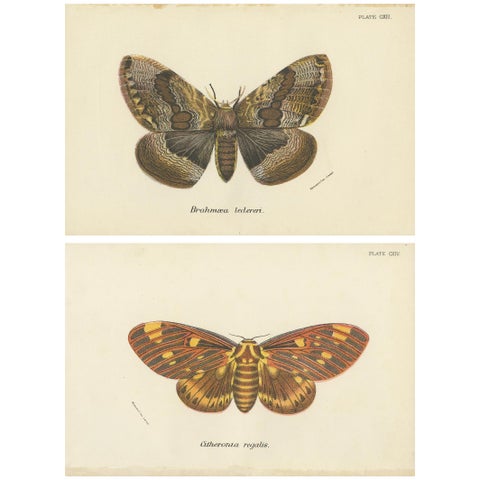
A hand-colored illustration of various insect species, created around 1866.
Th print is potentially part of a publication by W. G. Sebald, a well-known German writer, also known as Max Sebald. He was an avid collector of art and had an interest in natural history.
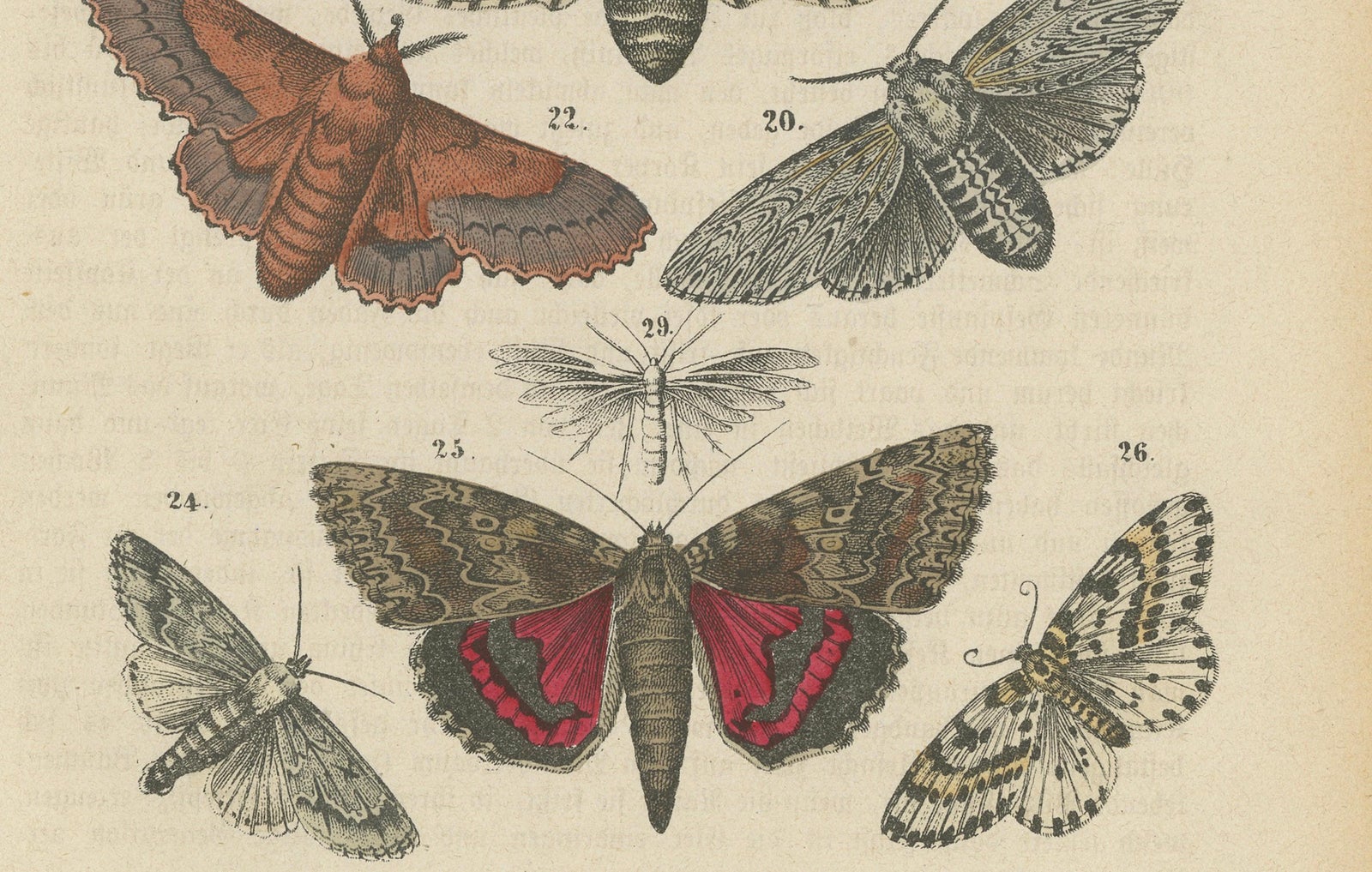
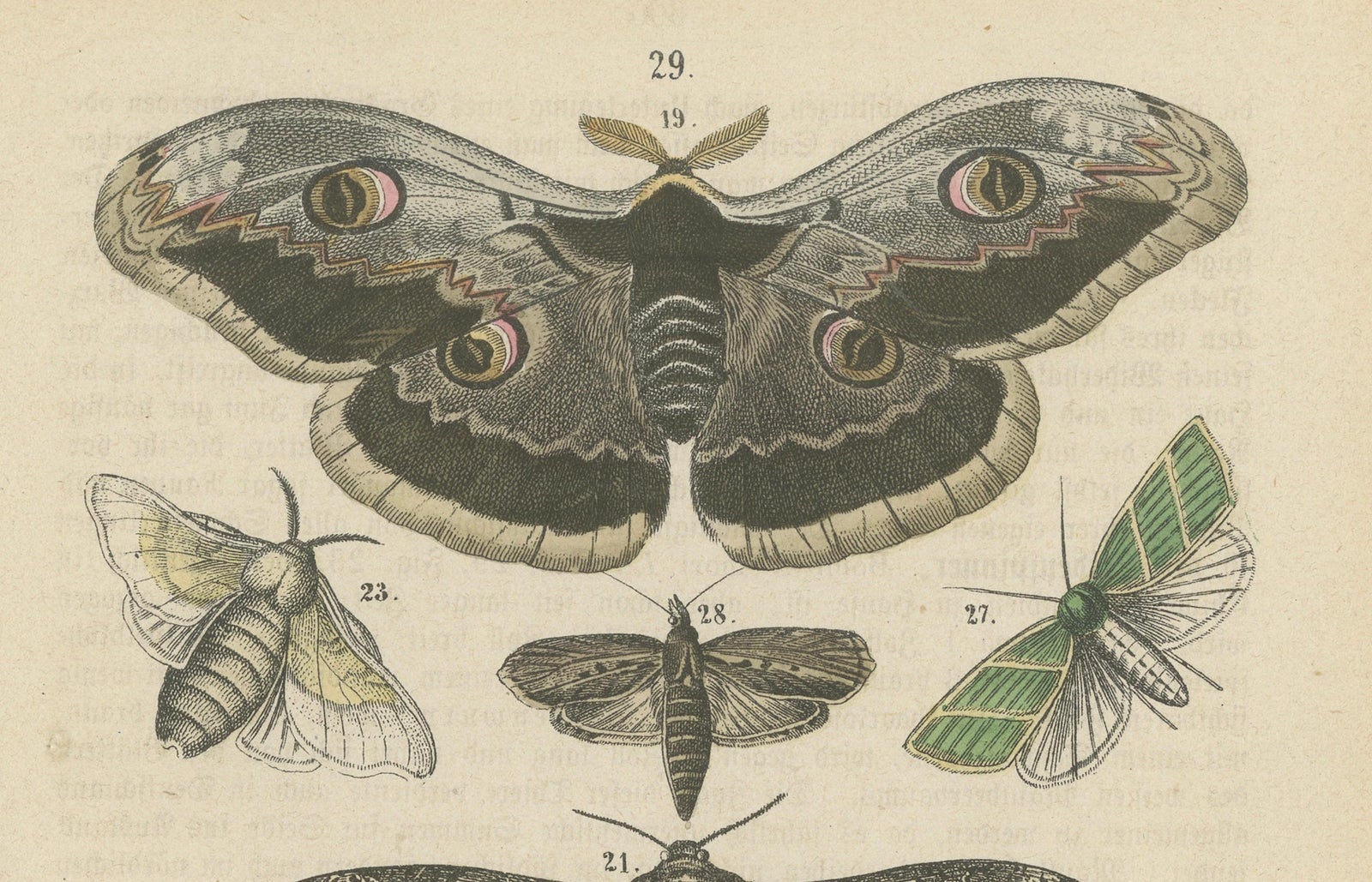
Specific types of moths and butterflies projected:
Emperor Moth (Saturnia pavonia): Typically, this moth has a distinctive eye pattern on its wings and is native to Europe.
Lappet (Gastropacha quercifolia): Known for the leaf-like appearance of their wings.
Red Underwing (Catocala nupta): This moth has cryptic forewings and bright red or orange hindwings.
Silkworm (Bombyx mori): Famous for its use in silk production, the domesticated silkworm moth has a white, stout body and reduced wings.
Dagger (Acronicta psi): The dagger moths are so named for the dagger-like markings on their wings.
More research needed.