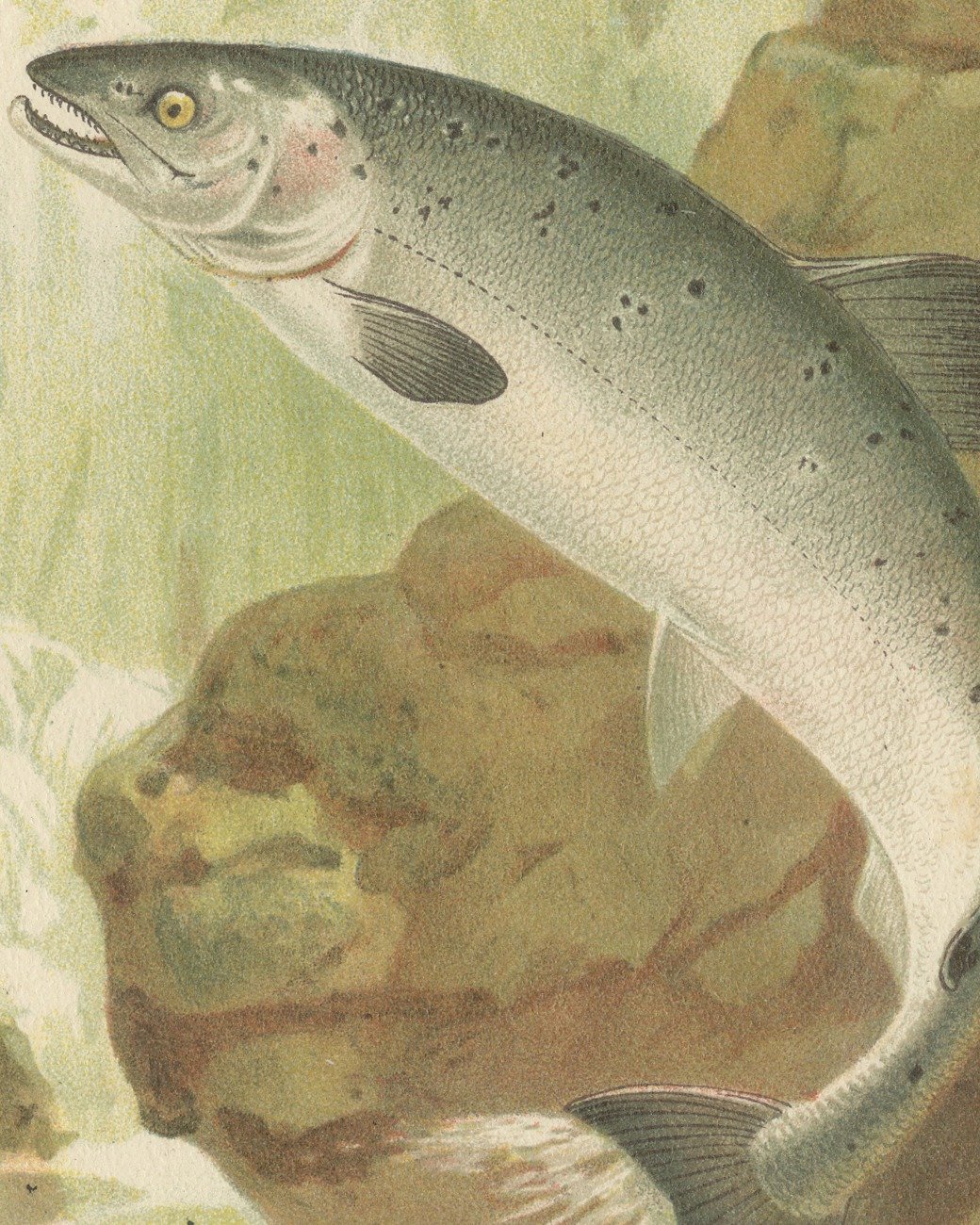
Close-ups
Framed and on the wall
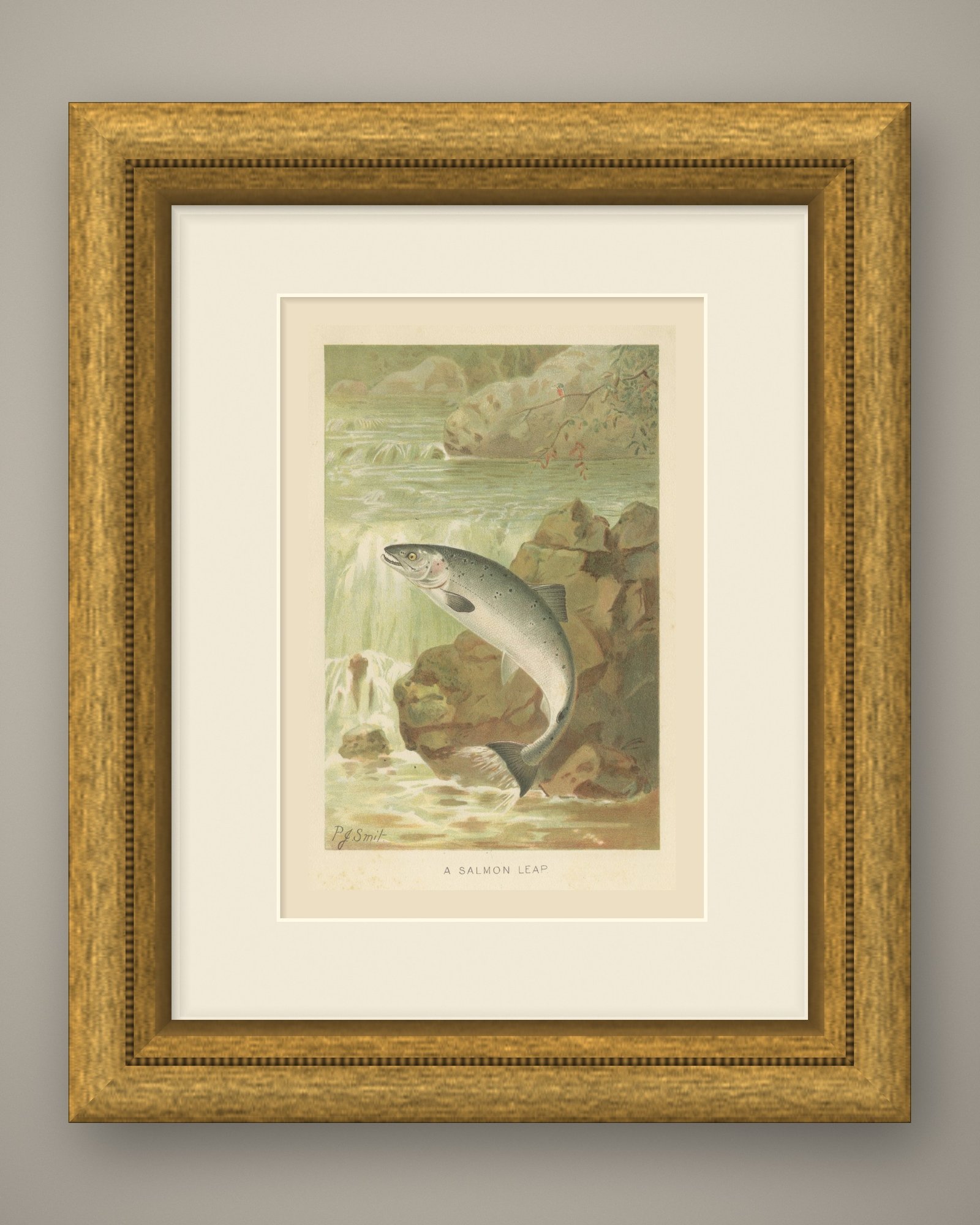
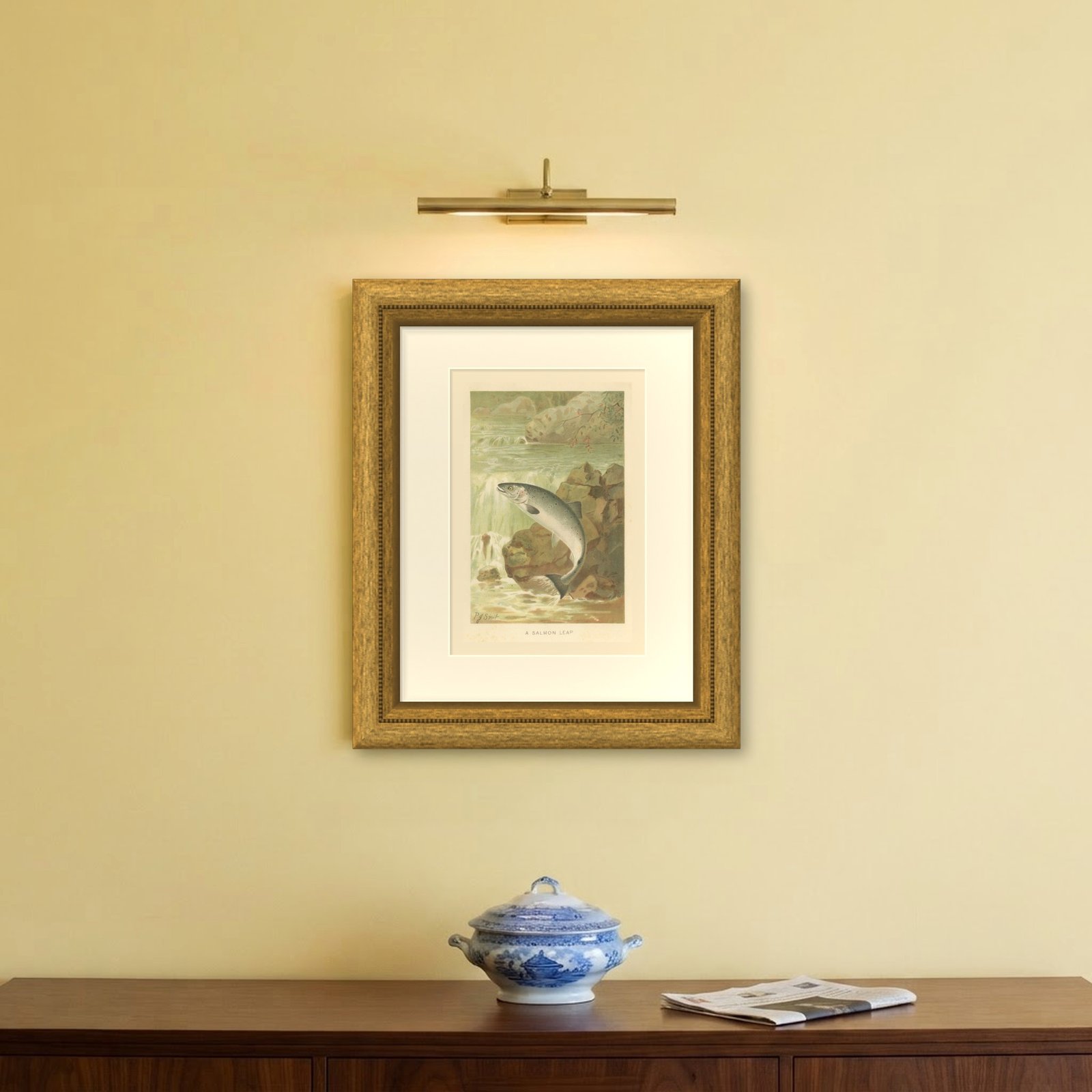
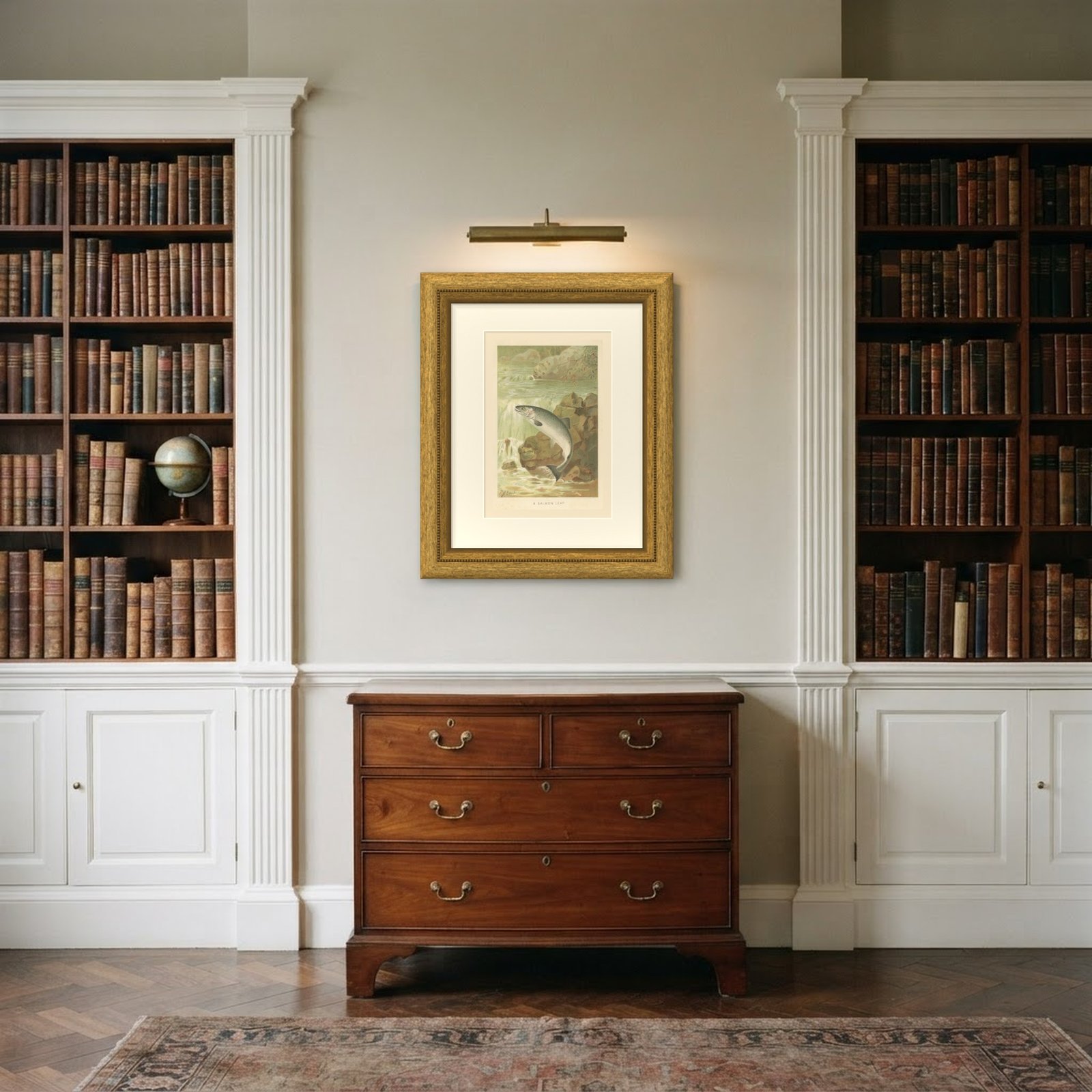
Frame and rooms are illustrations of how the print could look; the description says what is included.
A Salmon Leap, Antique Chromolithograph of a Leaping Salmon, Smit, 1896
$185 (£140, €165)
Period original, not a reproduction.
Shipped from the Netherlands, flat or rolled, insured and tracked, worldwide. Returns accepted within 14 days.
- Date
- 1896
- Size
- 10 × 6.7 in (25.5 × 17 cm)
- Technique
- Chromolithograph
- Coloring
- Printed color
- Condition
- Good. Light uneven toning, browner towards the edges. Marked handling soiling along the left, right and top edges. A few small foxing spots in the margin. Remains of a paper guard along the left edge.
- Period
- Late 19th century
- Section
- Fish and shells
- Reference
- BG-13341-59
What the condition grades mean
- Excellent
- Bright and clean, with no faults worth mentioning.
- Very good
- Only light signs of age, such as faint toning.
- Good
- Normal signs of age for a sheet of this period: toning, some foxing, small marks or neat old repairs.
- Fair
- Clear faults such as staining, tears or repairs, priced to match.
Every fault we see is written in the condition note, and the whole sheet is shown uncropped in the photos.
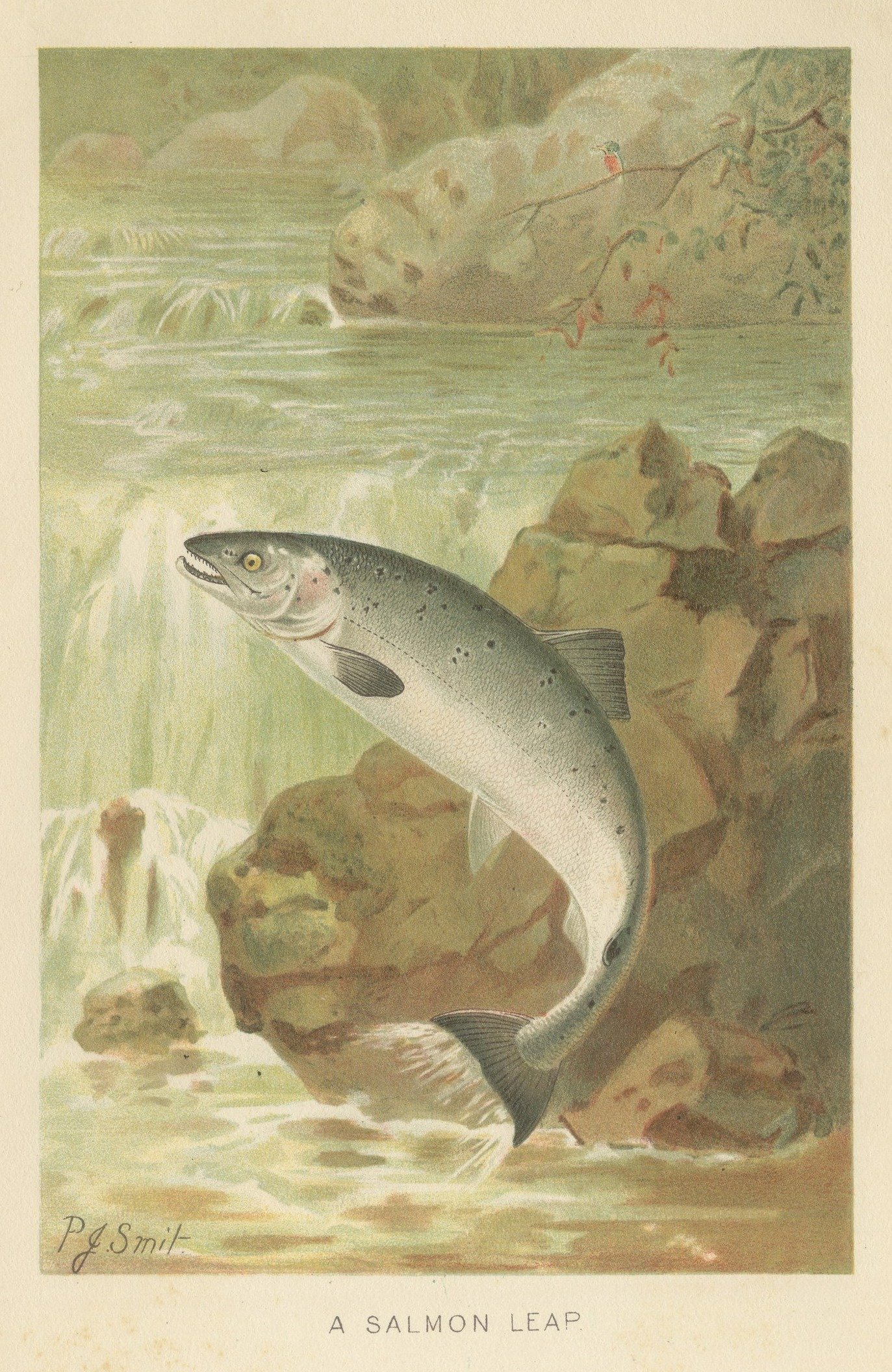
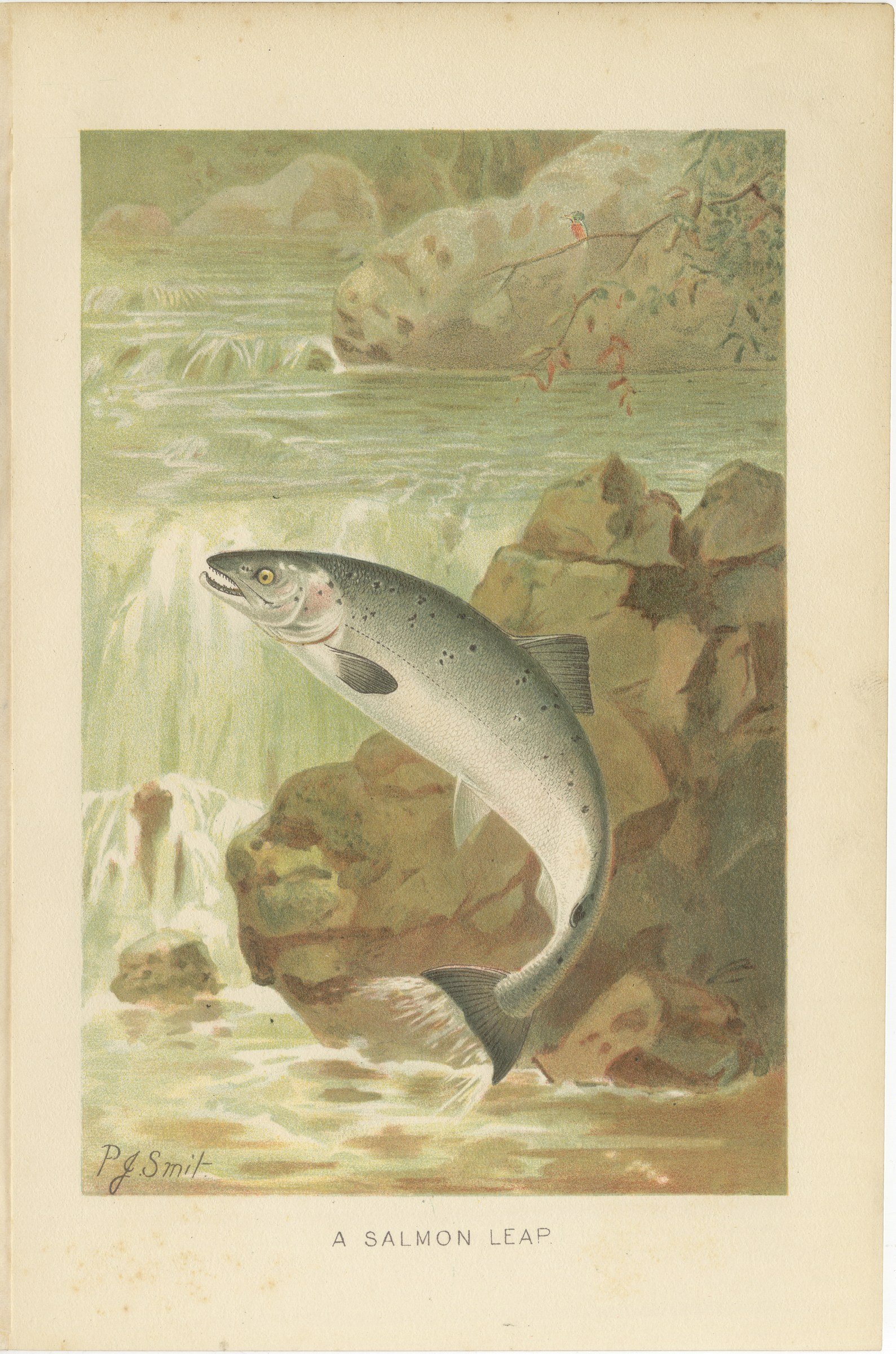
This is an original antique chromolithograph, printed in color, from 1896. The caption printed beneath the image reads "A SALMON LEAP."
A salmon is caught in mid leap at the foot of a fall, its silver body arched with the head up to the left and the tail curling down to the lower center. The flank is dotted with small black spots and touched with pink at the gill cover, and the open jaw shows its teeth. White water pours over a ledge at the left and foams around the base of large brown boulders at the right. Higher up the river runs over a further step of rapids between rounded rocks, and at the upper right a kingfisher perches on an overhanging branch with a few leaves turning red. The shallow pool in the foreground reflects the light.
The plate is signed in the image at the lower left by P. J. Smit. No plate number or printer's line appears on the sheet.
The plate comes from The Royal Natural History, a popular illustrated natural history in six volumes edited by the zoologist Richard Lydekker and published in London by Frederick Warne and Co. in 1893 to 1896. The title page that accompanies these plates is dated 1896, which is the date given for this sheet.
Light uneven toning, browner towards the edges. Marked handling soiling along the left, right and top edges. A few small foxing spots in the margin. Remains of a paper guard along the left edge.
This is an original antique plate, not a modern reproduction. This item is sold unframed.