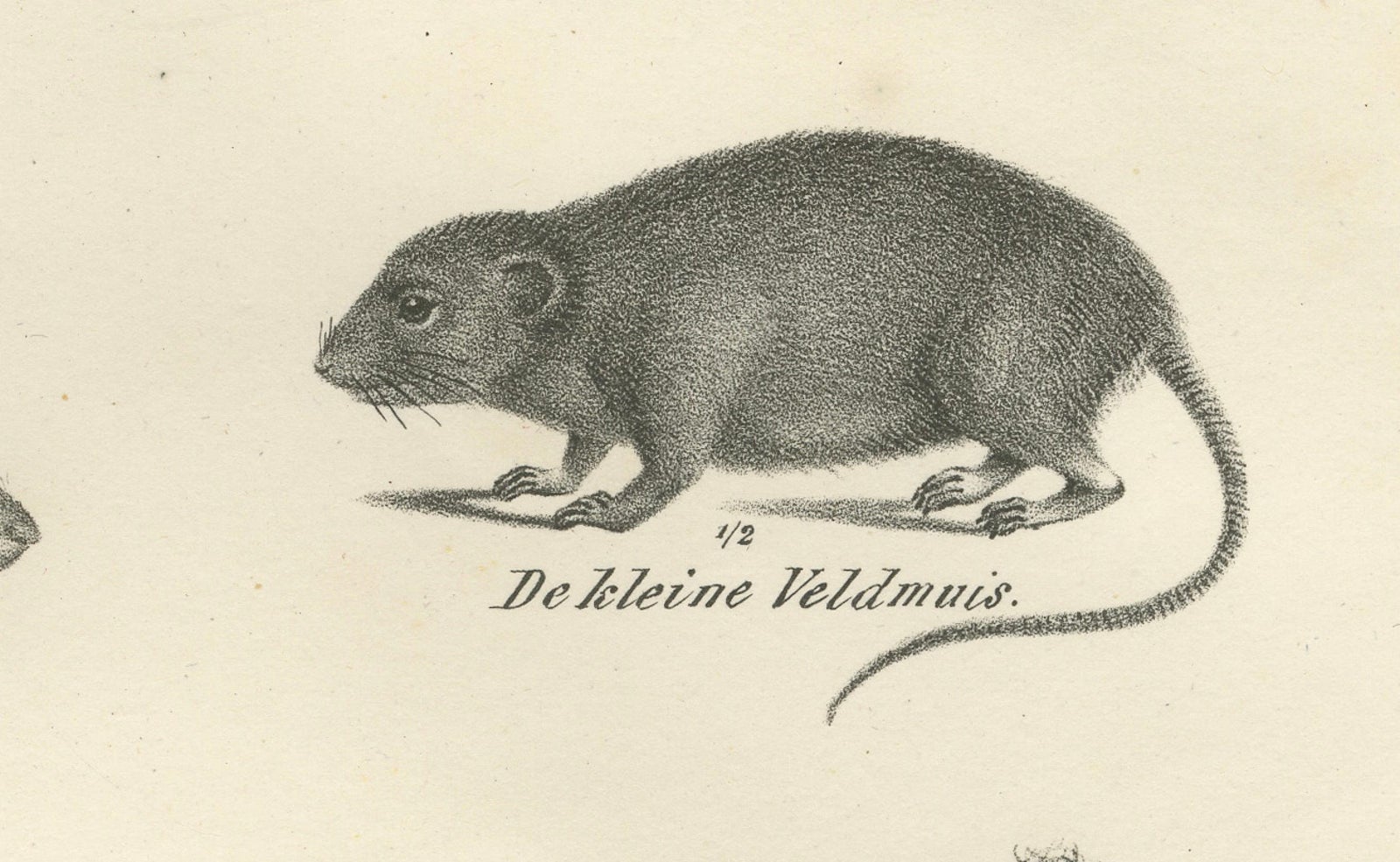
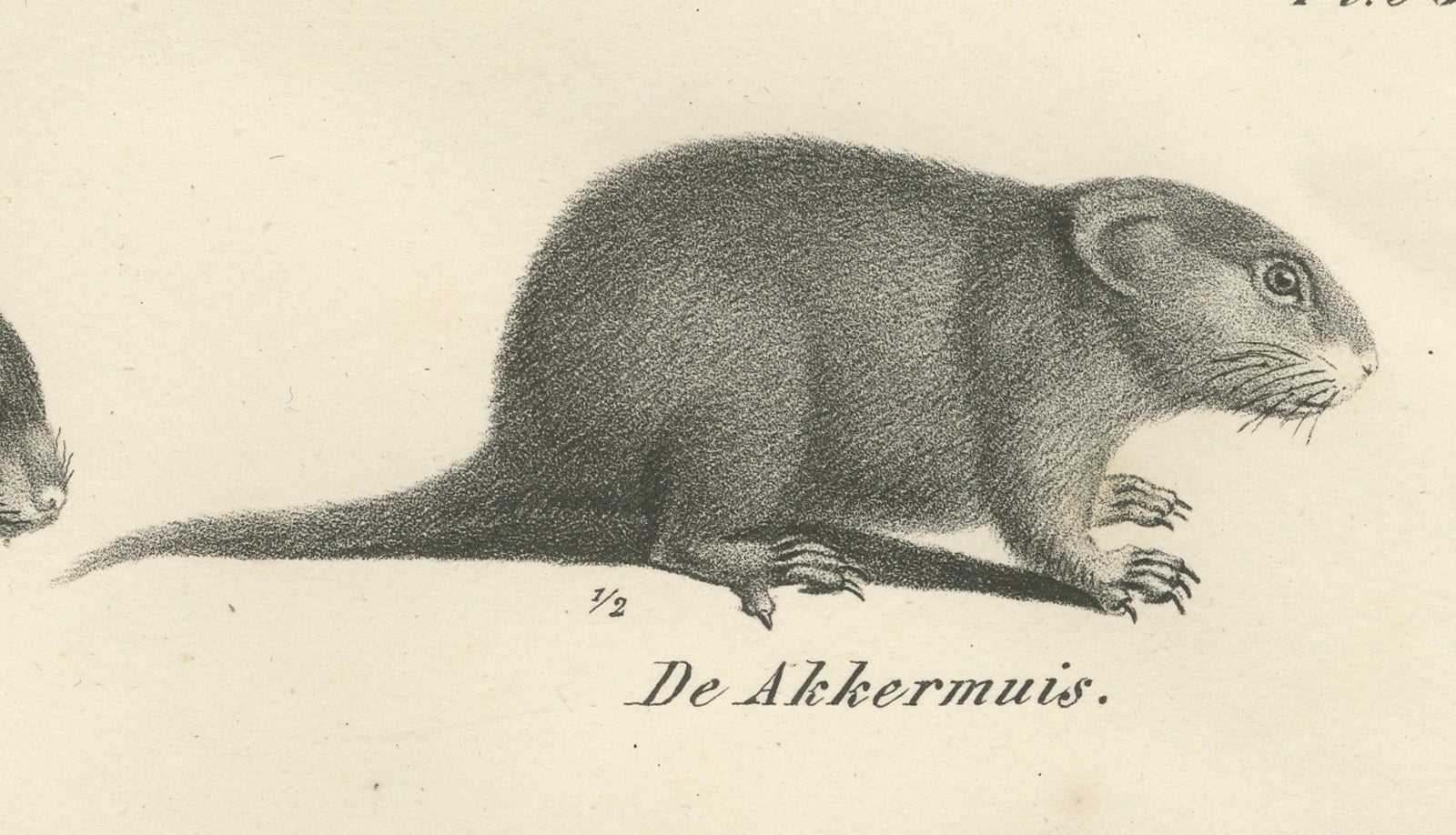
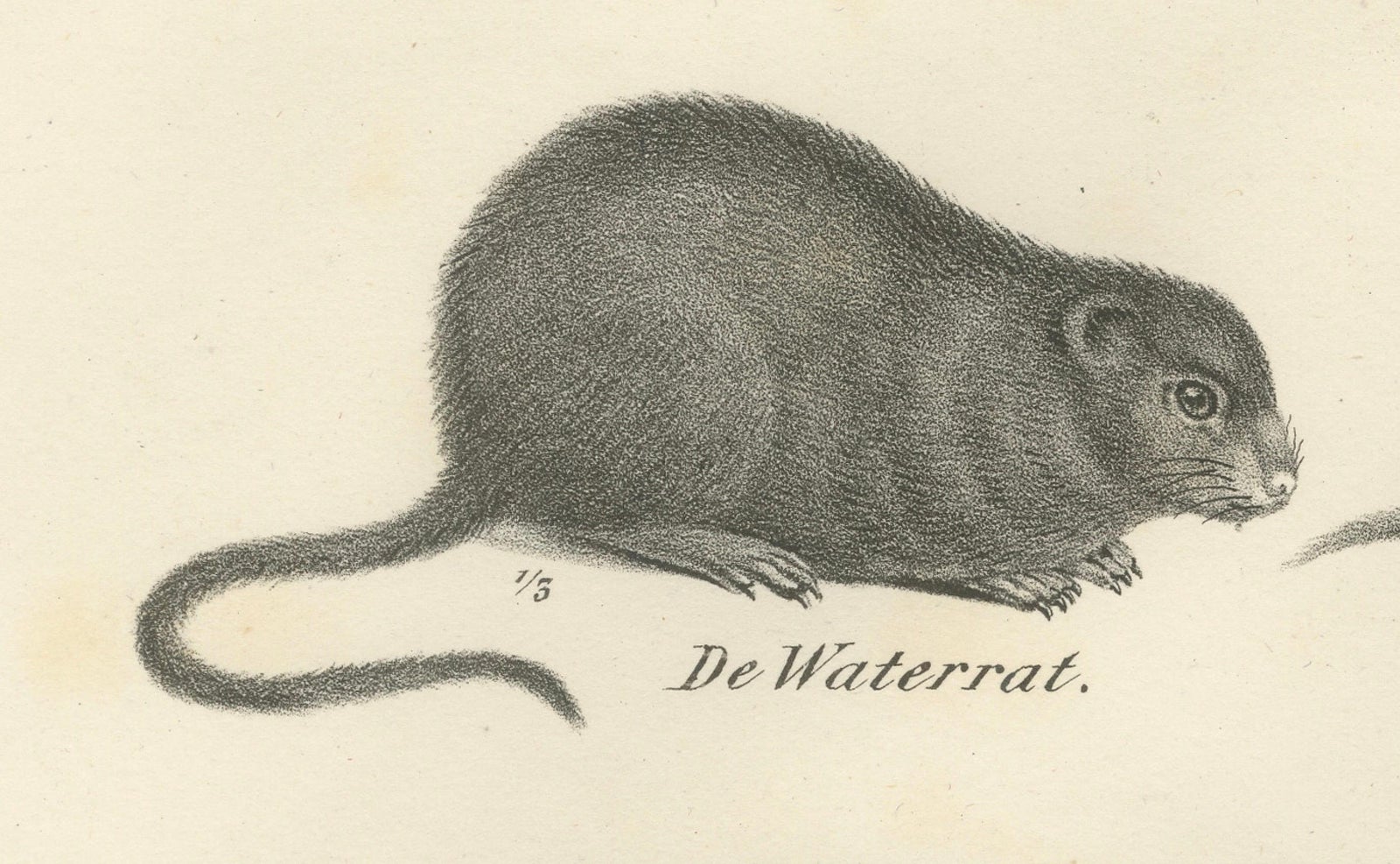
Close-ups
Framed and on the wall
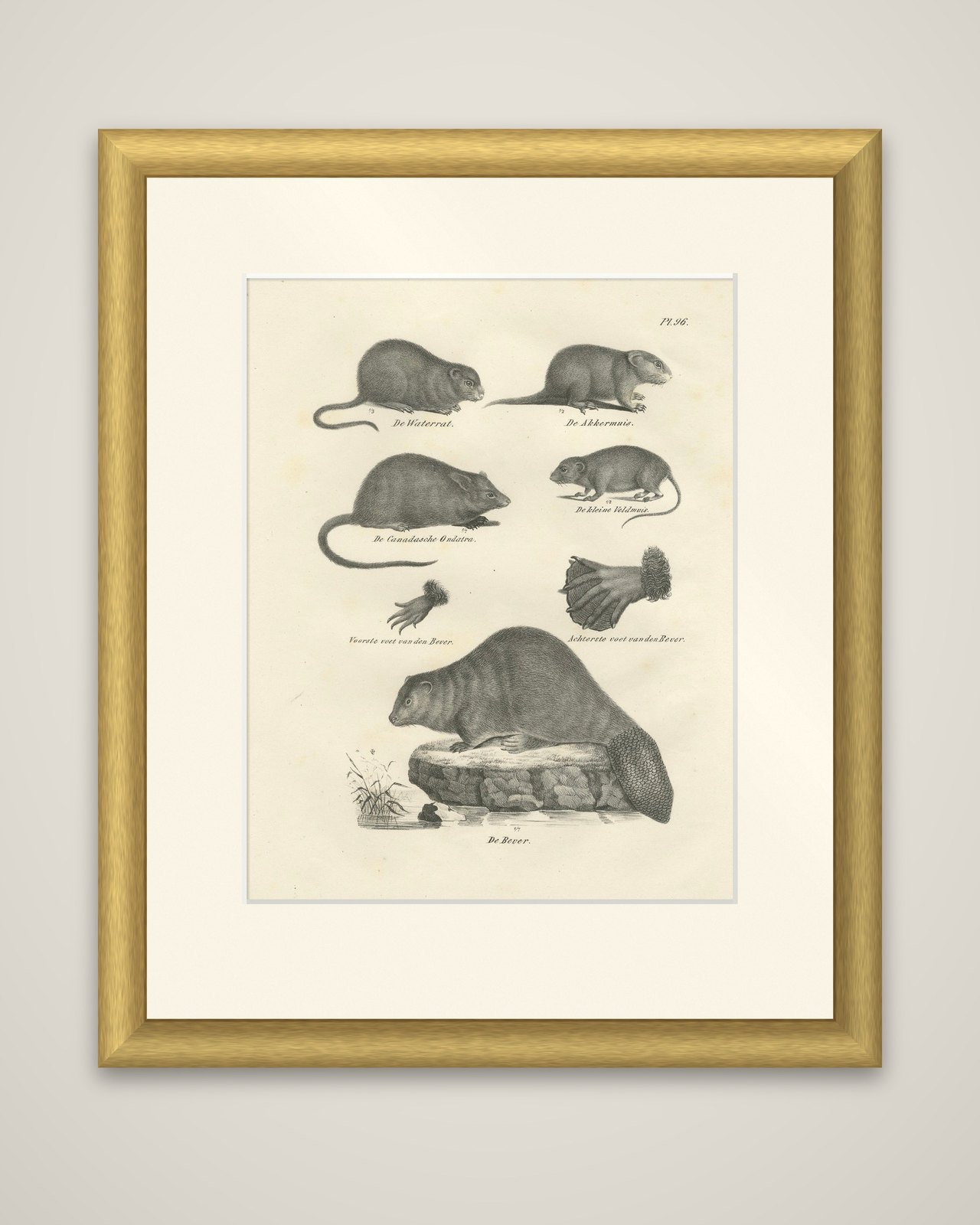


Frame and rooms are illustrations of how the print could look; the description says what is included.
19th-Century Zoological Lithograph of Beavers, Muskrats and Field Mice
£290 ($380, €340)
Period original, not a reproduction.
Shipped from the Netherlands, flat, insured and tracked, worldwide. Returns accepted within 14 days.
- Date
- Not stated
- Size
- 12.7 × 10.2 in (32.2 × 26 cm)
- Condition
- Good. The print remains in near excellent condition, with well-preserved fine details and crisp lithographic lines. The paper shows only minimal signs of aging, with slight foxing in the margins that does not detract from the clarity of the illustration.
- Section
- Mammals
- Reference
- f_43902822
What the condition grades mean
- Excellent
- Bright and clean, with no faults worth mentioning.
- Very good
- Only light signs of age, such as faint toning.
- Good
- Normal signs of age for a sheet of this period: toning, some foxing, small marks or neat old repairs.
- Fair
- Clear faults such as staining, tears or repairs, priced to match.
Every fault we see is written in the condition note, and the whole sheet is shown uncropped in the photos.
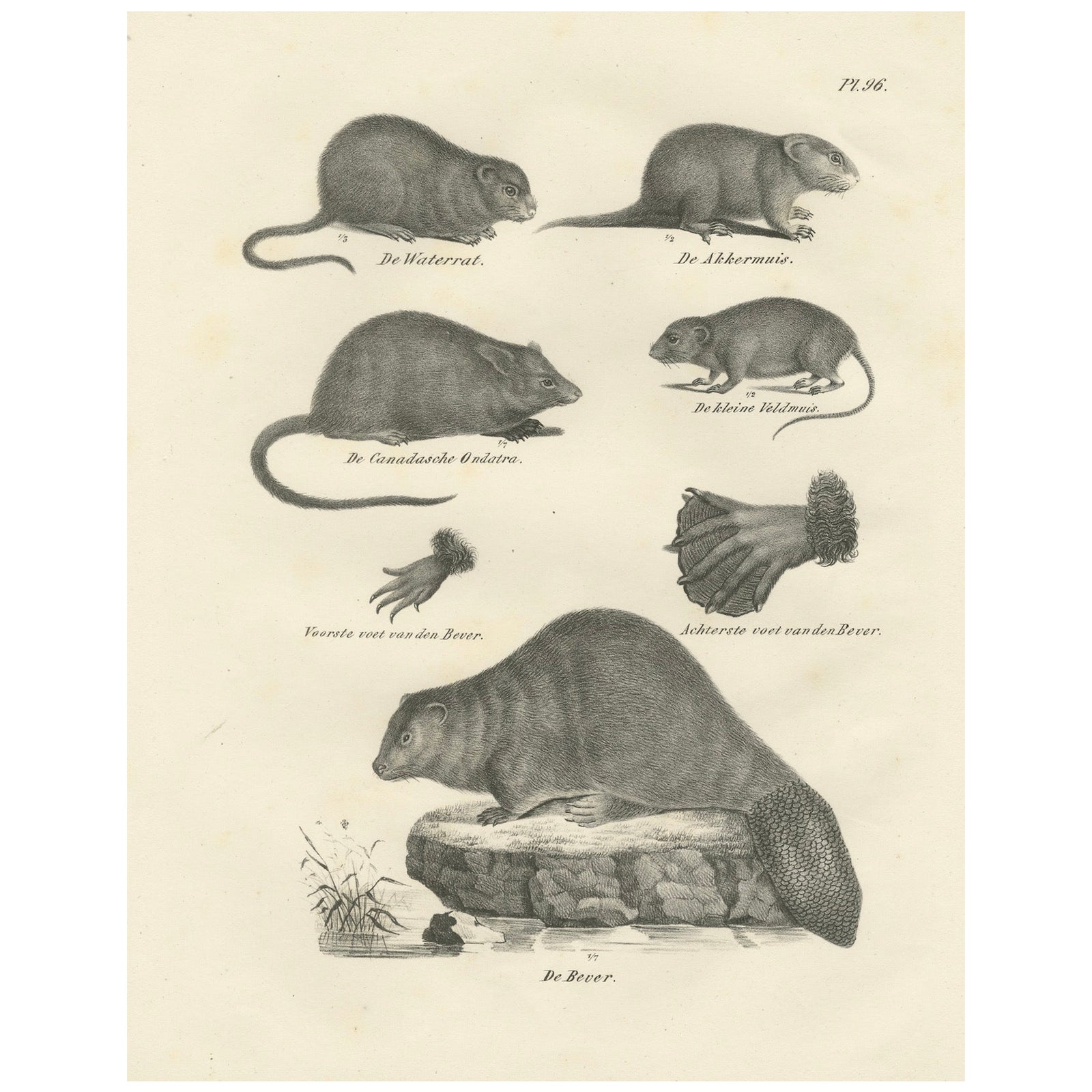
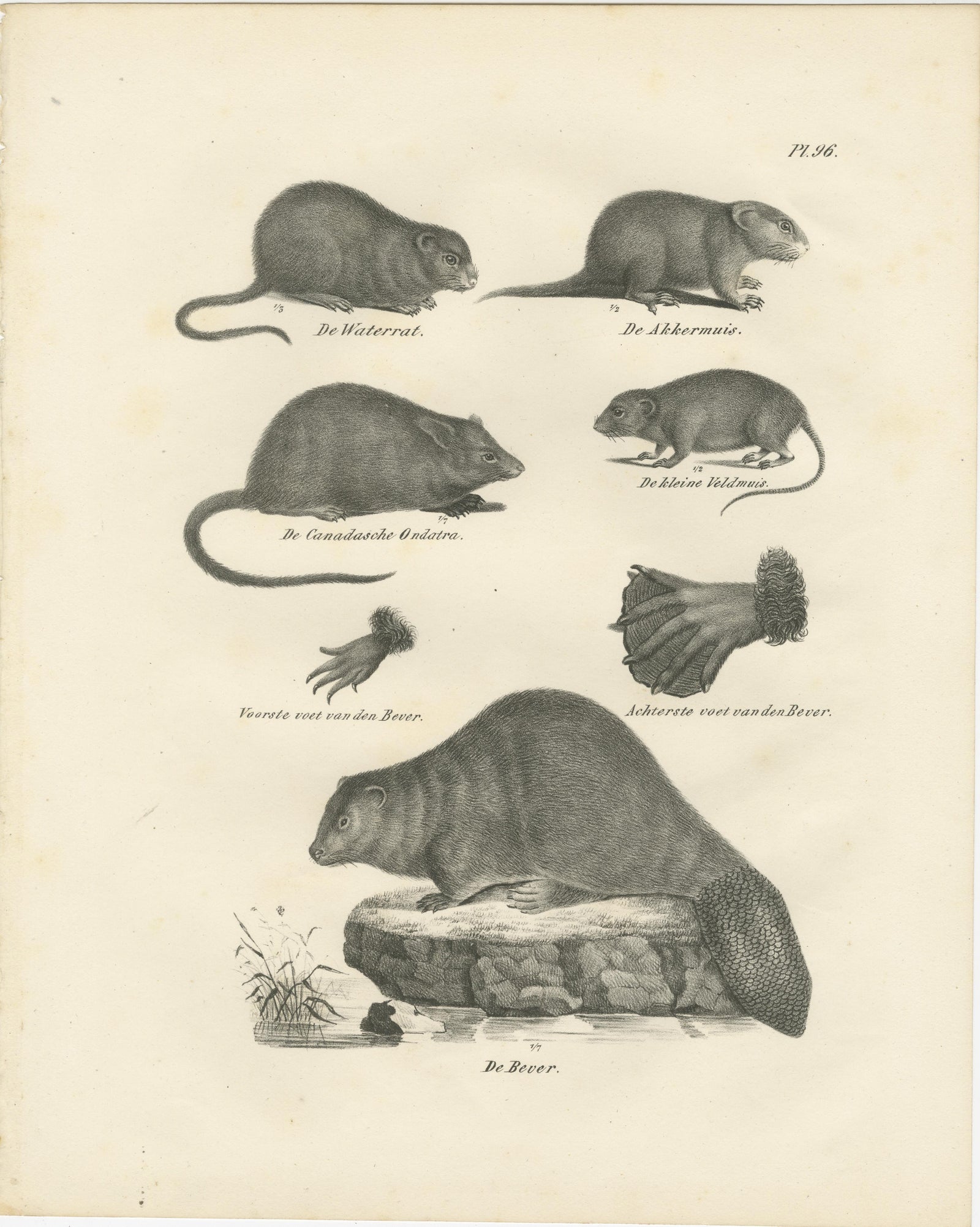
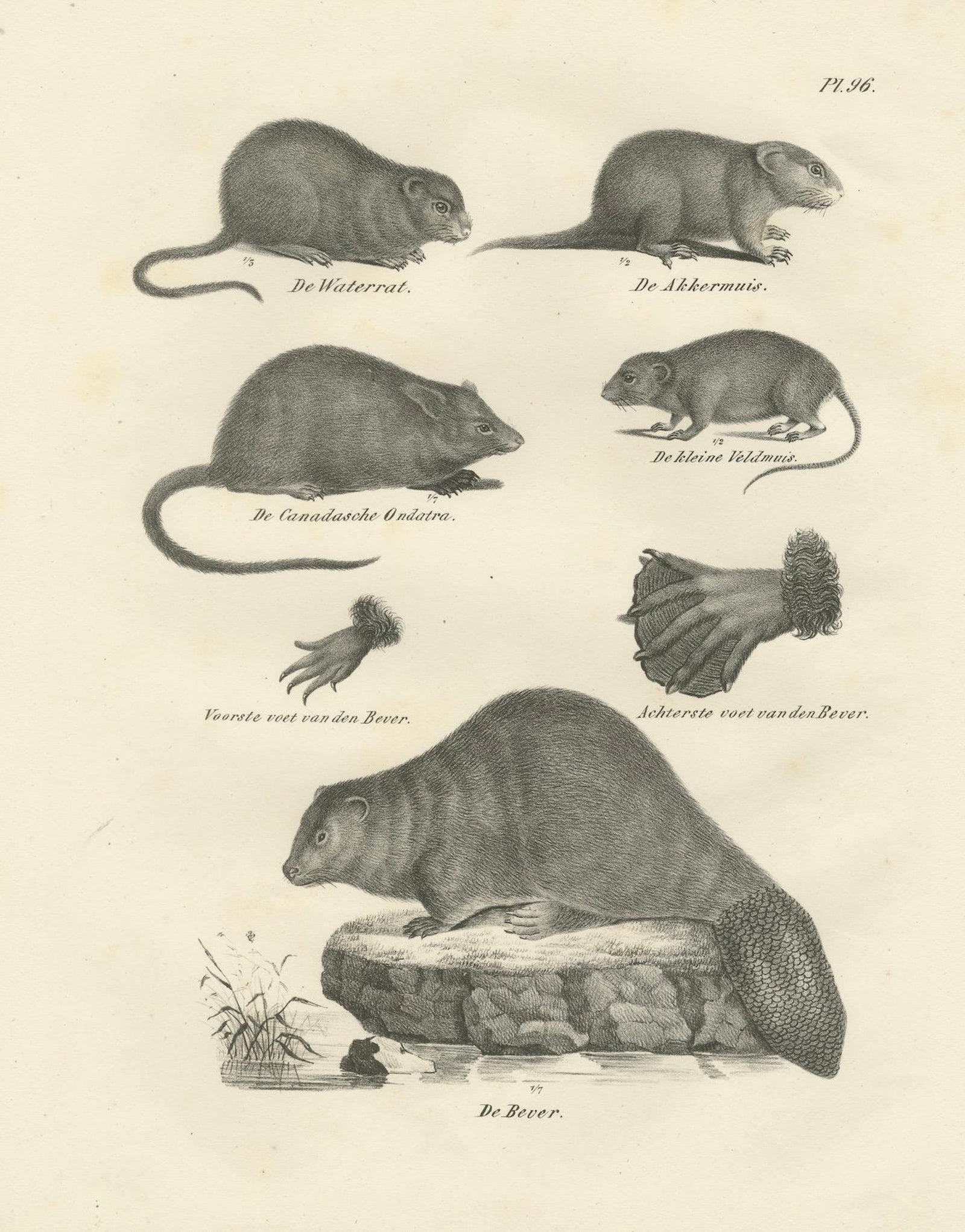
Rodents and beaver, a lithograph from the Dutch natural history work De Zoogdieren, afgebeeld en in hunne levenswijze geschetst, plate 96. The animals are lettered in Dutch under each figure: De Waterrat, De Akkermuis, De Canadasche Ondatra, De kleine Veldmuis and De Bever.
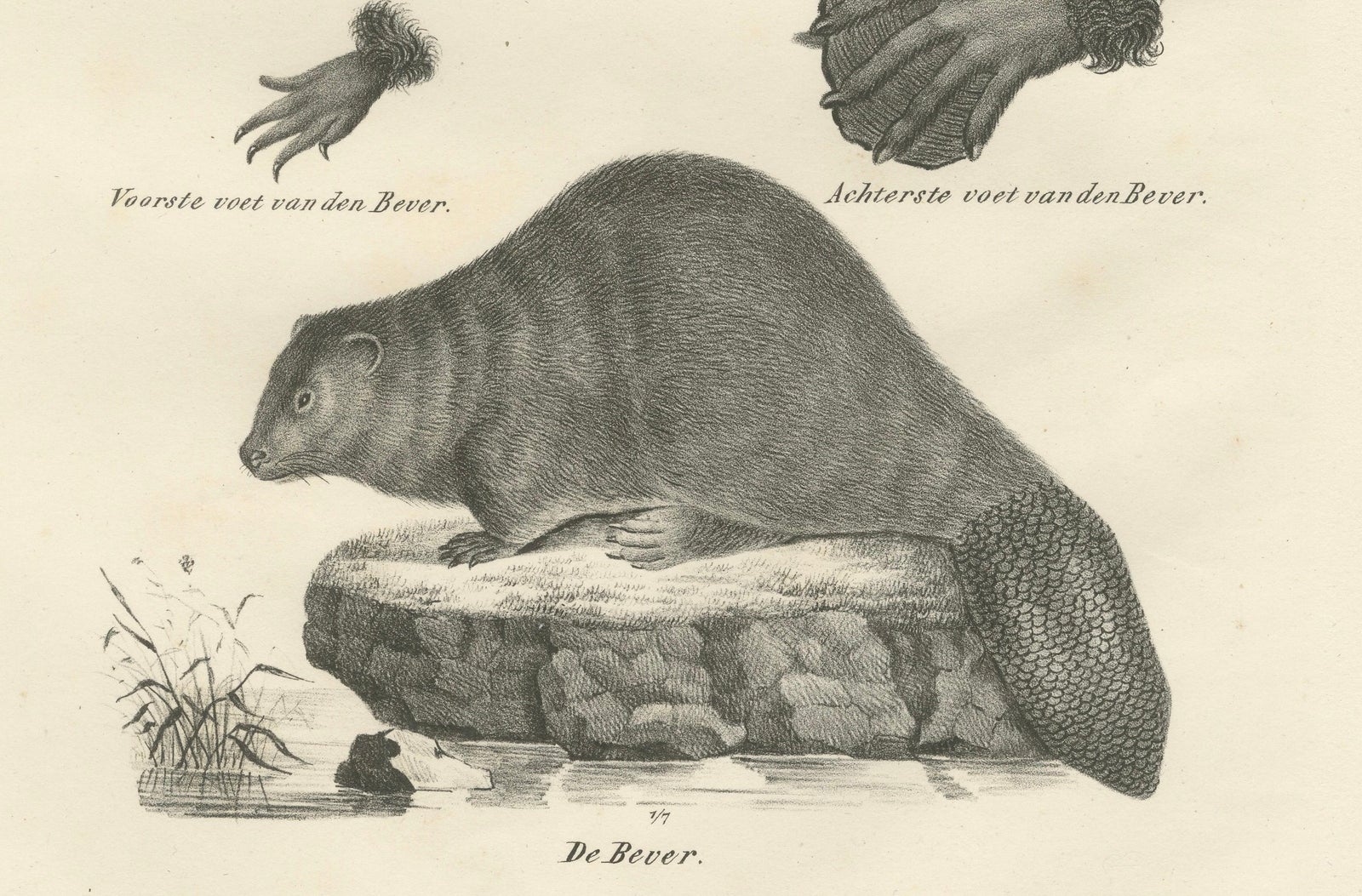
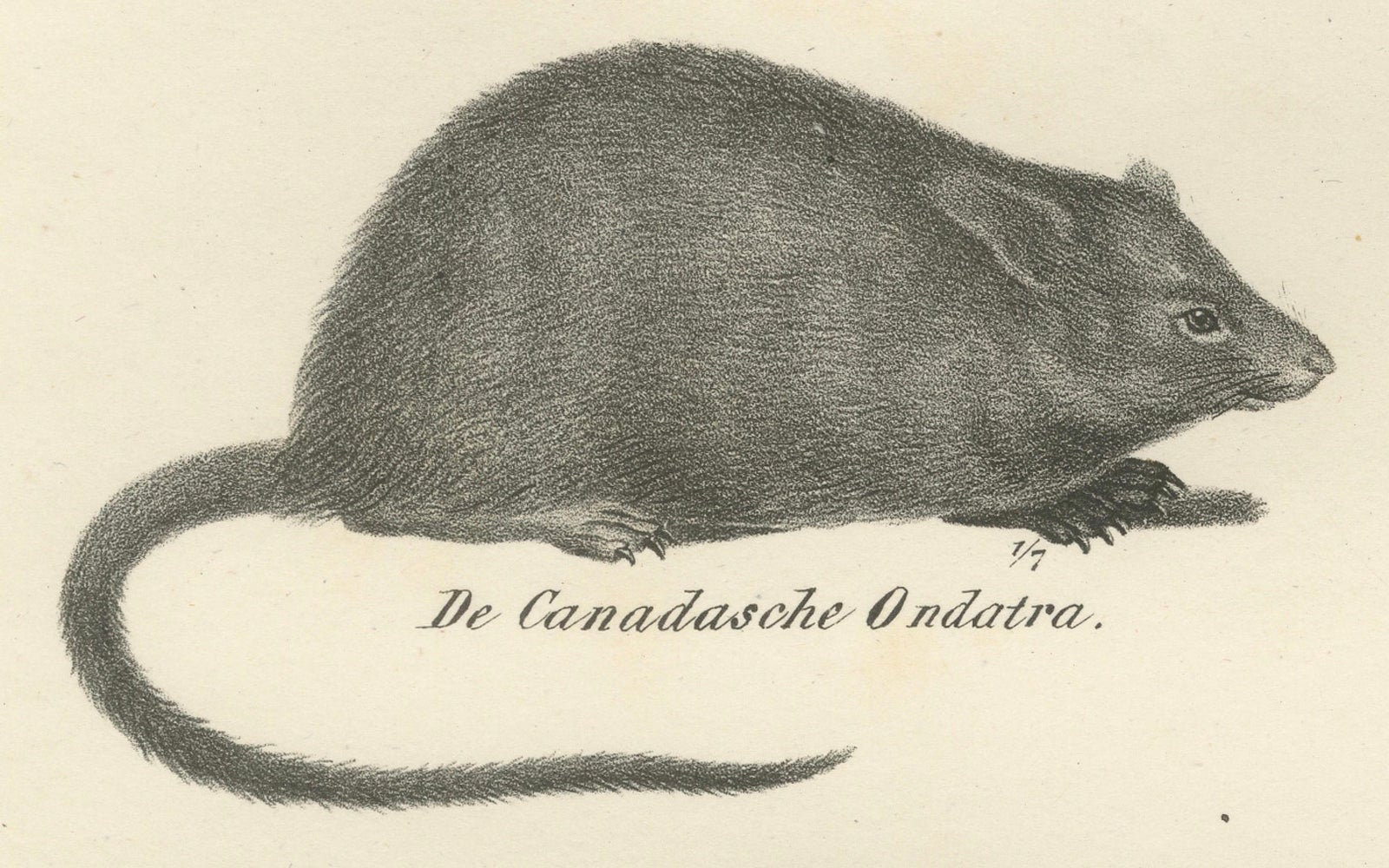
Four small rodents fill the upper half of the sheet, each drawn in profile with its tail trailing behind. The Canadian muskrat (Canadasche Ondatra) is the largest of these and is shown at the left. The lower half is given to the beaver, which sits on a flat rock beside a patch of reeds and water with its scaly paddle tail hanging behind. Two foot studies are drawn above it, labeled "Voorste voet van den Bever" and "Achterste voet van den Bever" (front foot and hind foot), the latter showing the webbing.
The beaver and the muskrat are both North American animals whose fur was central to the trade between Canada, the United States and Europe, which gave naturalists a ready reason to include them.