Close-ups
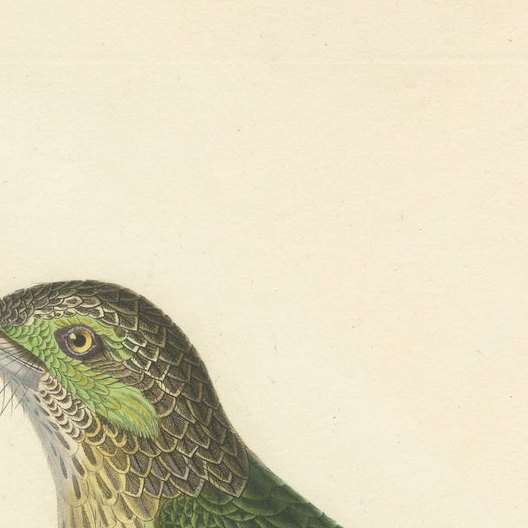
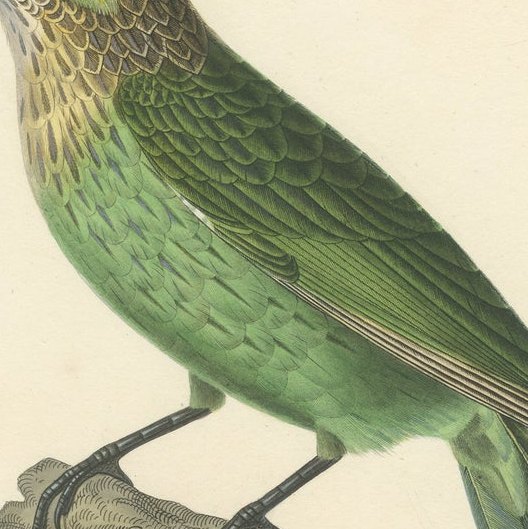
Framed and on the wall


Frame and rooms are illustrations of how the print could look; the description says what is included.
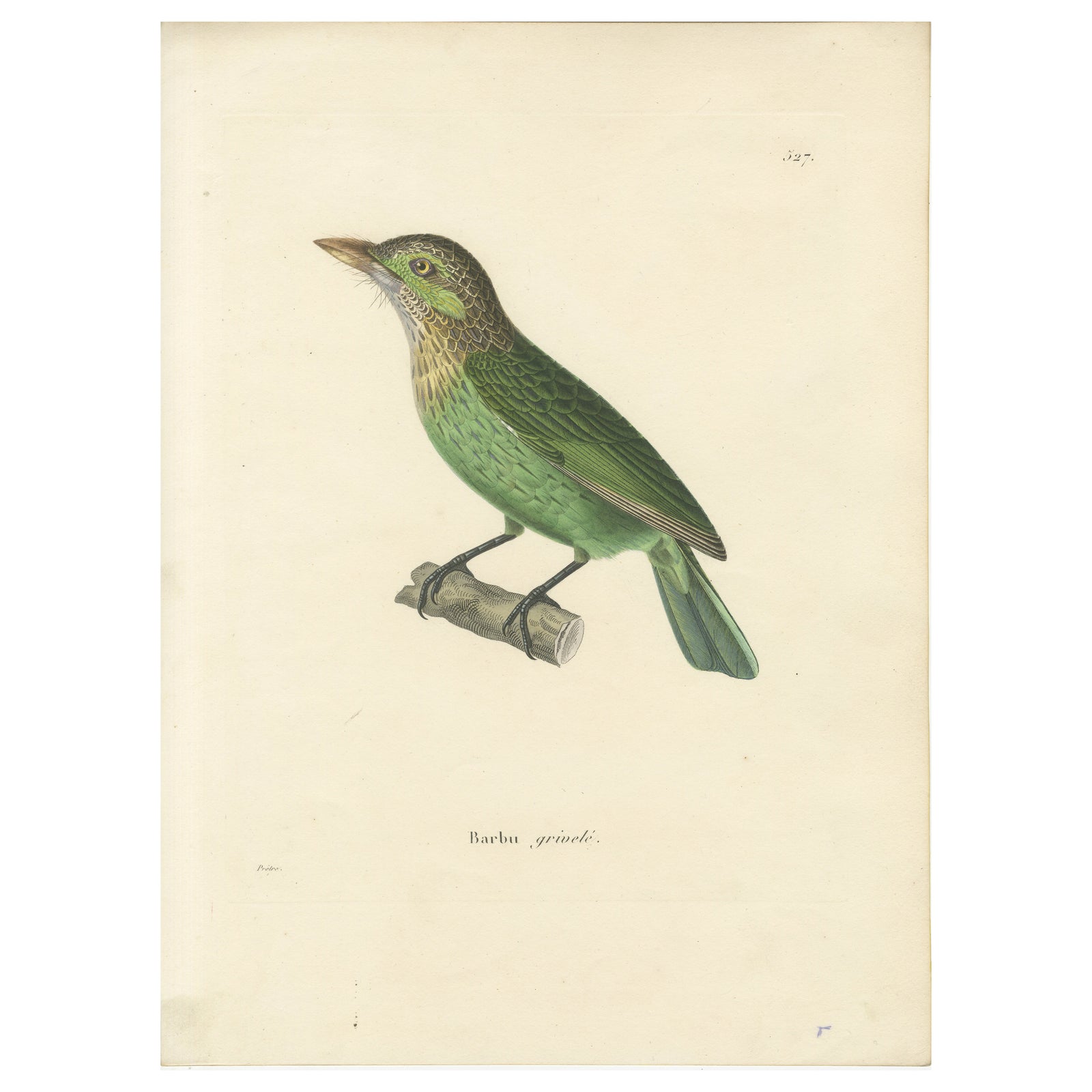
19th Century Ornithological Illustration of the Streaked Barbet (Barbu grivelé)
€540 ($610, £460, €540)
Period original, not a reproduction.
Shipped from the Netherlands, flat, insured and tracked, worldwide. Returns accepted within 14 days.
- Date
- Not stated
- Size
- 13.8 × 10.2 in (35 × 26 cm)
- Condition
- Very good, given age. Some light soiling. General age-related toning and/or occasional minor defects from handling. Please study scan carefully.
- Section
- Birds
- Reference
- f_40616042
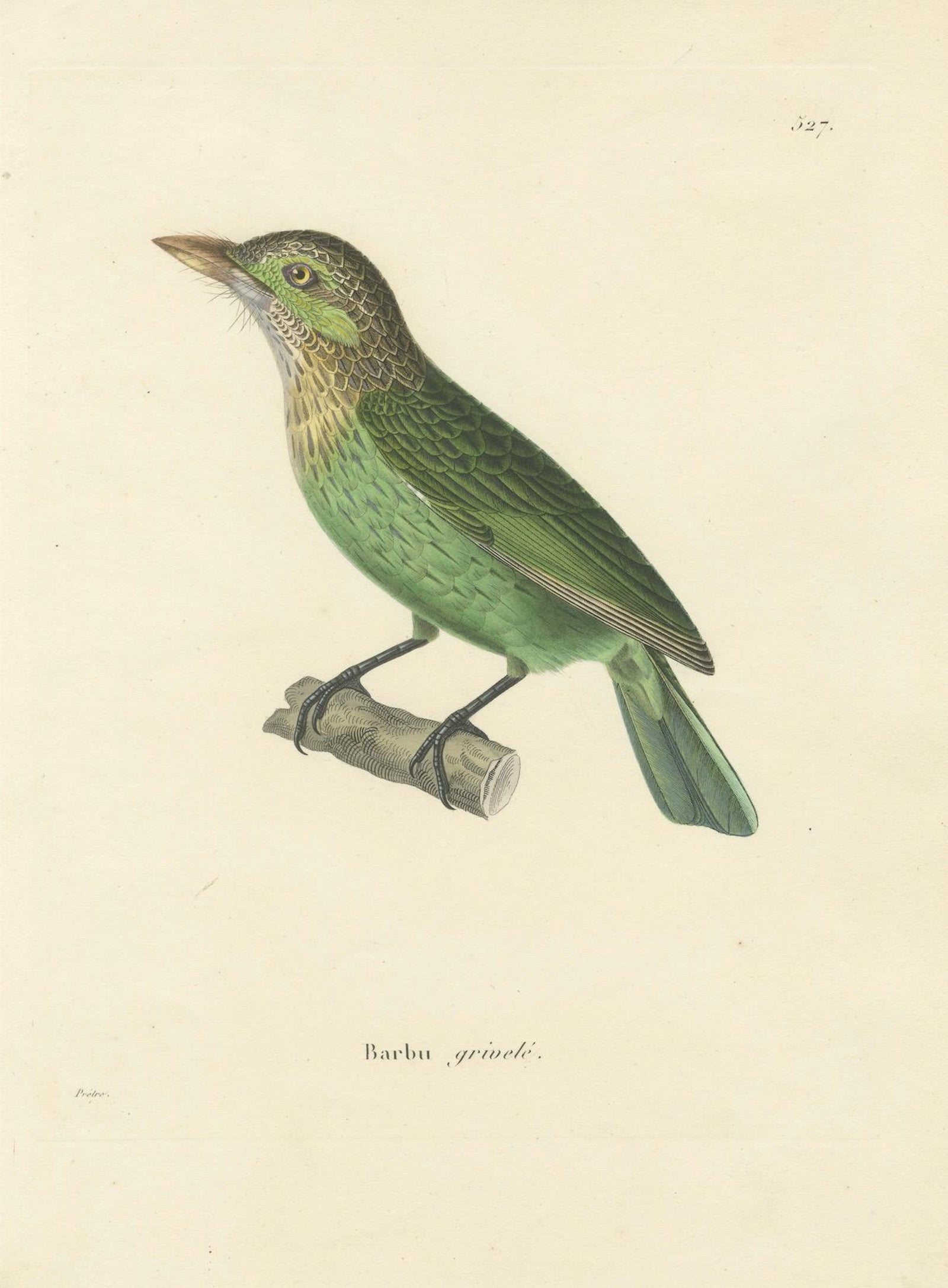
This illustration depicts a bird labeled "Barbu grivelé," which translates to "Streaked Barbet" in English.
Description of the Print:
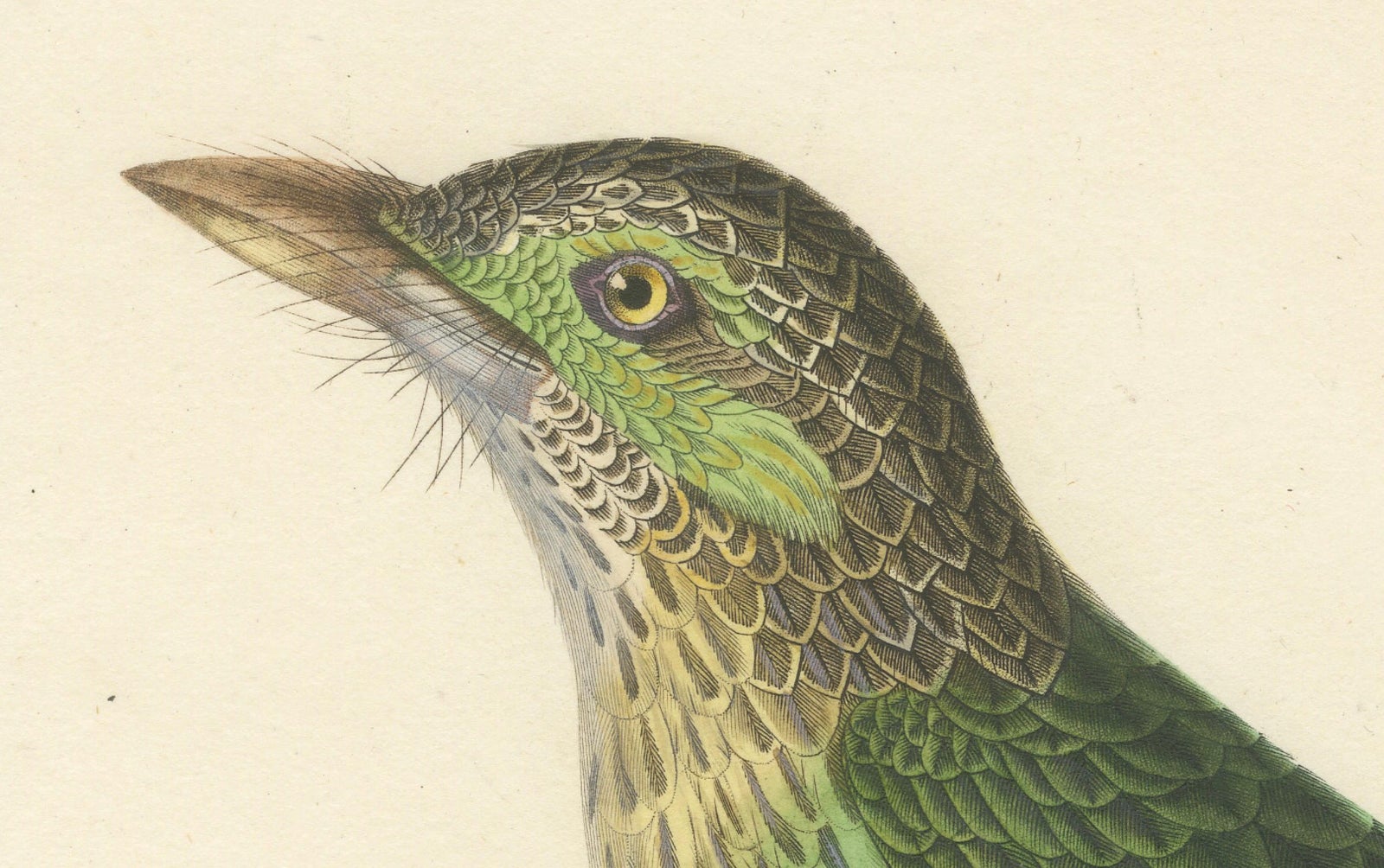
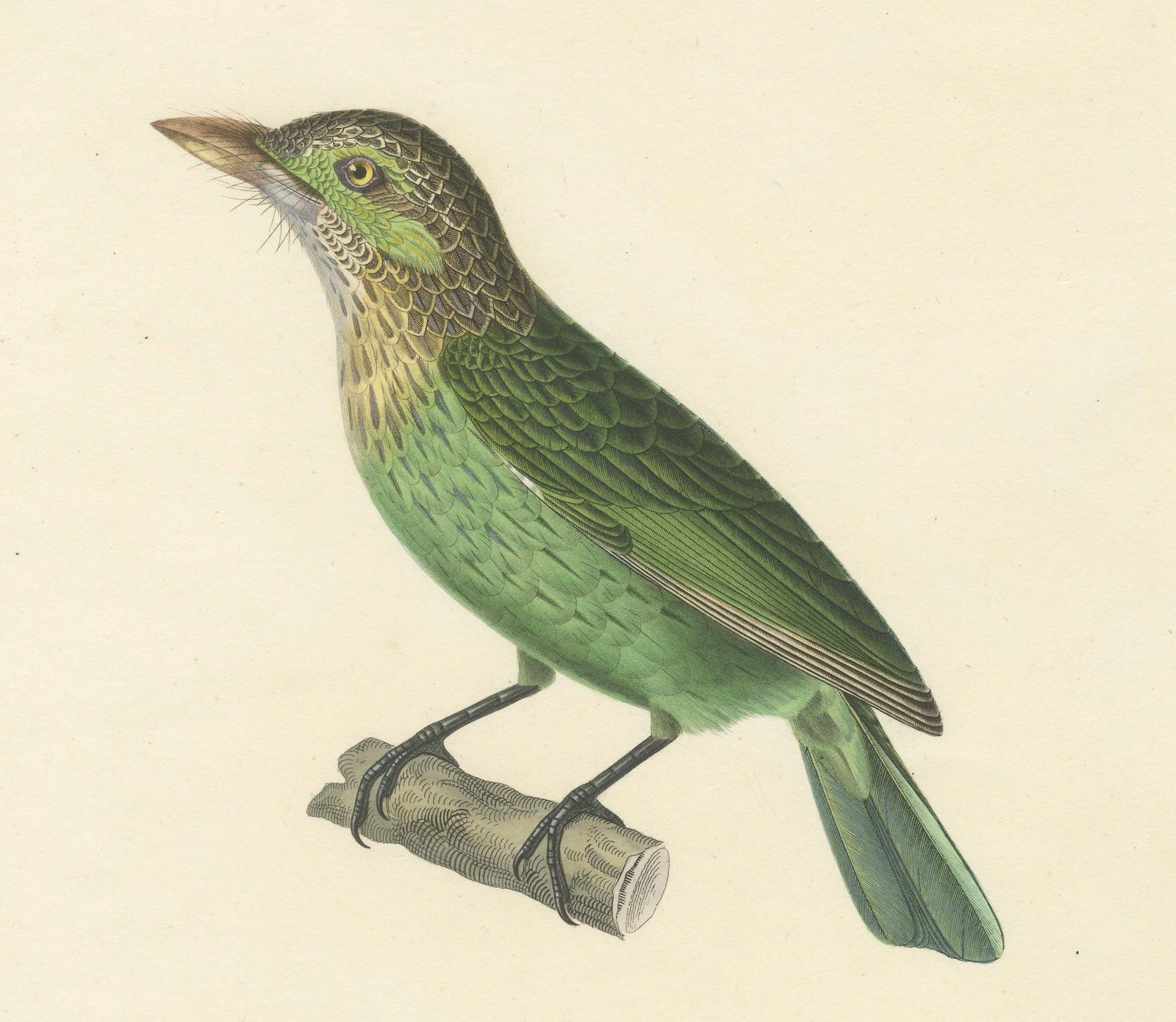
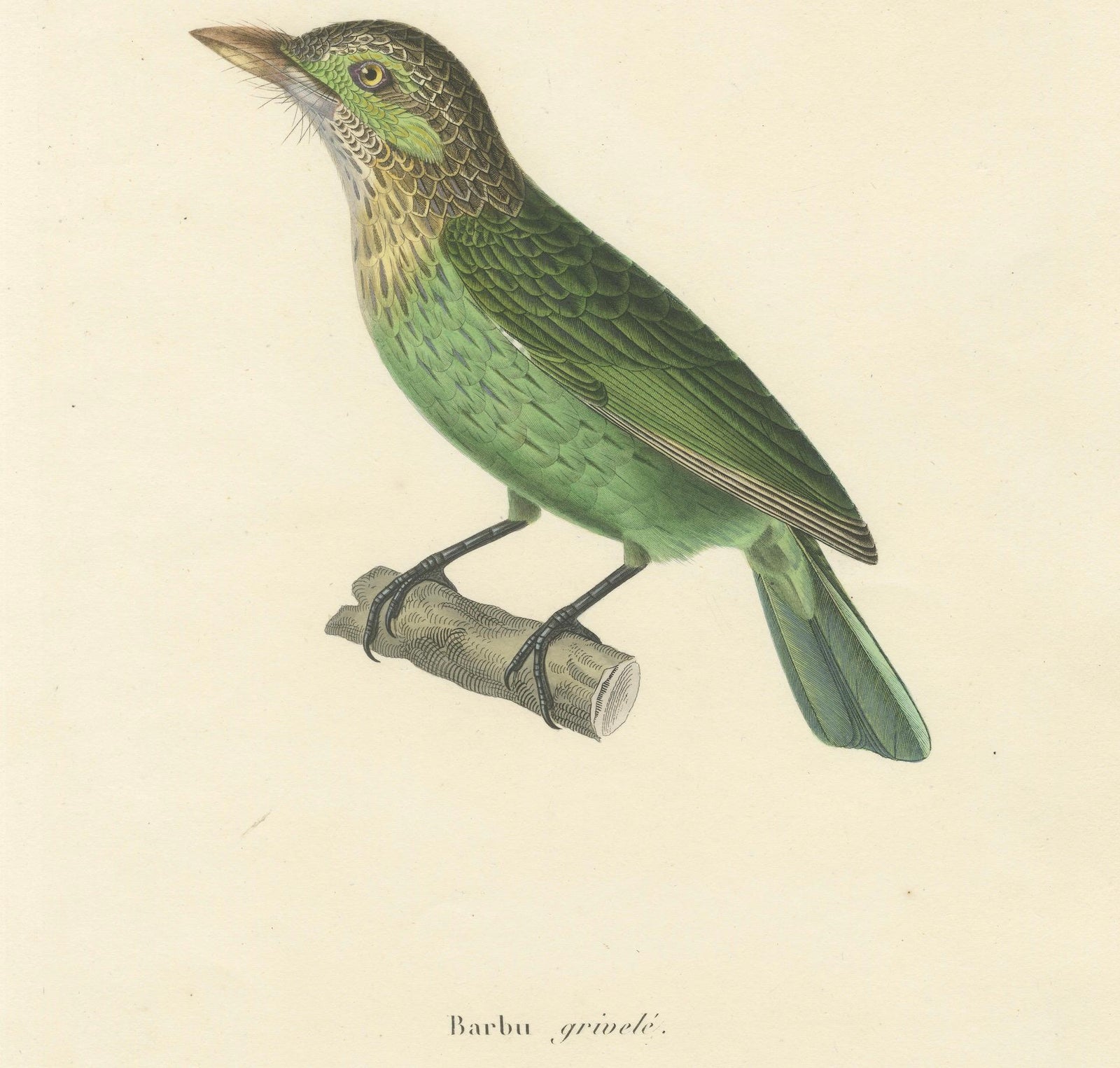
- The bird is illustrated perched on a small branch, showcasing its intricate plumage. It features predominantly green feathers with detailed streaks and scales on its head and chest, which may indicate the streaked or spotted pattern typical of barbets. The beak is strong and slightly curved, characteristic of barbet species.
About the Artists:
**Nicolas Huet (1770–1830)**:
- A prominent French natural history illustrator.
- Renowned for his precise and lifelike depictions of birds and other animals.
- Contributed significantly to various ornithological publications of his time.
**Jean Gabriel Prêtre (1768–1849)**:
- A Swiss-born natural history painter who worked primarily in France.
- Known for his detailed and accurate representations of zoological and botanical subjects.
- Collaborated with many leading naturalists and illustrated numerous scientific works.
Habitat of Barbets:
- Barbets are tropical birds, typically found in forests, woodlands, and scrub areas. They are native to regions in Africa, Asia, and tropical America.
- Given the specific label "Barbu grivelé," this species may correspond to a particular barbet known for streaked plumage, but without a precise scientific name, it is difficult to pinpoint its exact range. Generally, barbets are found in areas with abundant fruiting trees and dense foliage, where they can feed on fruits, insects, and occasionally small animals.
This print, part of the "Nouveau recueil de planches coloriées d'oiseaux" published in 1838, is another fine example of the detailed and scientifically accurate work produced by Huet and Prêtre, reflecting the high standards of ornithological illustration in the 19th century.