Close-ups
Framed and on the wall
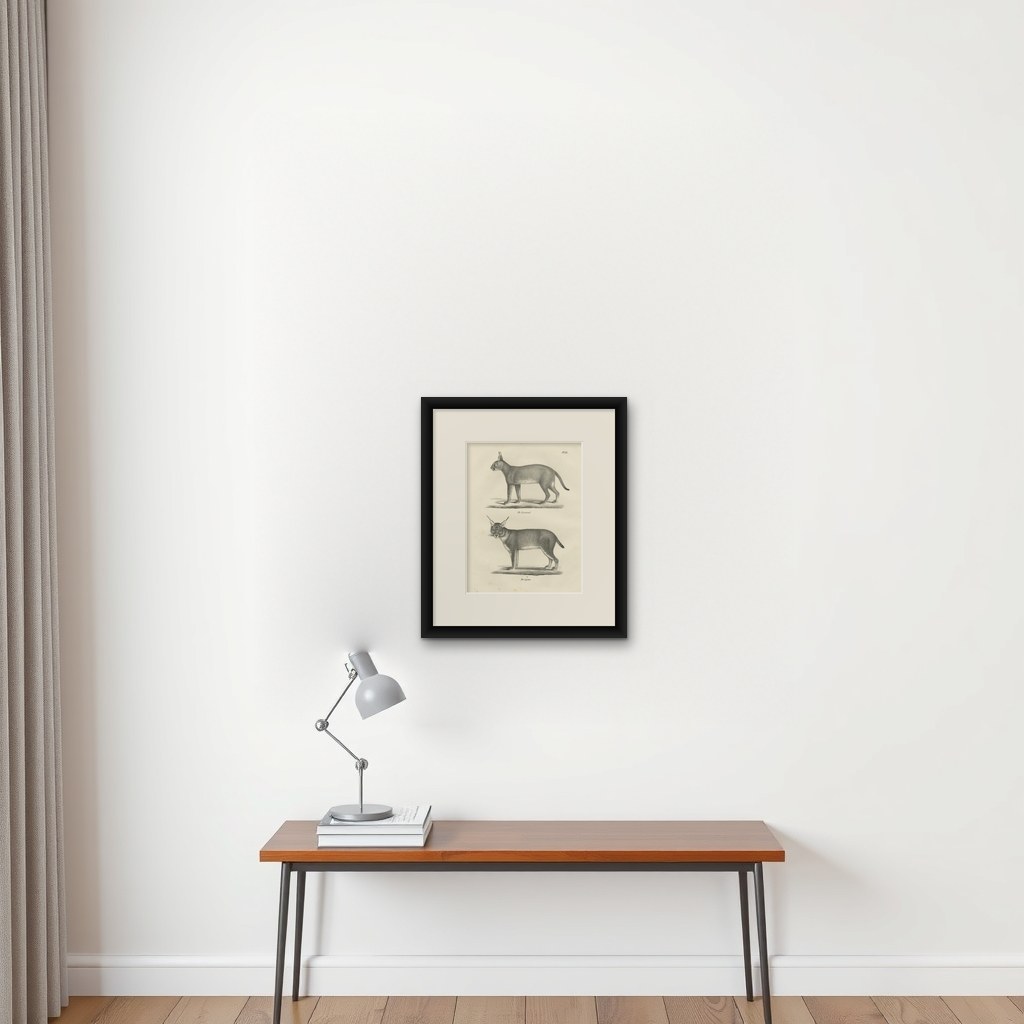

Frame and rooms are illustrations of how the print could look; the description says what is included.
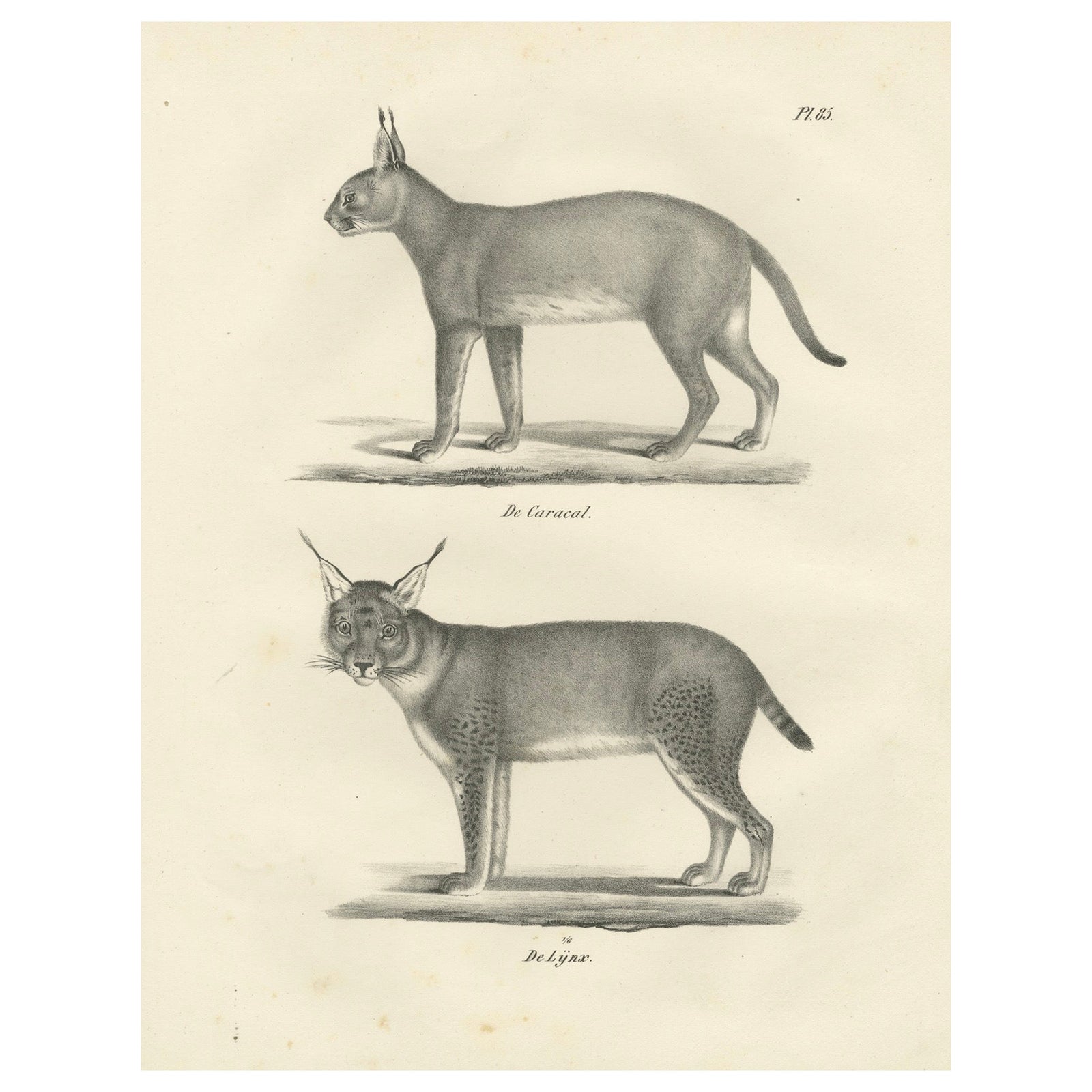
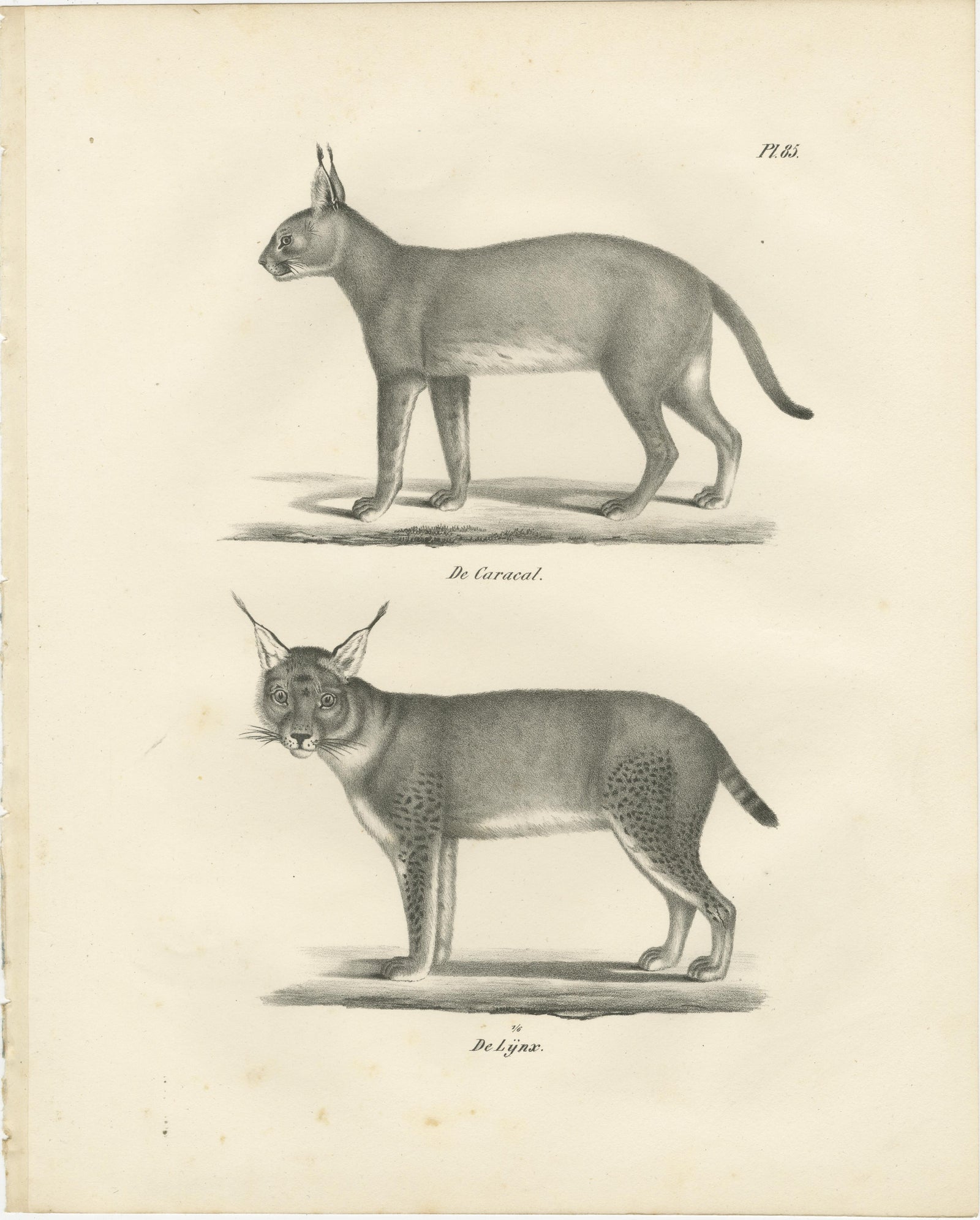
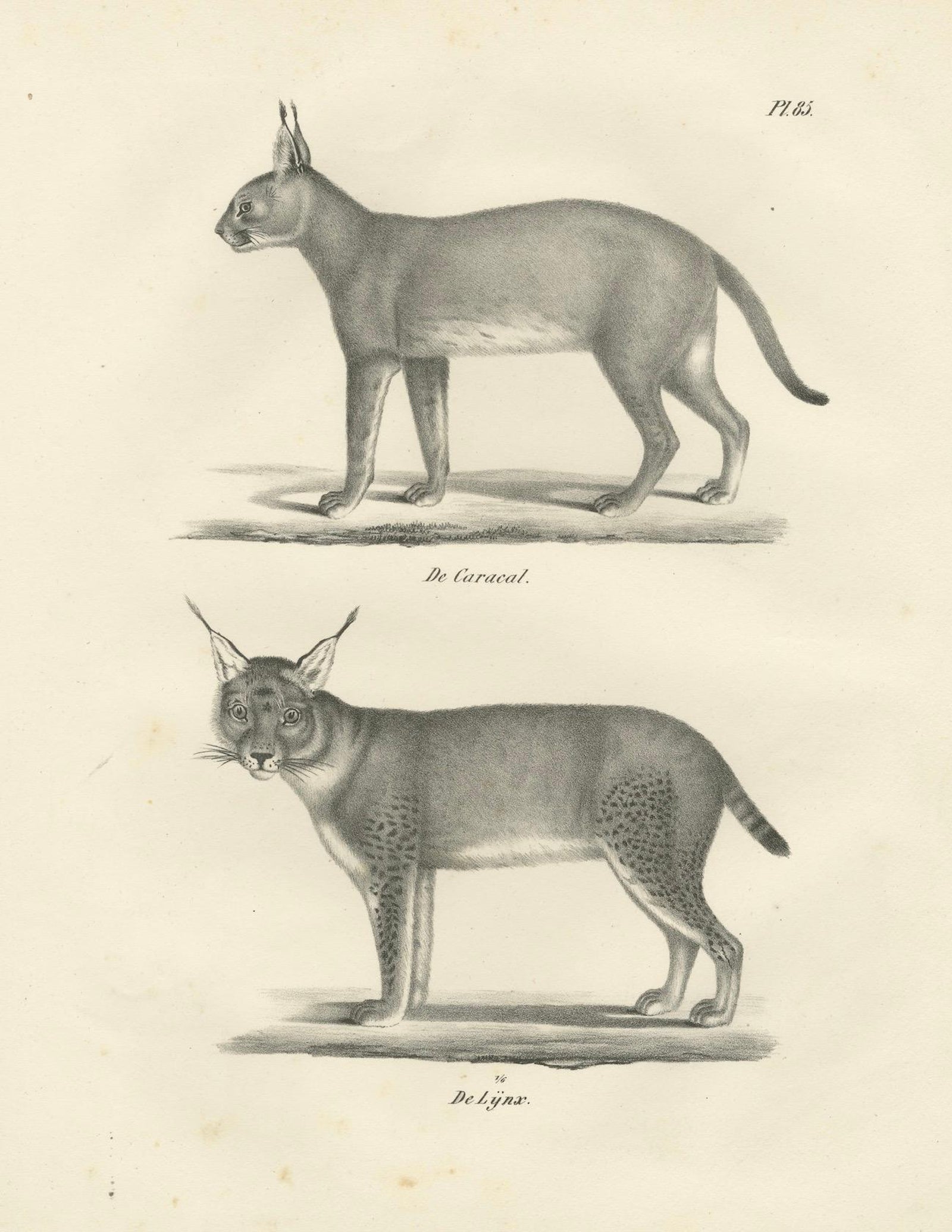
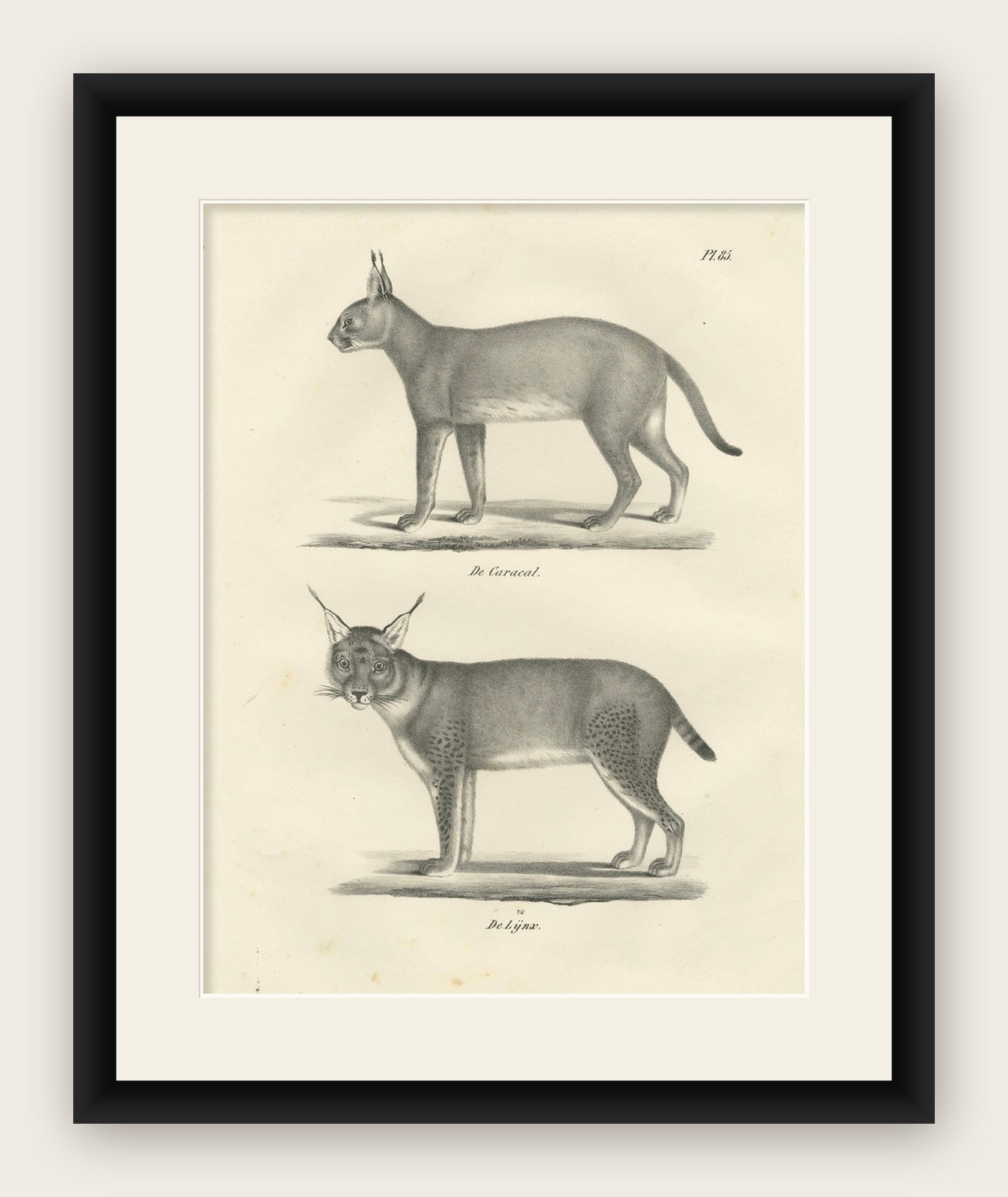
19th-Century Lithograph of the Caracal and Lynx in Striking Profiles
$380 (£290, €340)
Period original, not a reproduction.
Shipped from the Netherlands, flat, insured and tracked, worldwide. Returns accepted within 14 days.
- Date
- Not stated
- Size
- 10.2 × 12.7 in (26 × 32.2 cm)
- Condition
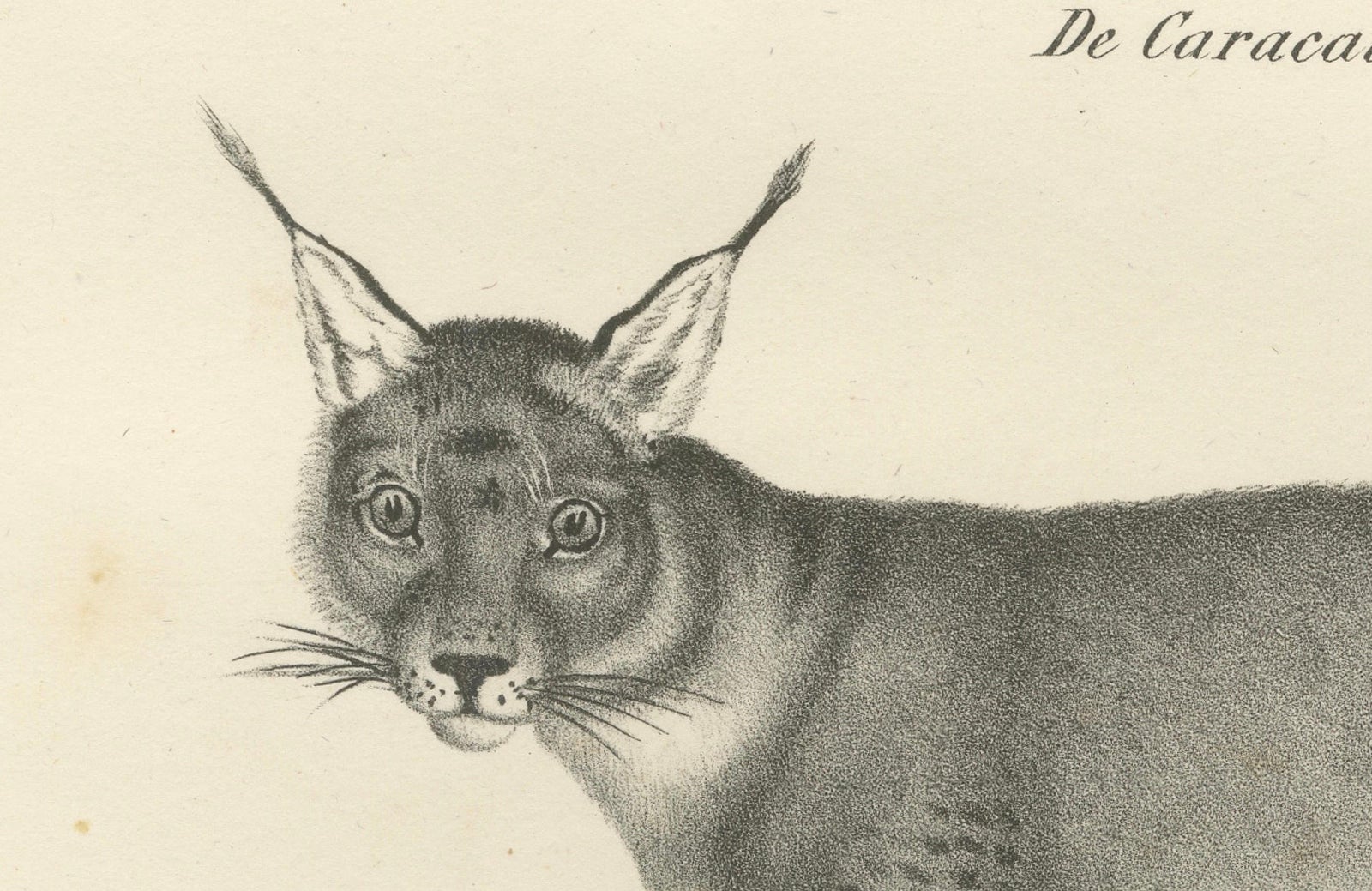
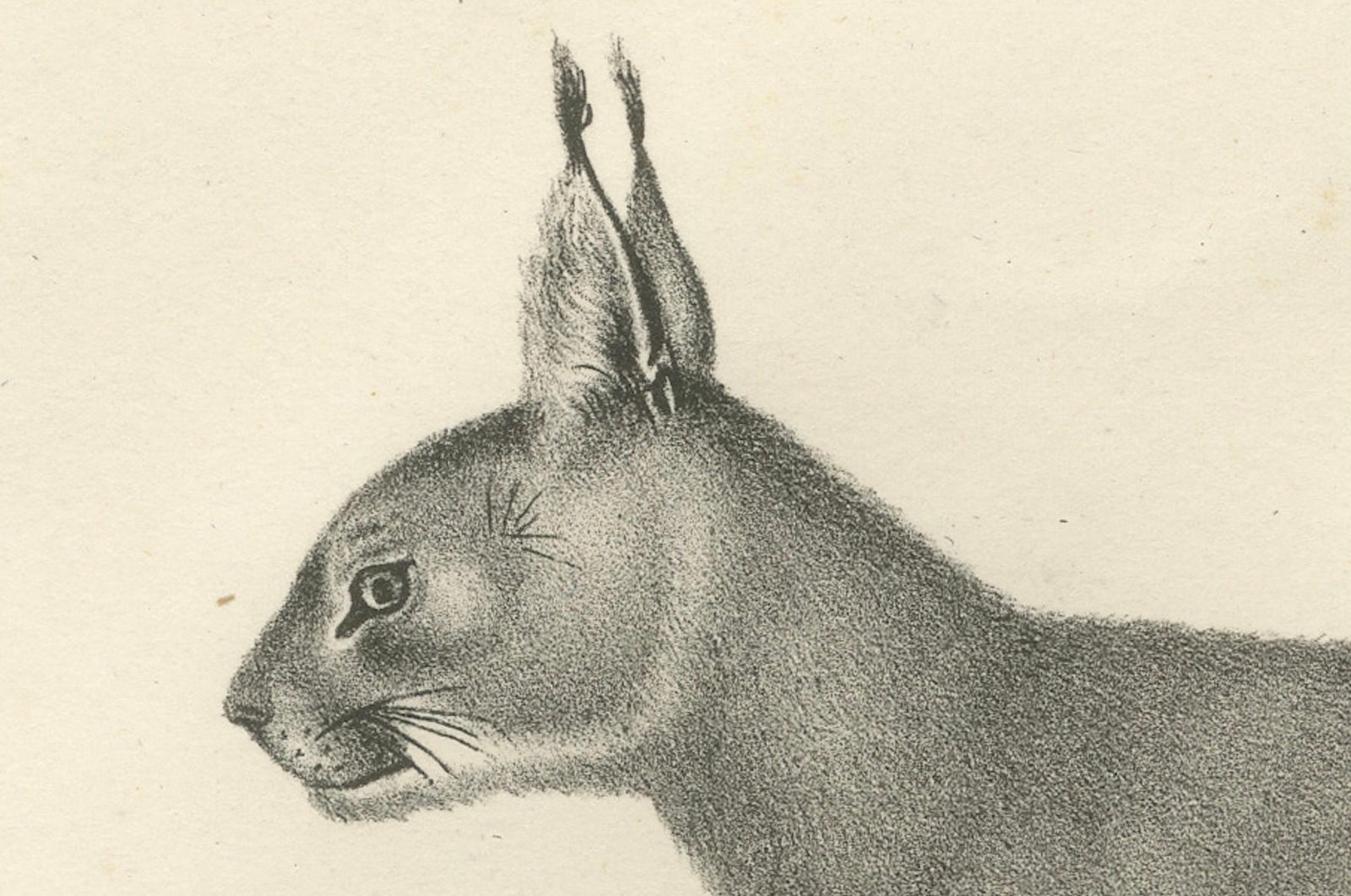
- Good. The print is in good condition, with minor age-related toning and light foxing along the margins. The lithographic details remain crisp, highlighting the caracal’s elegant profile and the lynx’s distinctive features.
- Section
- Mammals
- Reference
- f_43897532
What the condition grades mean
- Excellent
- Bright and clean, with no faults worth mentioning.
- Very good
- Only light signs of age, such as faint toning.
- Good
- Normal signs of age for a sheet of this period: toning, some foxing, small marks or neat old repairs.
- Fair
- Clear faults such as staining, tears or repairs, priced to match.
Every fault we see is written in the condition note, and the whole sheet is shown uncropped in the photos.
19th-Century Lithograph of the Caracal and Lynx in Striking Profiles
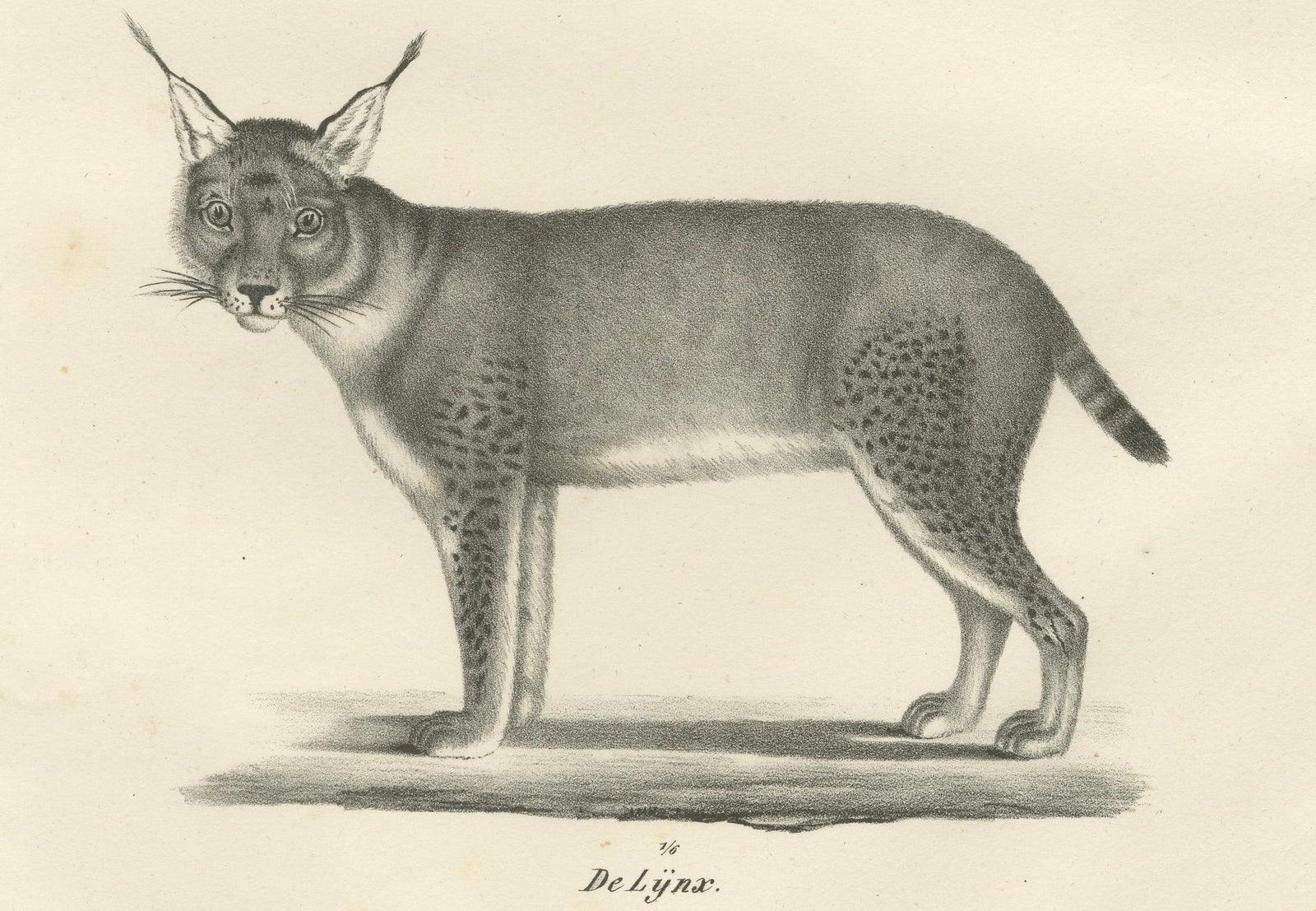
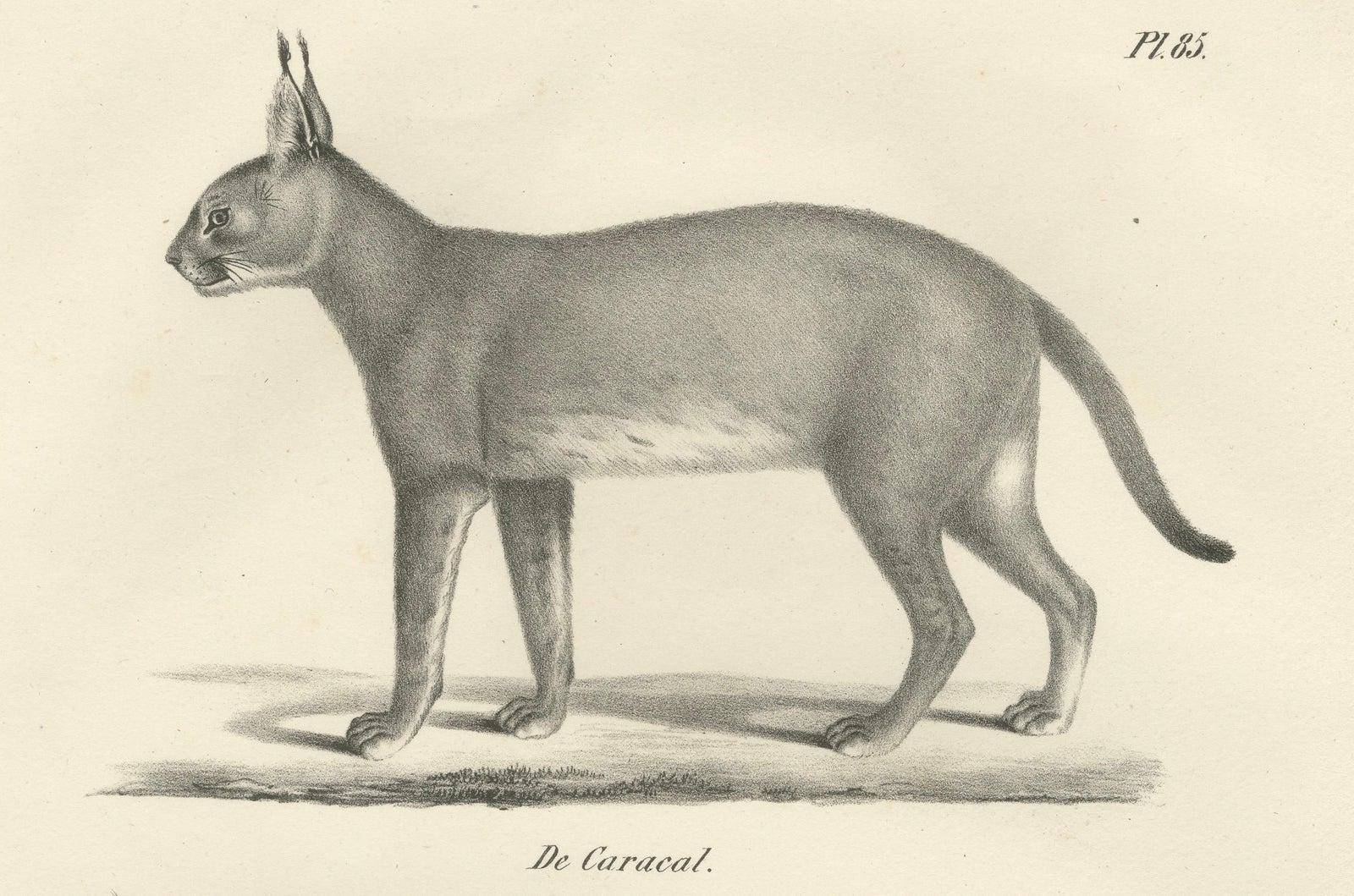
This detailed 19th-century lithograph features two remarkable wild cats: the caracal (Caracal caracal) and the lynx (Lynx lynx). Originally published in *De Zoogdieren: afgebeeld en in hunne levenswijze geschetst*, this illustration captures the defining characteristics of these elusive felines with remarkable artistic precision.
The caracal, also known as the desert lynx, is native to Africa, the Middle East, and parts of Asia. It is easily recognized by its long, tufted ears, which enhance its acute sense of hearing. Caracals are exceptional hunters, capable of leaping several meters into the air to catch birds in flight. Unlike other small wild cats, they are known for their remarkable agility and speed, making them efficient solitary predators in arid landscapes.
The lynx, found across Europe, North America, and Asia, is characterized by its short tail, distinctive ear tufts, and thick fur, which helps it survive in colder climates. Lynxes are expert stalkers and ambush predators, primarily hunting small mammals such as hares. Unlike caracals, which thrive in open areas, lynxes prefer dense forests where they can remain hidden from prey and competitors.
Created by C.C. G. Zool. and printed by La Haye & J. L. G. V., this lithograph is an important piece for collectors of antique zoological prints, wildlife enthusiasts, and those interested in early scientific representations of felines.
Keywords: 19th Century, Lithograph, Natural History, Zoology, Caracal, Lynx, Wild Cats, Big Cats, Caracal Caracal, Lynx Lynx, Wildlife Art, Scientific Illustration, Antique Print, Animal Engraving, Taxonomy, Netherlands, La Haye, J.L.G.V.
---
Condition Summary:
The print is in good condition, with minor age-related toning and light foxing along the margins. The lithographic details remain crisp, highlighting the caracal’s elegant profile and the lynx’s distinctive features. The edges show slight irregularities due to historical binding, but no major tears or folds are present. The print is well-preserved and highly collectible.
---
Framing Tips:
To emphasize the lithograph’s fine details, use an acid-free mat in a neutral shade, such as off-white or light beige. A dark wooden or black frame will create an elegant contrast, drawing attention to the rich textures of the fur. UV-protective glass is recommended to prevent fading over time. If displayed alongside other wildlife lithographs, matching frames will provide a cohesive and refined presentation.