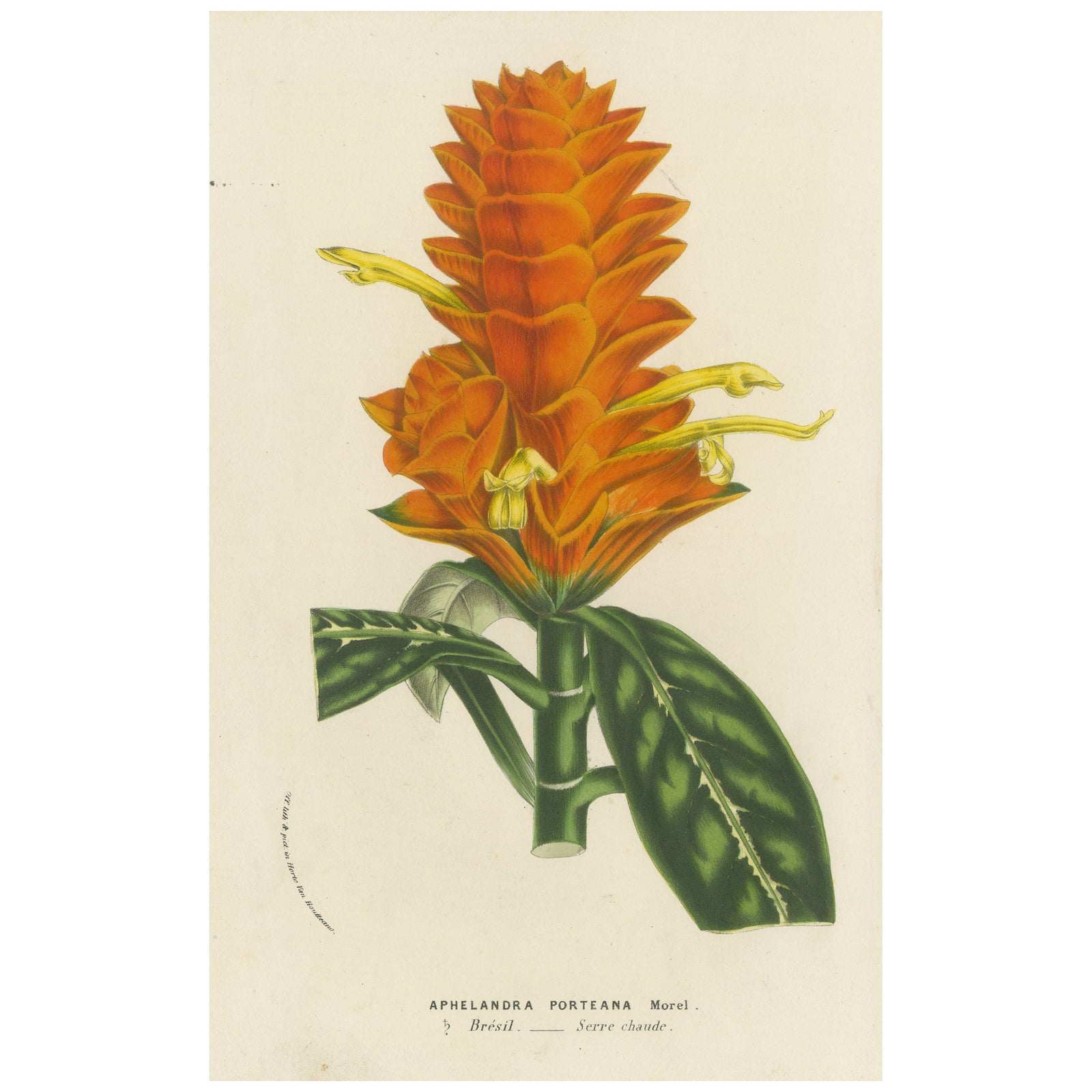
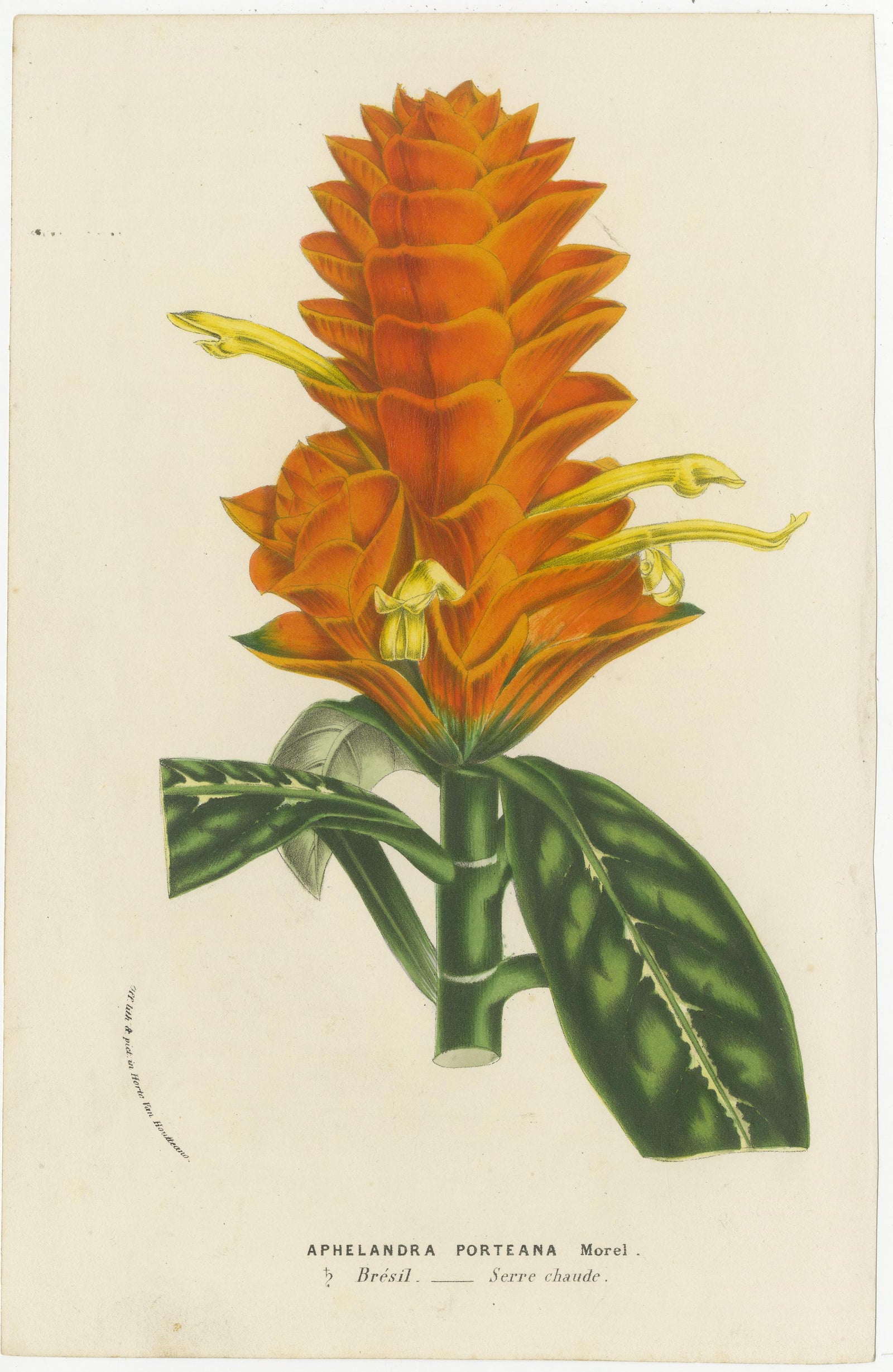
Close-ups
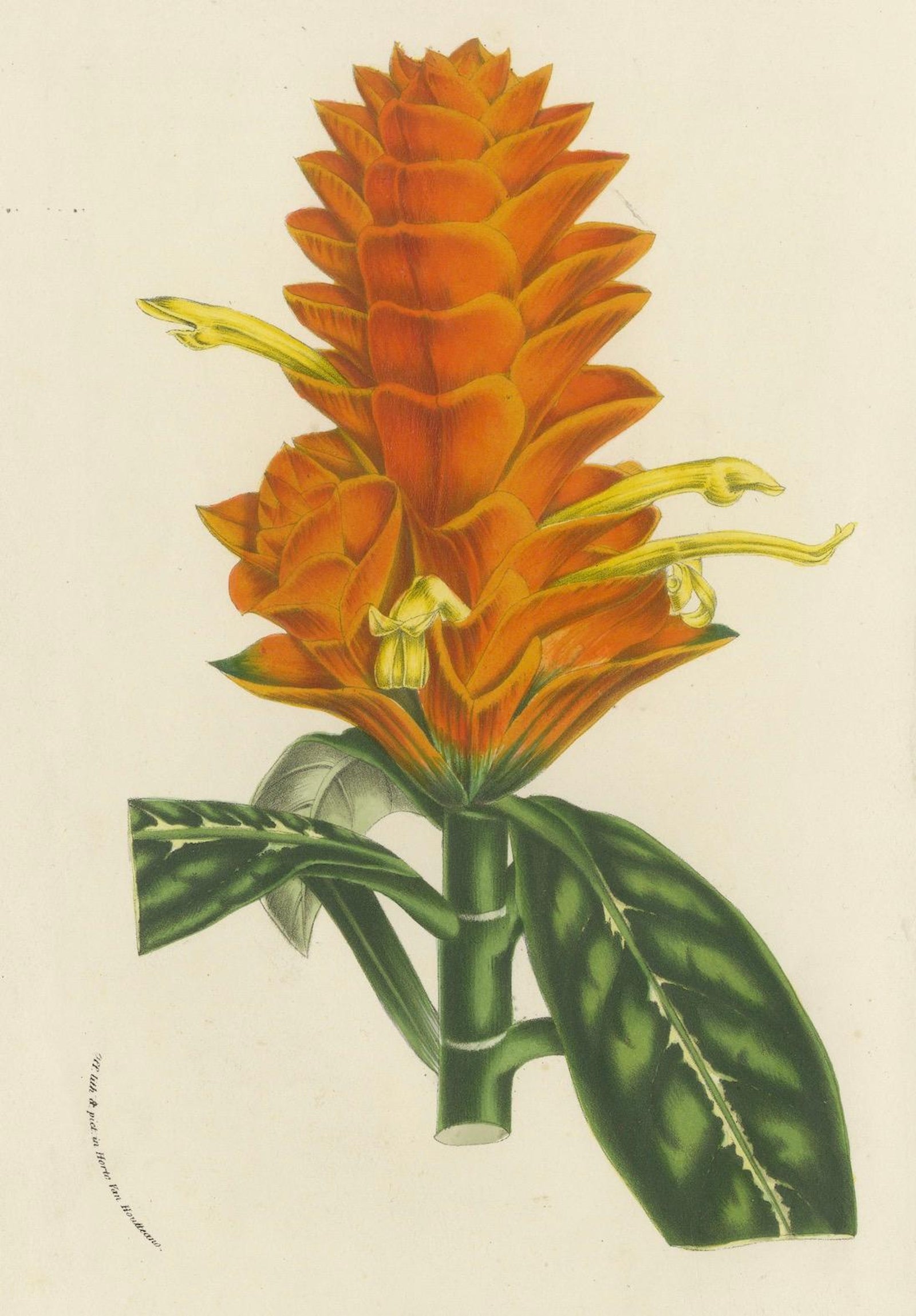
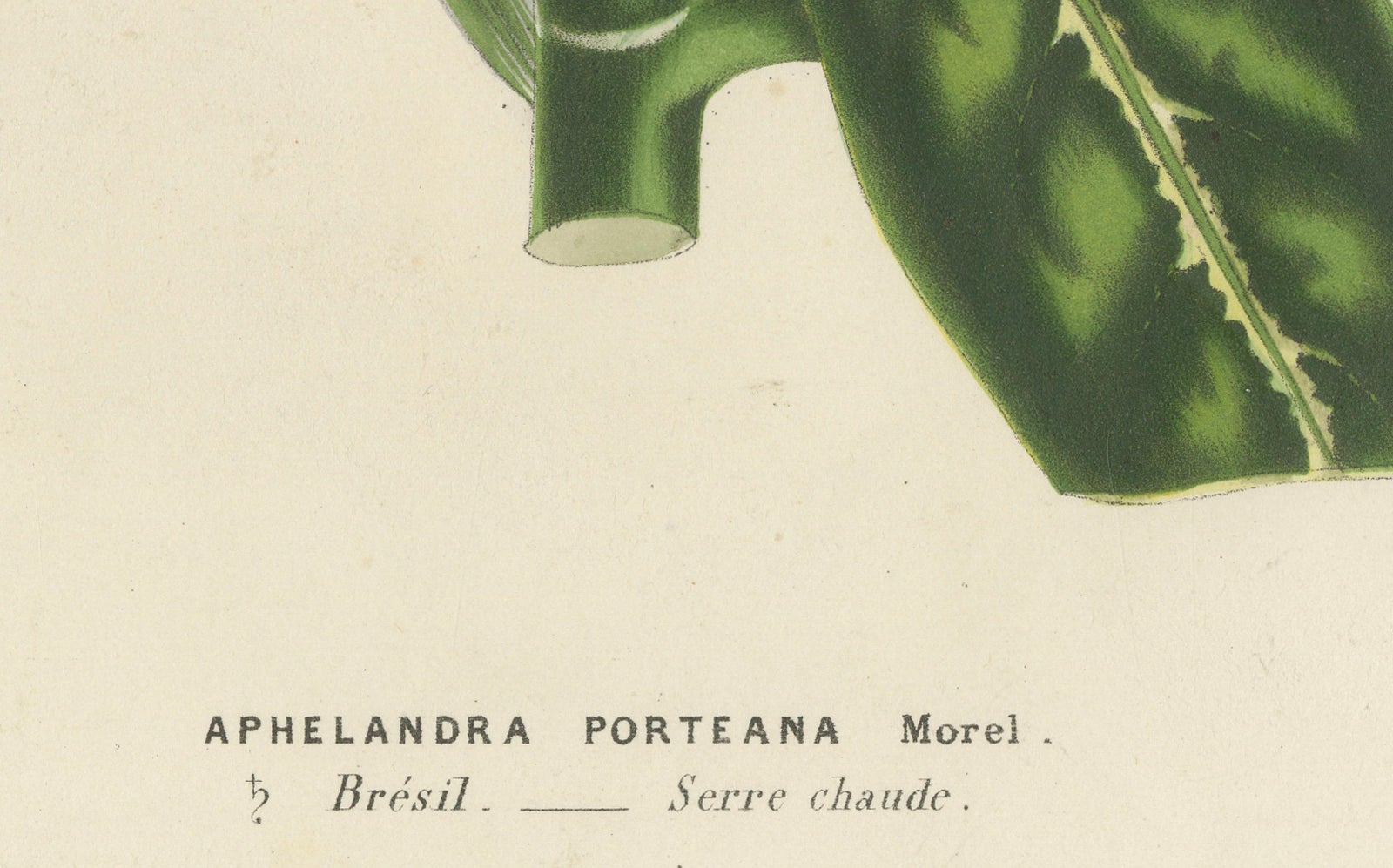
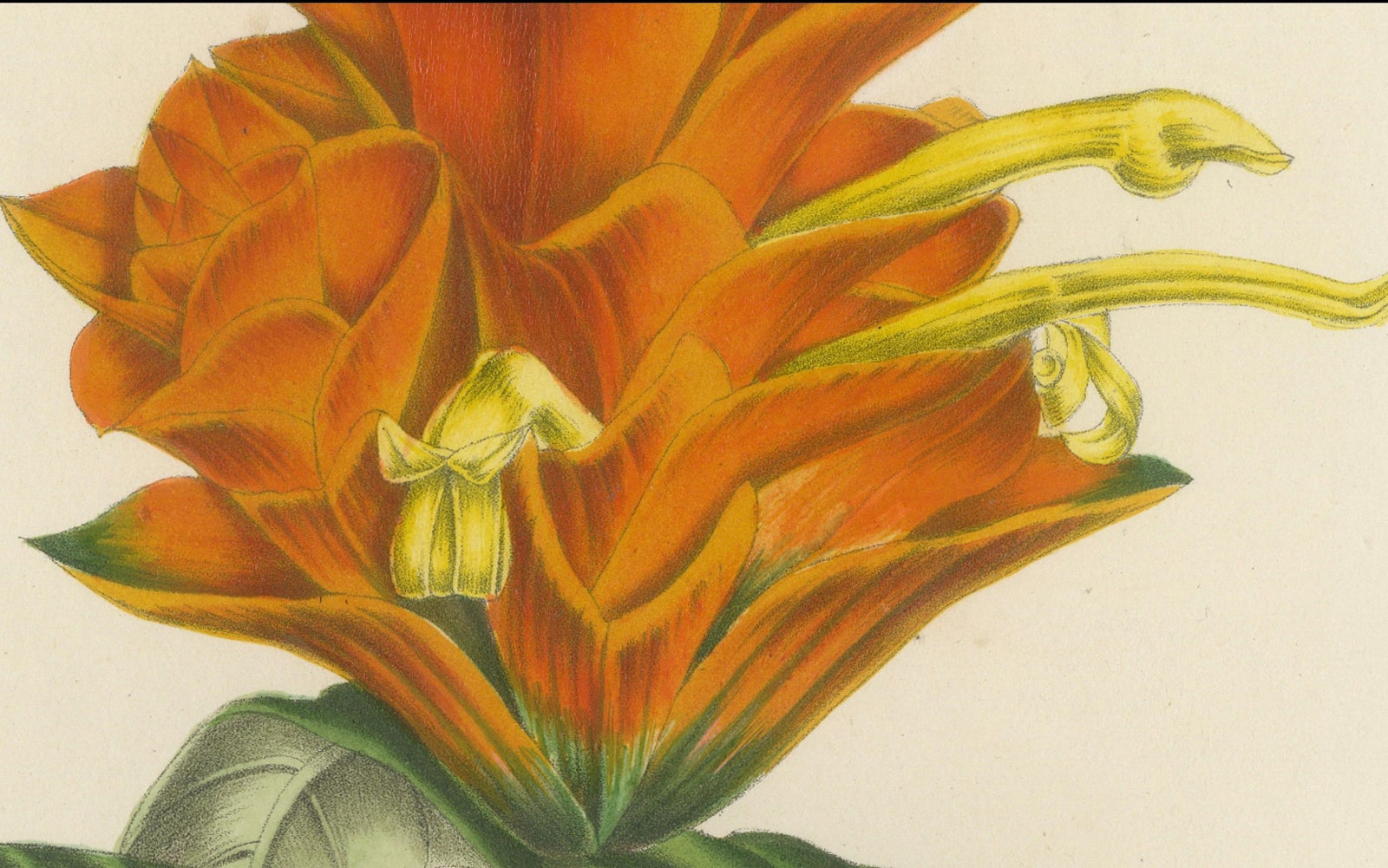
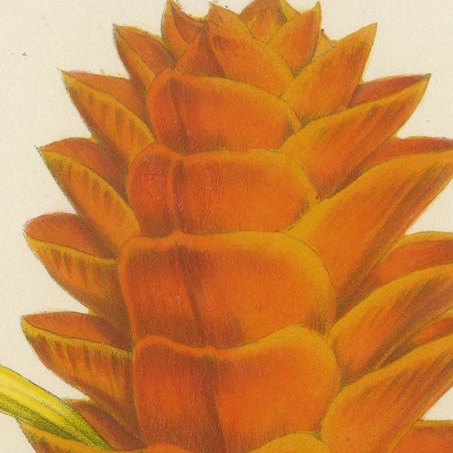
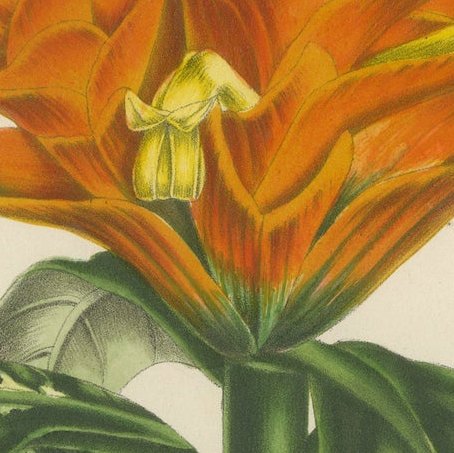
Framed and on the wall
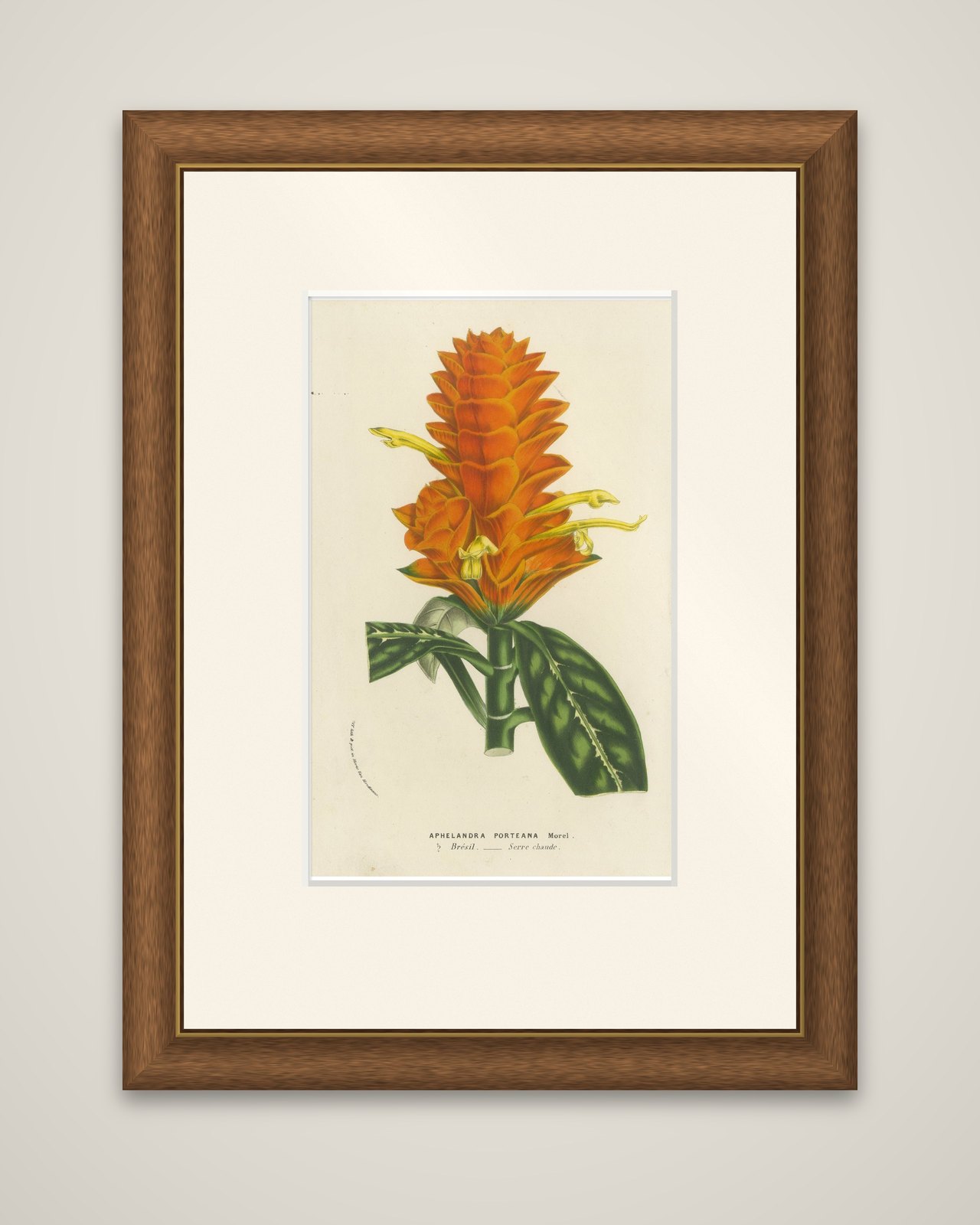
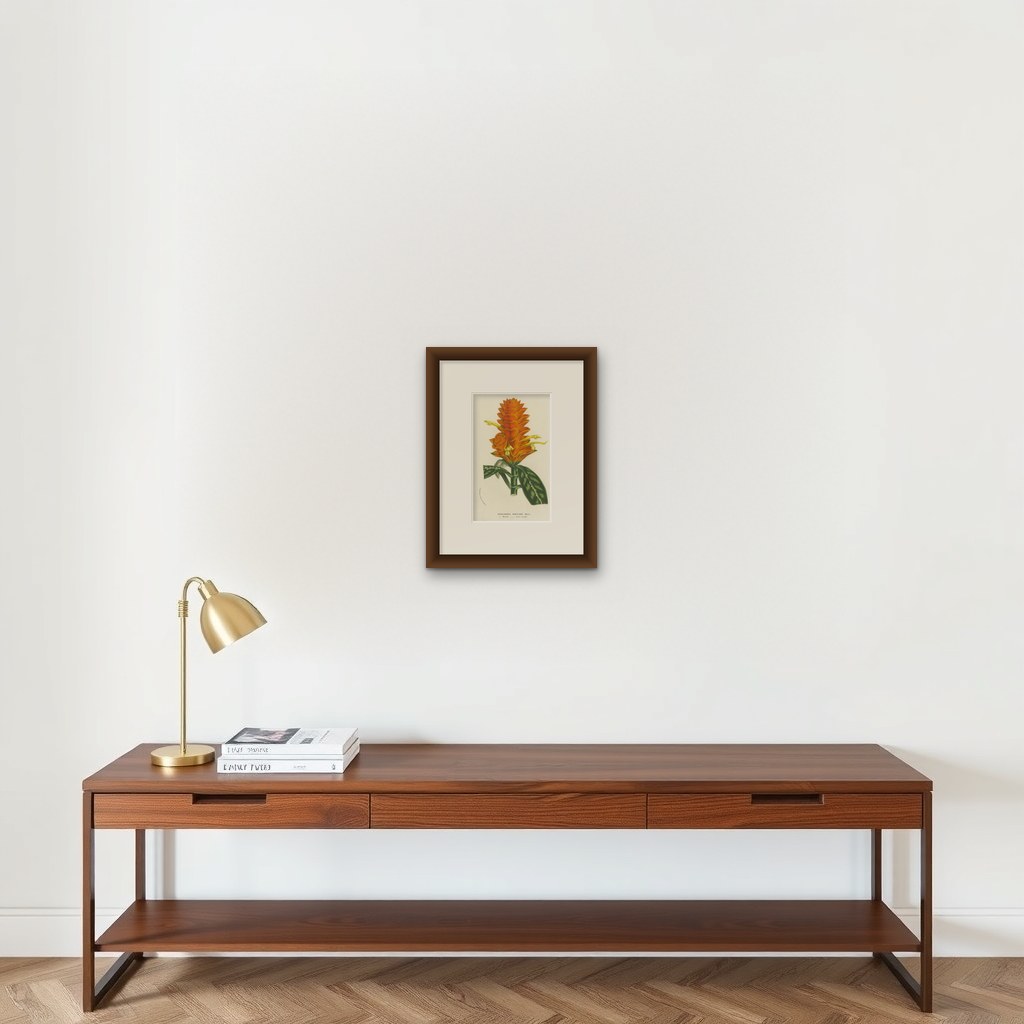
Frame and rooms are illustrations of how the print could look; the description says what is included.
19th Century Botanical Lithograph of Aphelandra Porteana by Louis van Houtte
€140 ($155, £120, €140)
Period original, not a reproduction.
Shipped from the Netherlands, flat, insured and tracked, worldwide. Returns accepted within 14 days.
- Date
- Not stated
- Size
- 9.4 × 6.3 in (24 × 16 cm)
- Condition
- Good. The condition of this print is good, with vibrant colors and clear details that have been well-preserved over time. General age-related toning and/or occasional minor defects from handling. Please study scan carefully.
- Artist or book
- Louis van Houtte
- Section
- Botanical
- Reference
- f_41290092
- Colour
- Printed colour
What the condition grades mean
- Excellent
- Bright and clean, with no faults worth mentioning.
- Very good
- Only light signs of age, such as faint toning.
- Good
- Normal signs of age for a sheet of this period: toning, some foxing, small marks or neat old repairs.
- Fair
- Clear faults such as staining, tears or repairs, priced to match.
Every fault we see is written in the condition note, and the whole sheet is shown uncropped in the photos.
Aphelandra porteana, a chromolithograph from Louis van Houtte's Flore des Serres et des Jardins de l'Europe, issued in Ghent in the mid-nineteenth century. The sheet is lettered "Aphelandra Porteana Morel", with the origin "Brésil" and the cultivation note "Serre chaude" (warm greenhouse).
The plant is drawn as a single upright flowering stem against the blank paper. A dense spike of overlapping orange bracts rises from the top, with narrow yellow flowers pushing out between them, and below it a pair of large dark green leaves marked with pale veins and edged with fine teeth. The colors are strong and saturated, the orange shading to red in the folds of the bracts.
Van Houtte, a Belgian horticulturist, ran a famous nursery in Ghent and published the Flore des Serres from 1845, a series of plates showing new plants shown in European greenhouses and gardens. The note "Brésil" gives the source of this one.