Close-ups
Framed and on the wall

Frame and rooms are illustrations of how the print could look; the description says what is included.
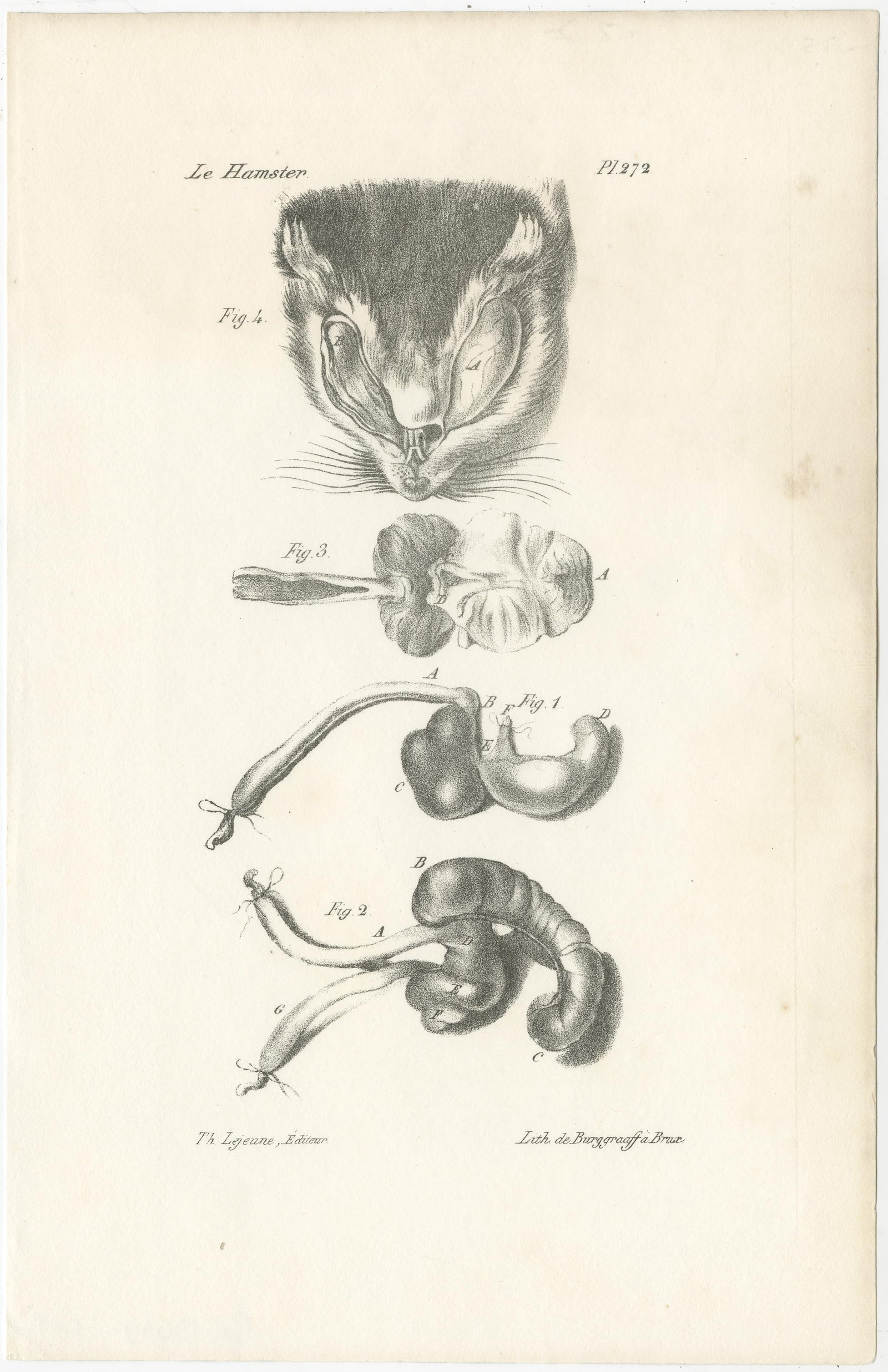
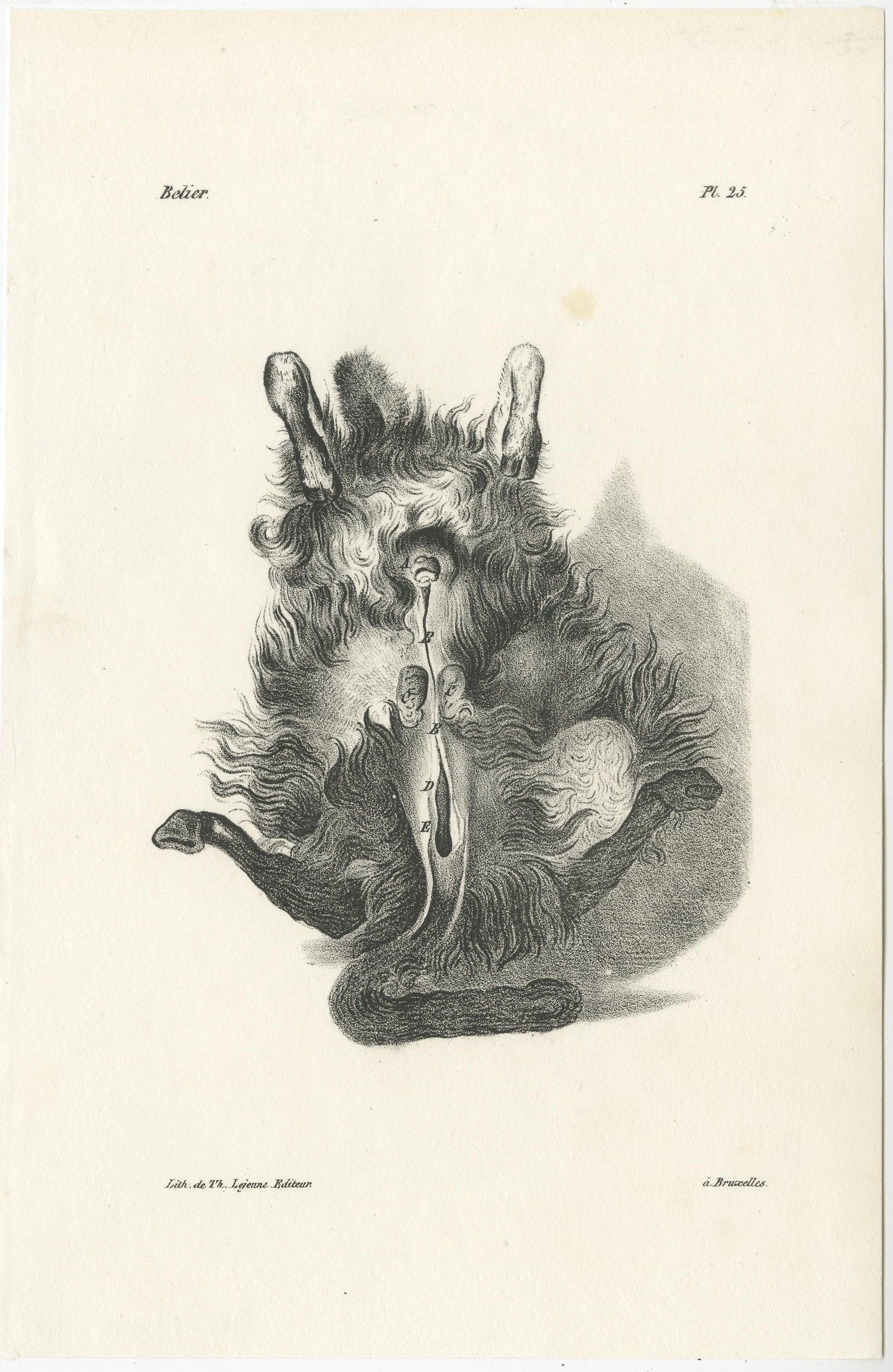
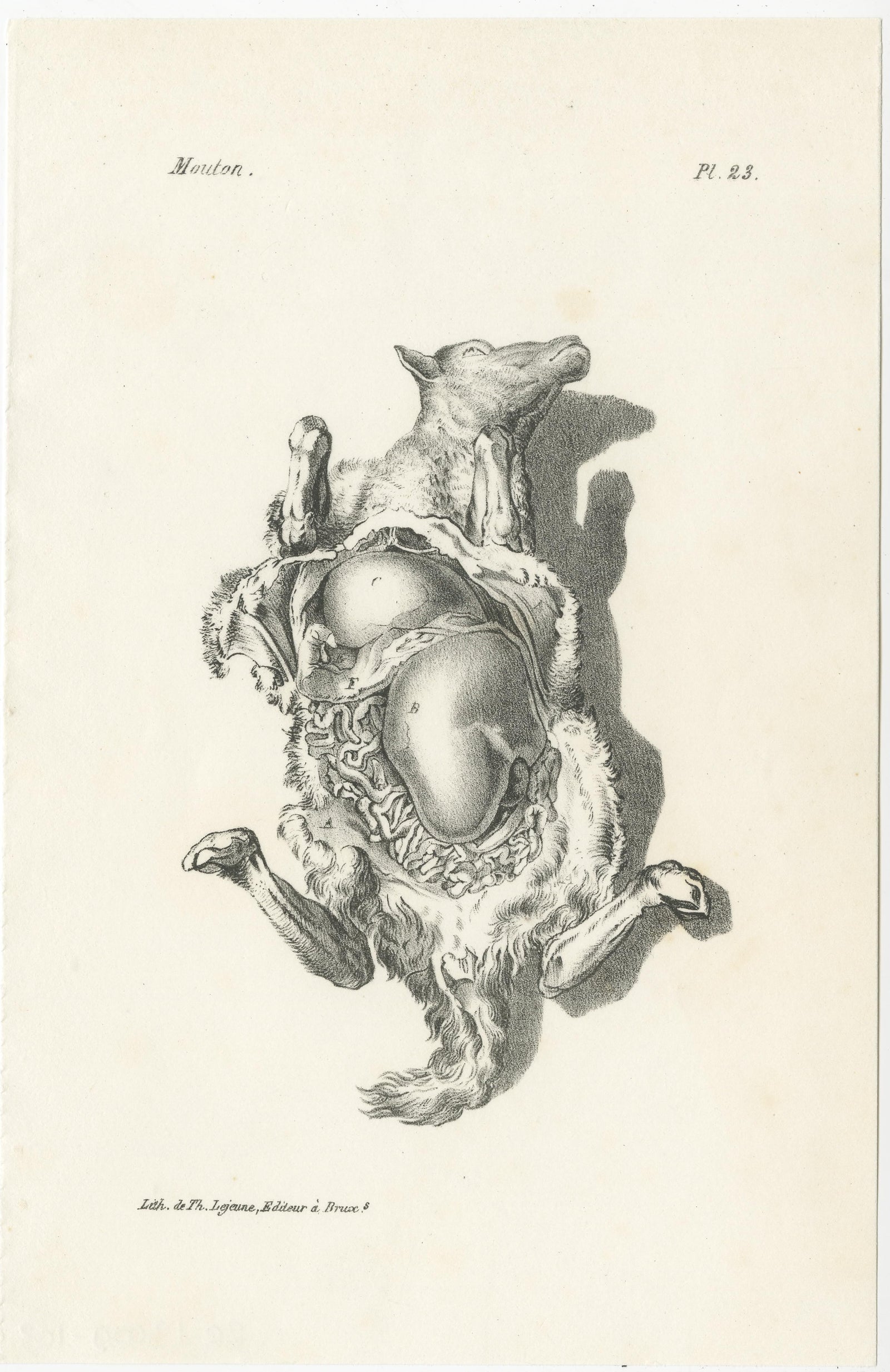
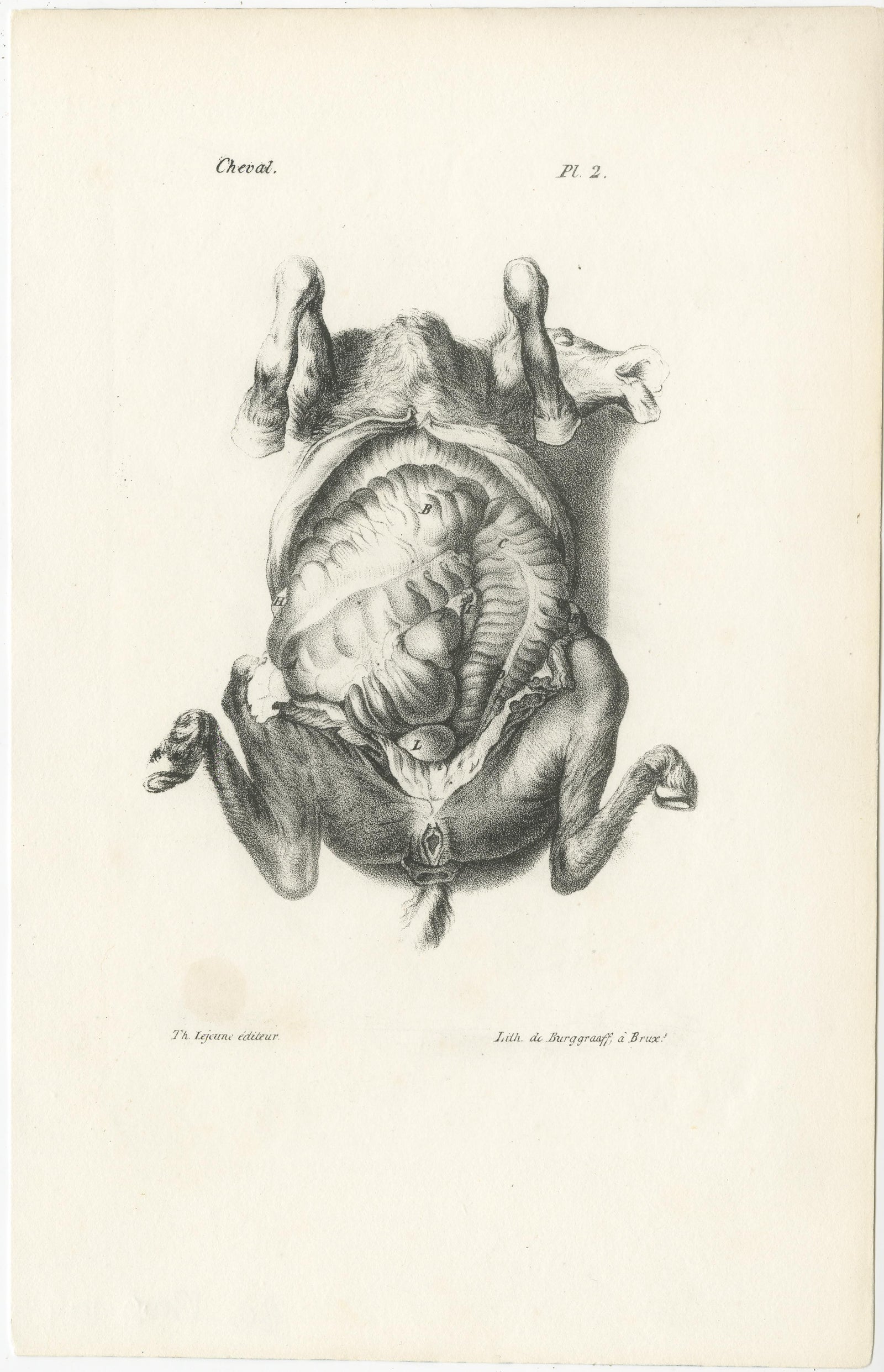
19th Century Animal Anatomy Prints by Lejeune, circa 1840
$675 (£510, €600)
Period original, not a reproduction.
Shipped from the Netherlands, flat, insured and tracked, worldwide. Returns accepted within 14 days.
- Date
- 1840
- Size
- 8.9 × 5.9 in (22.5 × 15 cm)
- Technique
- Engraved
- Condition
- Good. General age-related toning. Minor wear and a few tiny tears, some soiling. Blank verso. Please study images carefully.
- Period
- Early 19th century
- Section
- Mammals
- Reference
- f_25510122
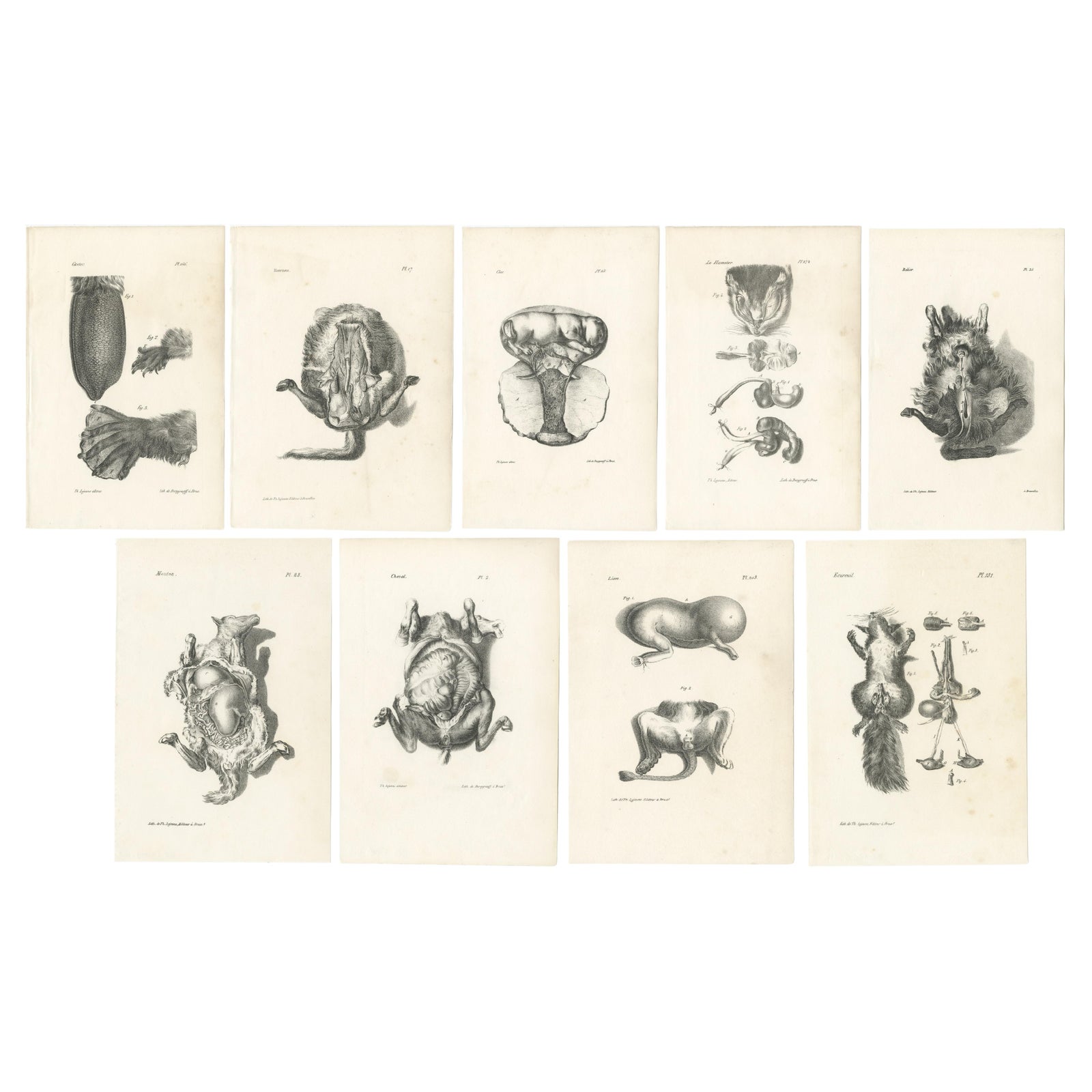
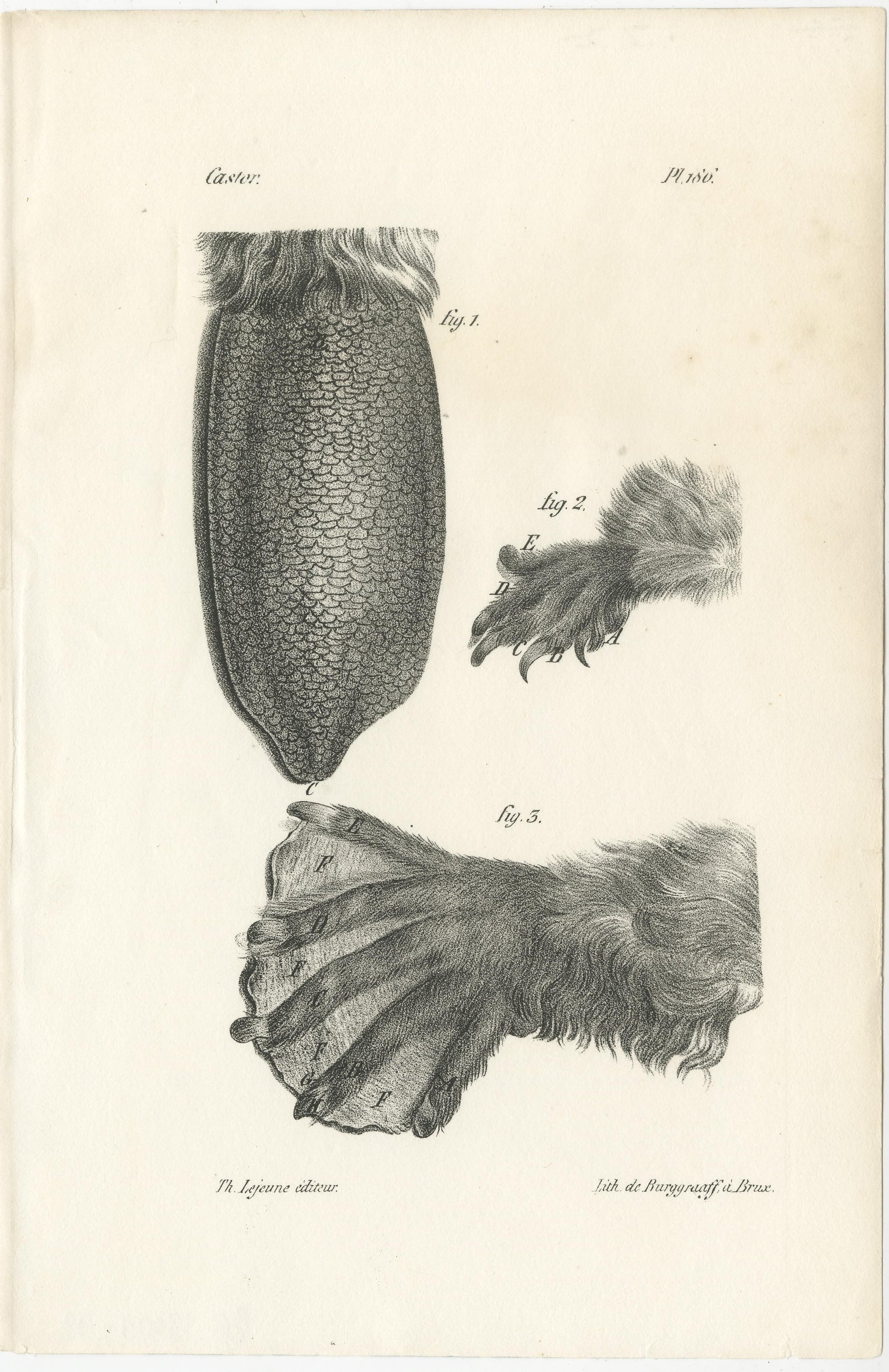
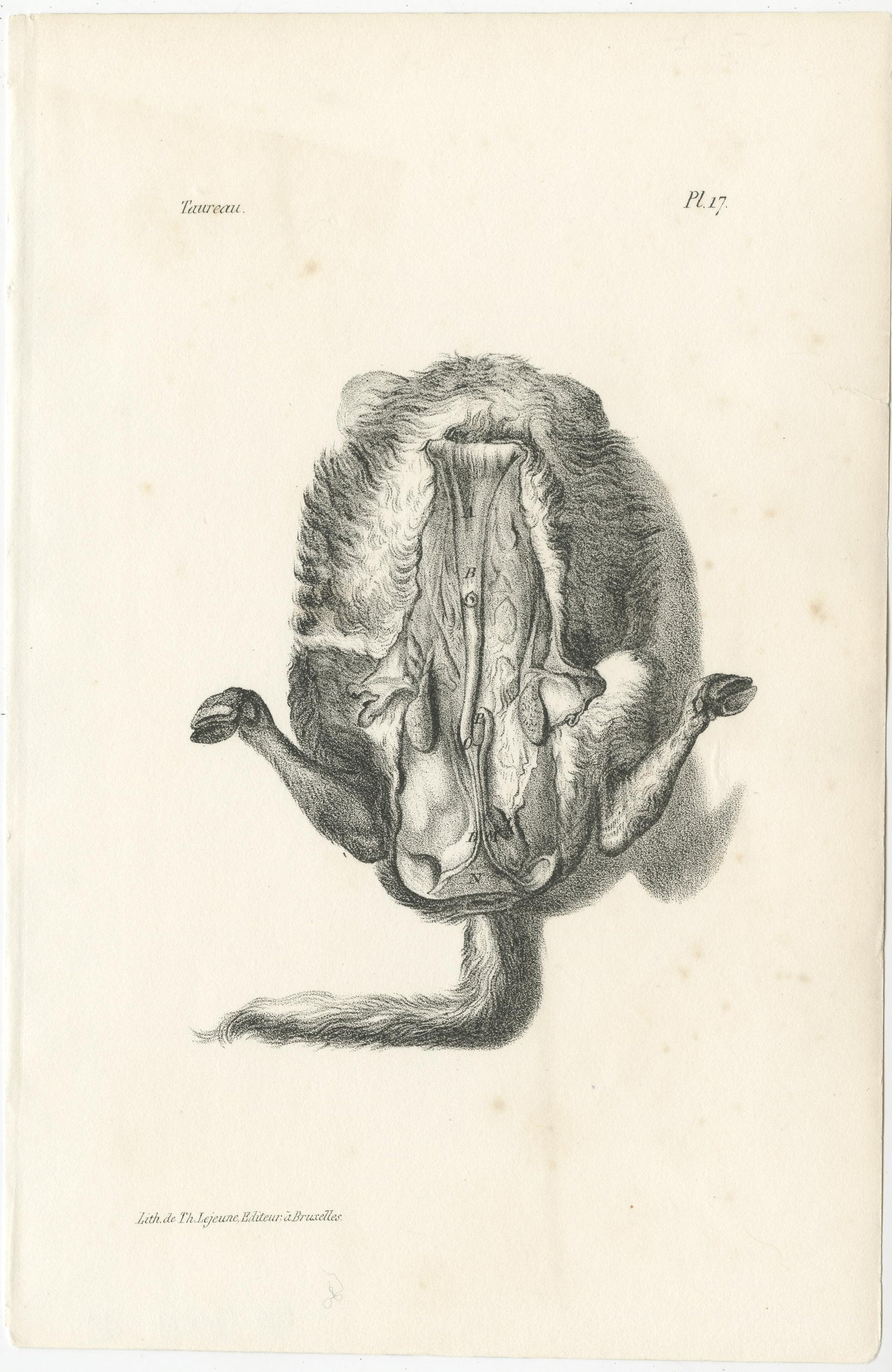
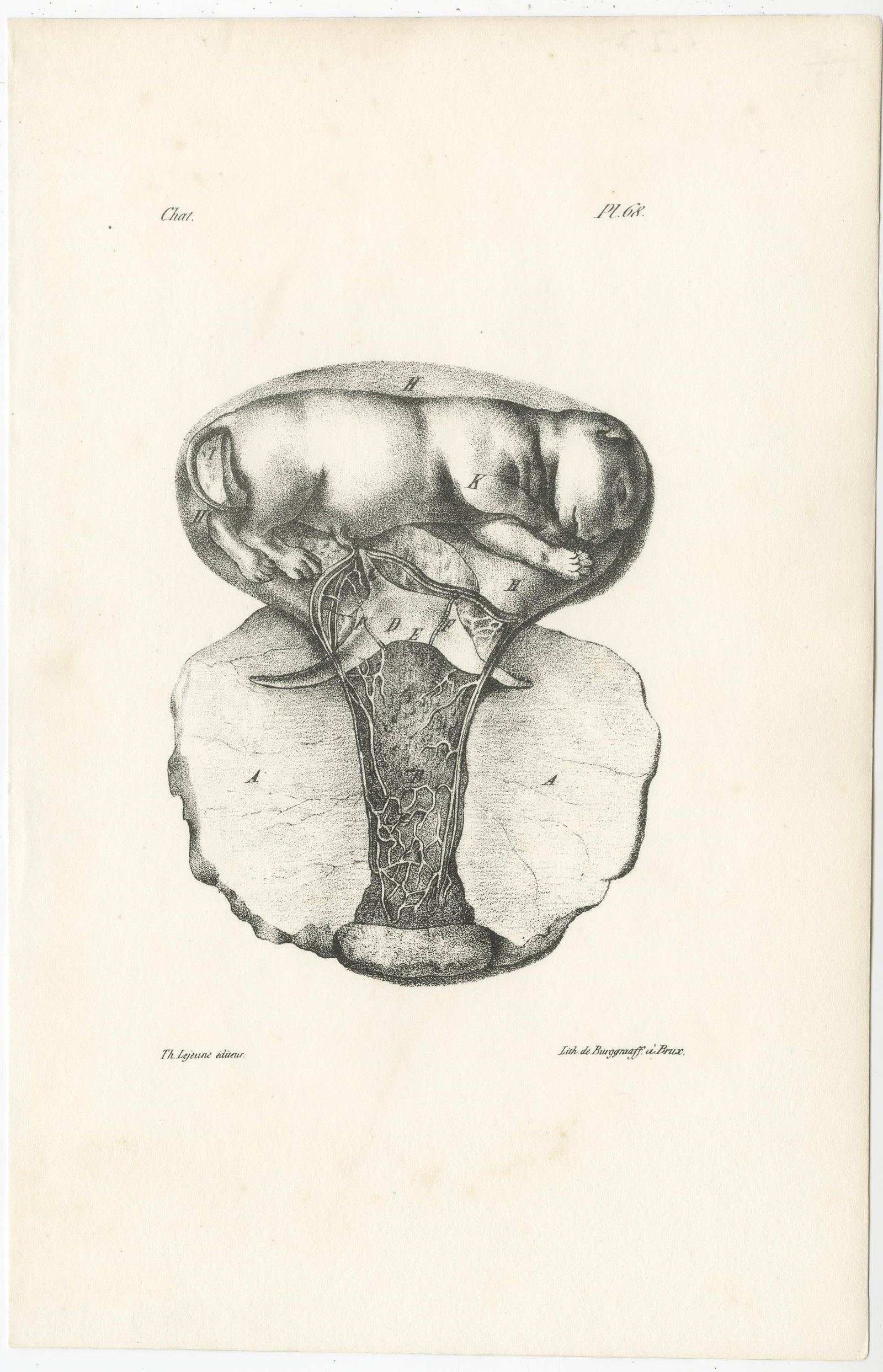
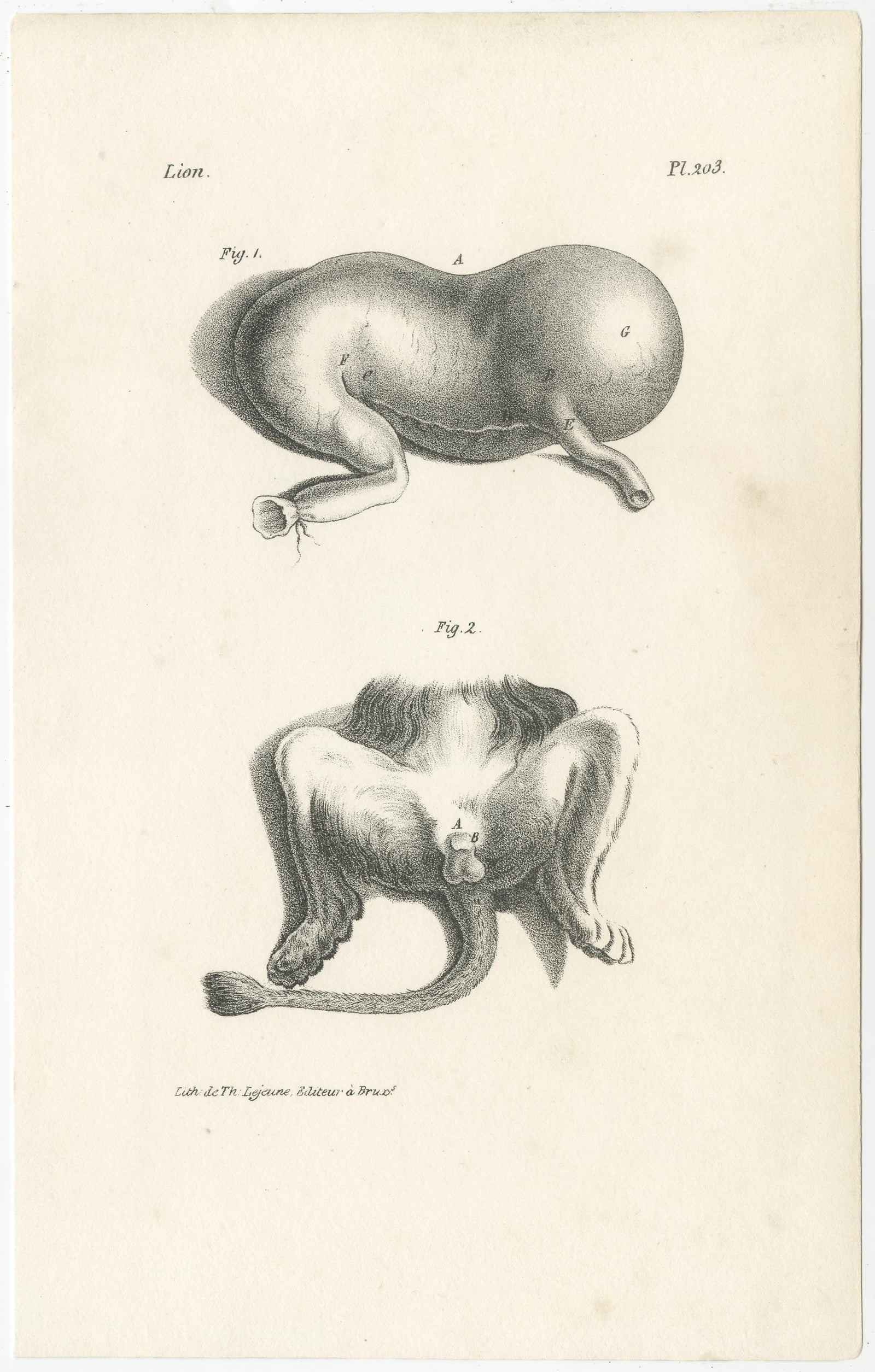
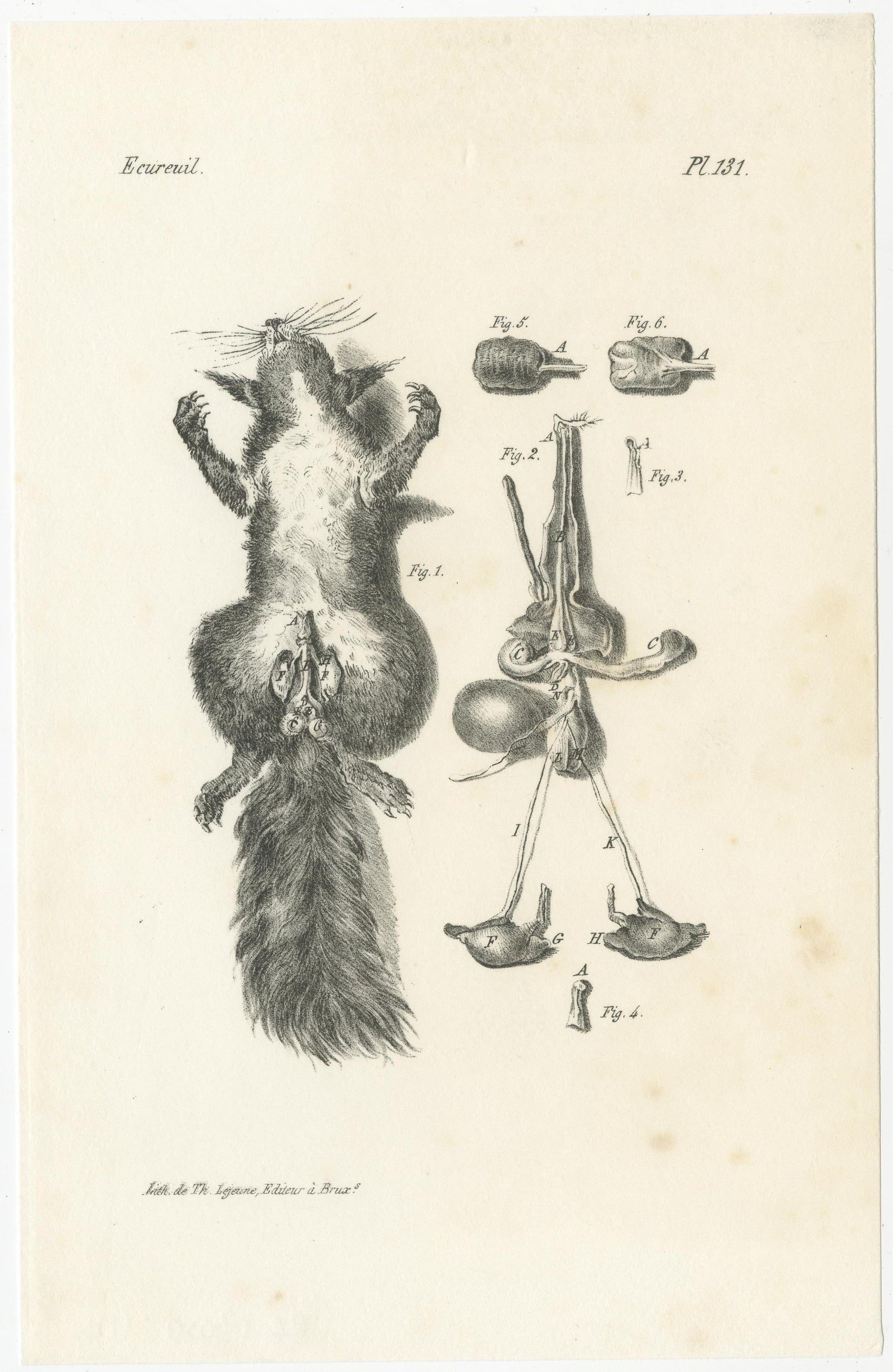
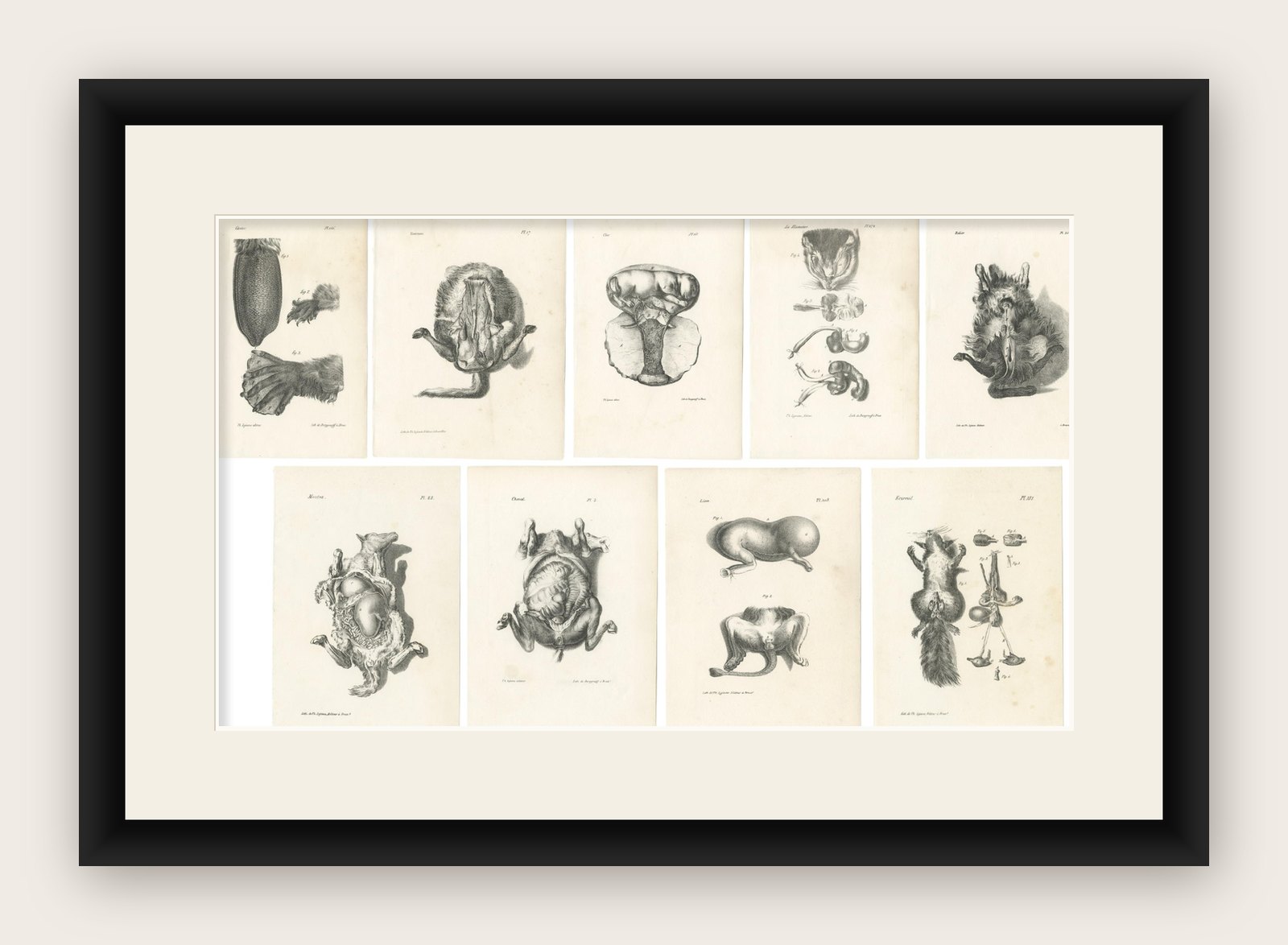
The set of nine antique animal anatomy prints, dating back to around 1840, showcases detailed illustrations of various animals, including a lion, horse, cat, and others. These prints primarily focus on the reproductive organs of these animals, providing intricate insights into their anatomical structures.
Published by Lejeune, these prints likely served as educational tools or references for anatomical studies. Such detailed illustrations of animal reproductive systems were invaluable for veterinary sciences, zoological studies, or medical education during that era.
The precision and intricacy of these antique prints offer a comprehensive visual study of the reproductive anatomy of different species, providing a glimpse into scientific knowledge and anatomical understanding during the mid-19th century. These prints serve as historical artifacts, reflecting the scientific exploration and interest in animal anatomy prevalent during that period.