Close-ups
Framed and on the wall
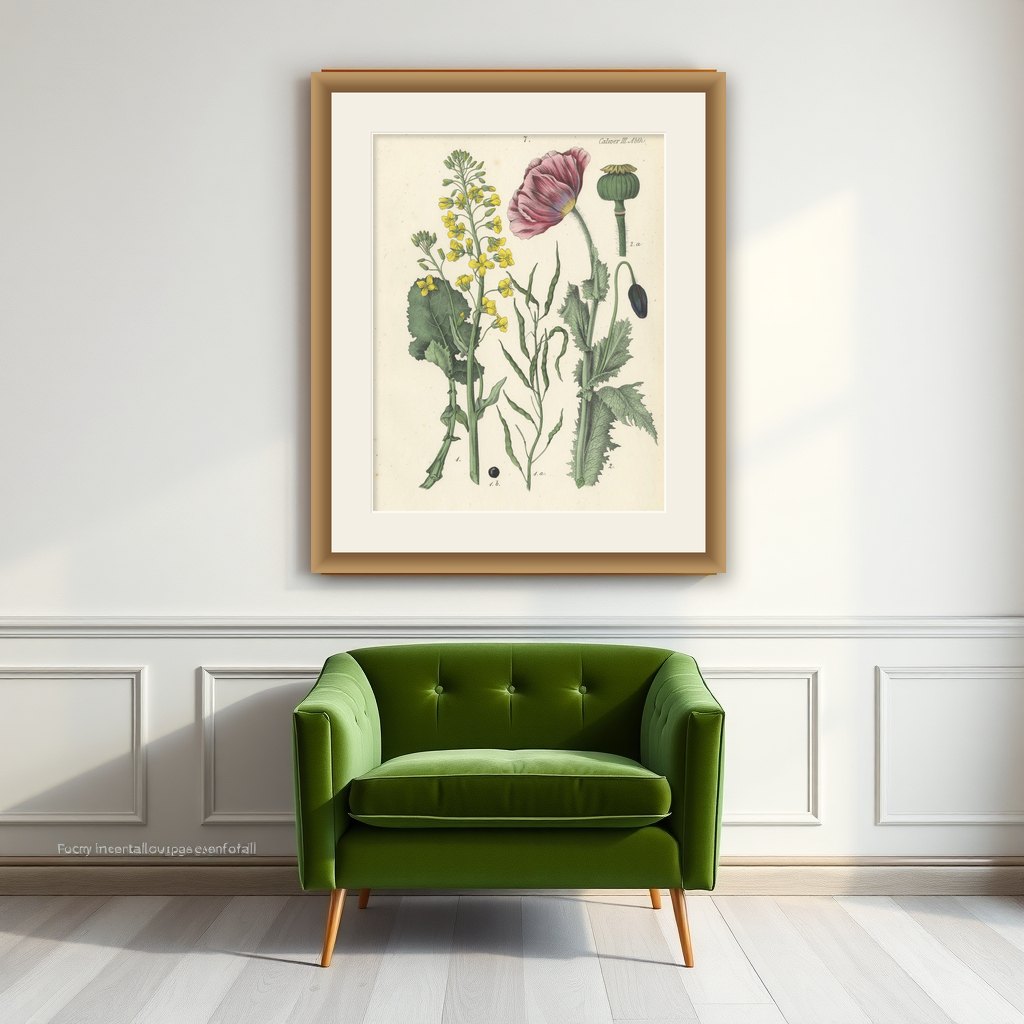
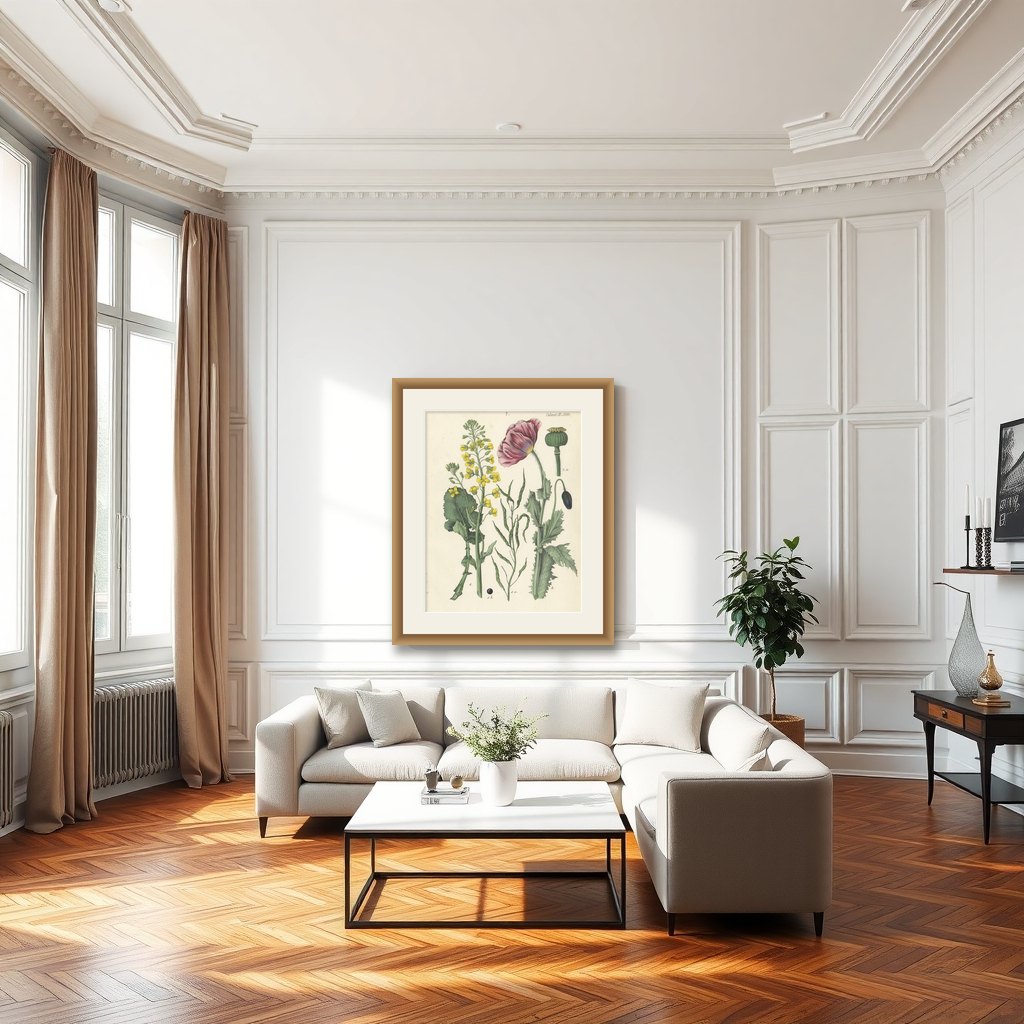
Frame and rooms are illustrations of how the print could look; the description says what is included.
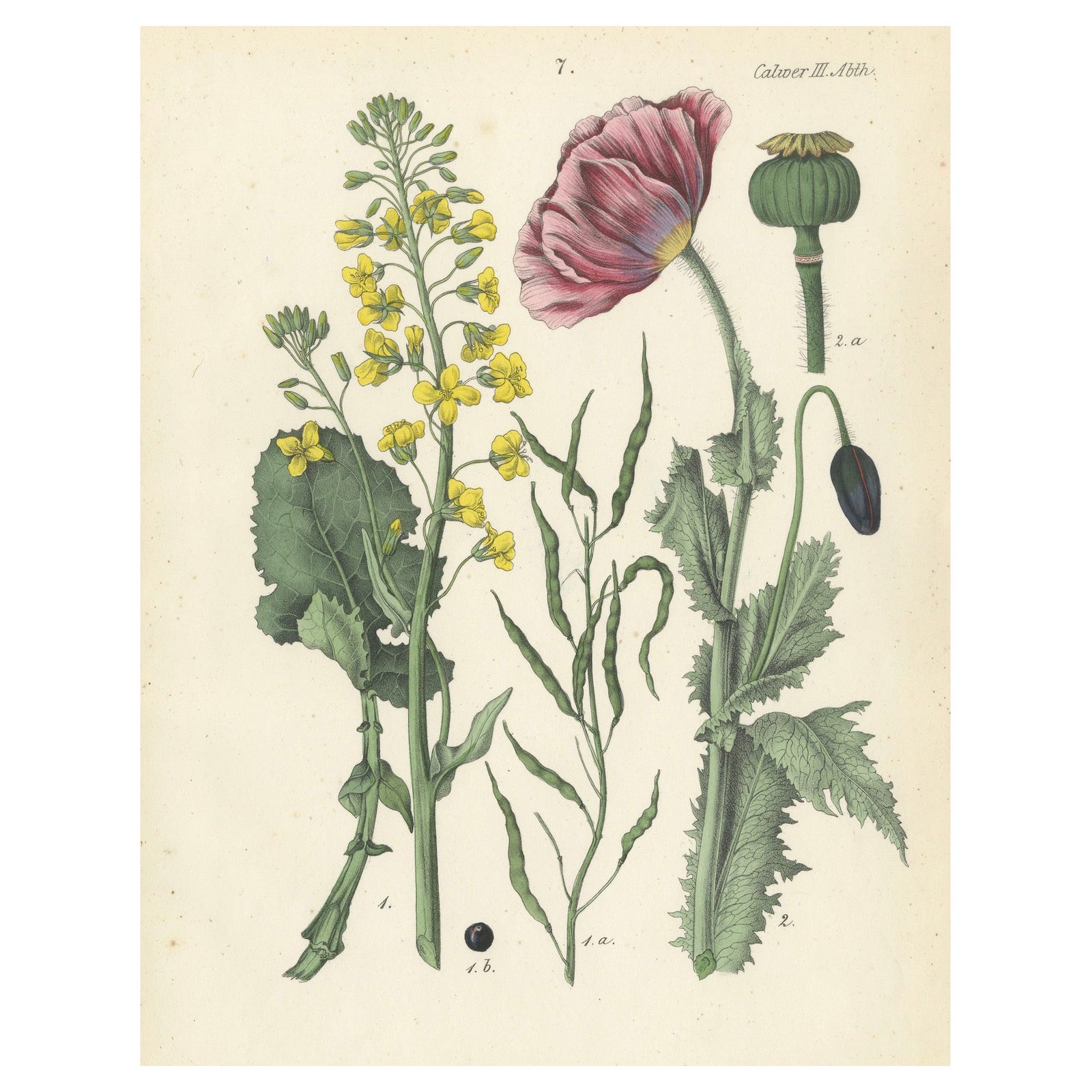
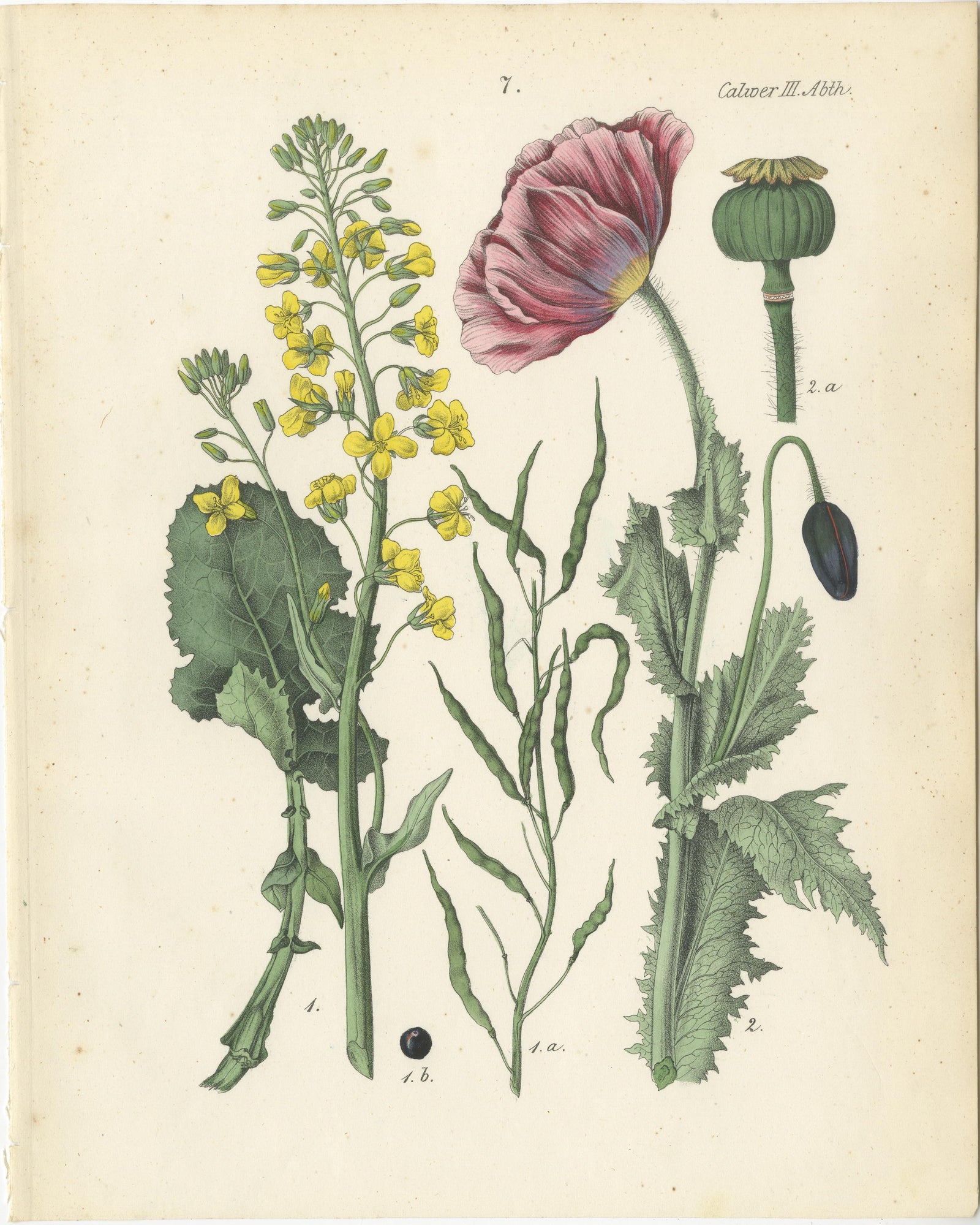
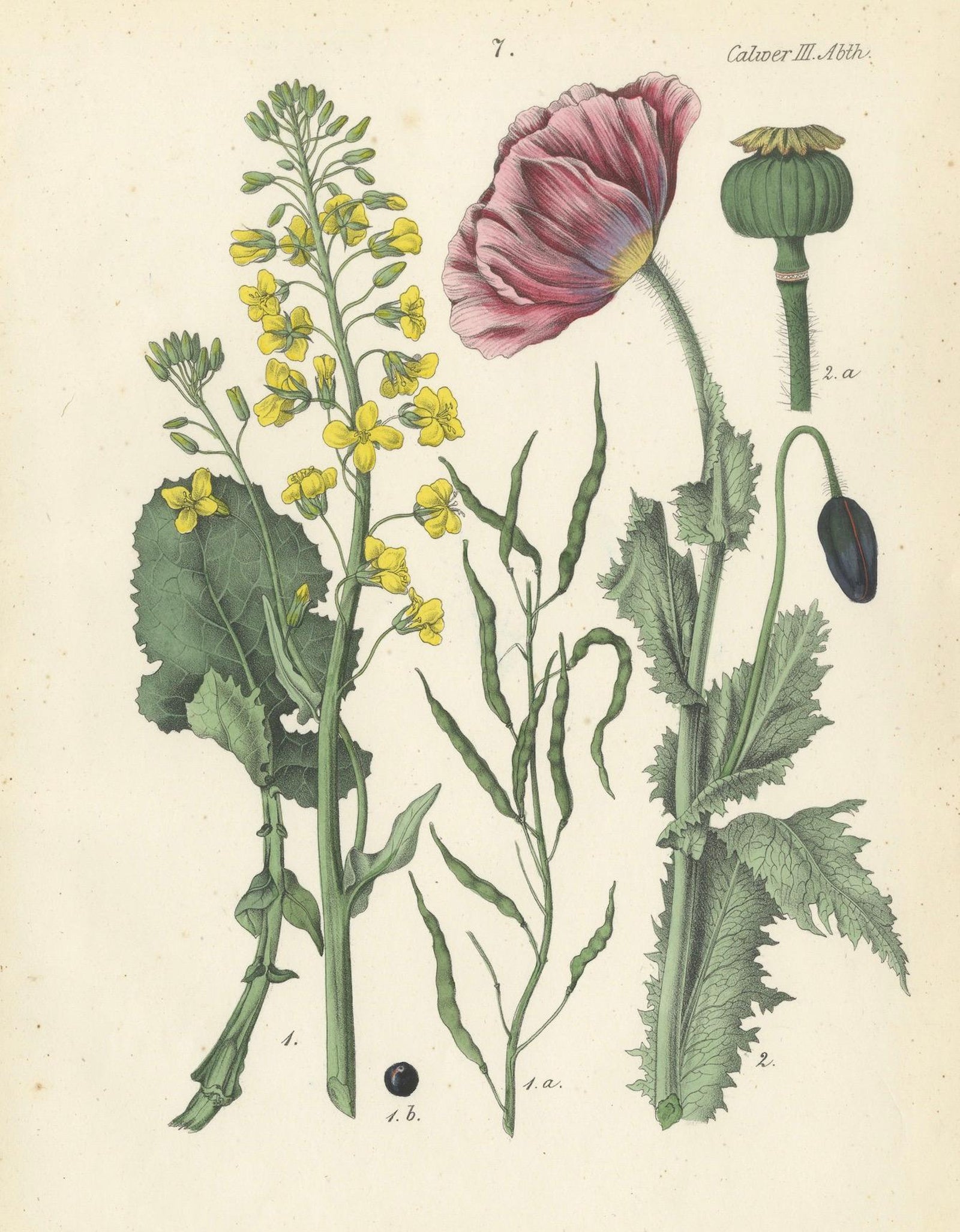
1854 Hand-Colored Botanical Lithograph of Rapeseed and Poppy
€360 ($405, £305, €360)
Period original, not a reproduction.
Shipped from the Netherlands, flat, insured and tracked, worldwide. Returns accepted within 14 days.
- Date
- 1854
- Size
- 10.2 × 8.1 in (26 × 20.5 cm)
- Condition
- The print is in excellent condition with minor signs of age-related foxing and light edge wear. Colors remain bright and vibrant, with sharp detailing throughout.
- Period
- Late 19th century
- Artist or book
- Calwer's Käferbuch
- Section
- Botanical
- Reference
- f_43019972
Hand-Colored Botanical Lithograph of Rapeseed and Poppy, Calwer, 1854
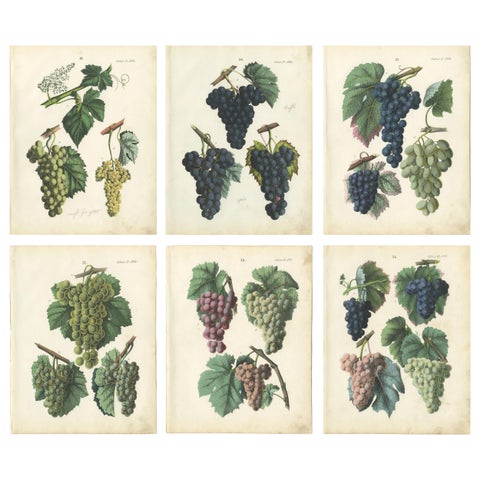
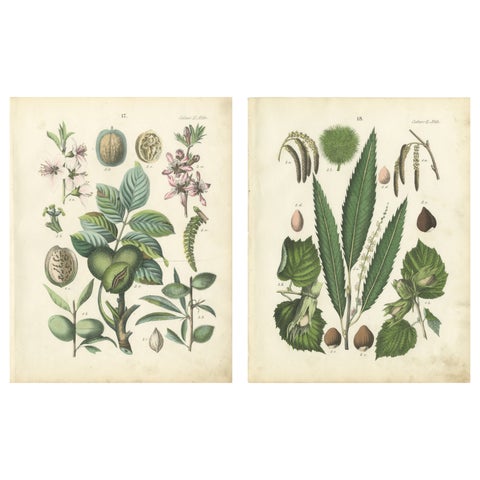
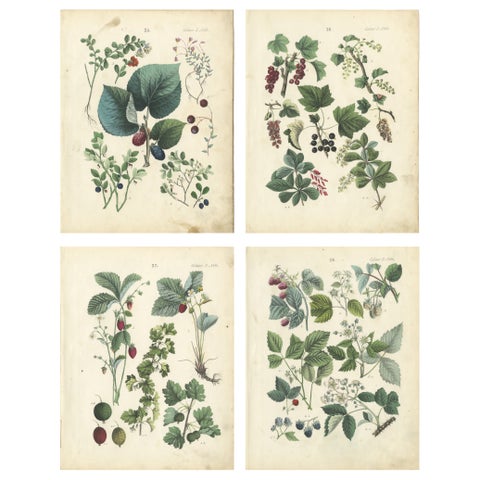
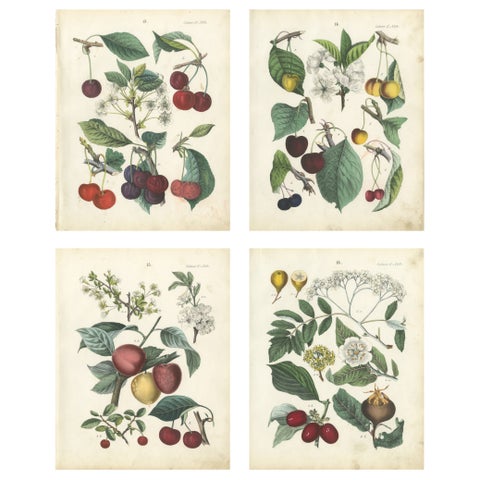
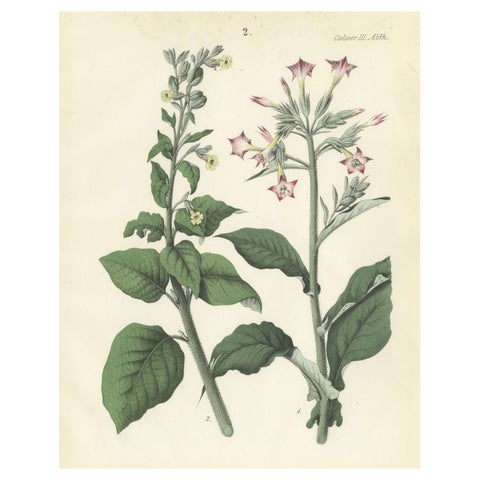
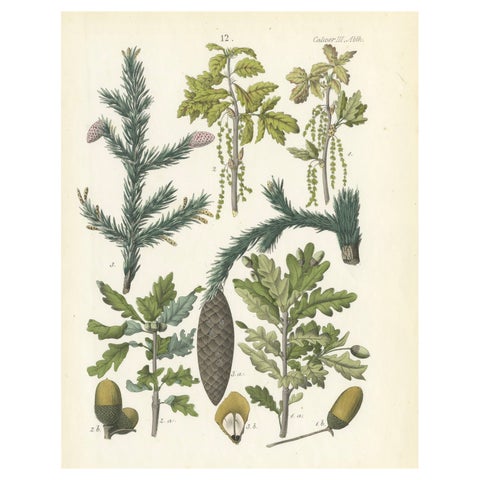
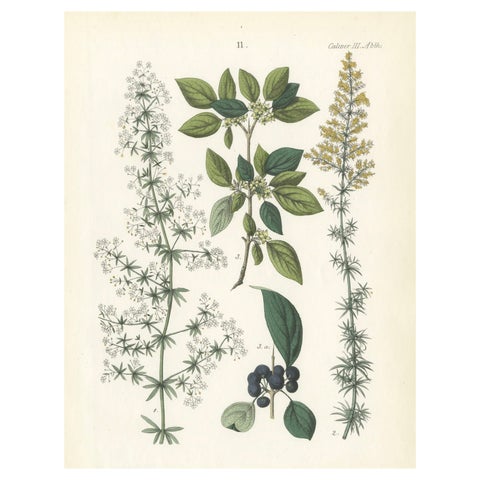
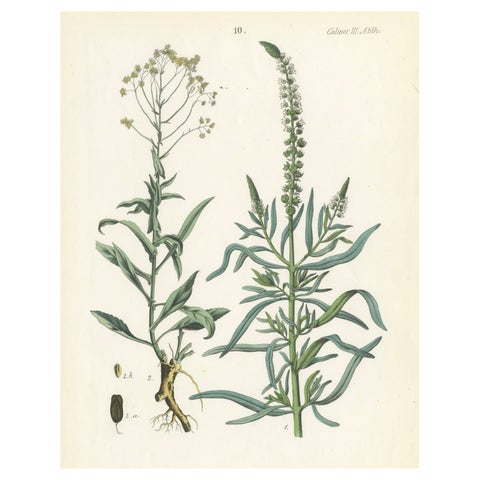
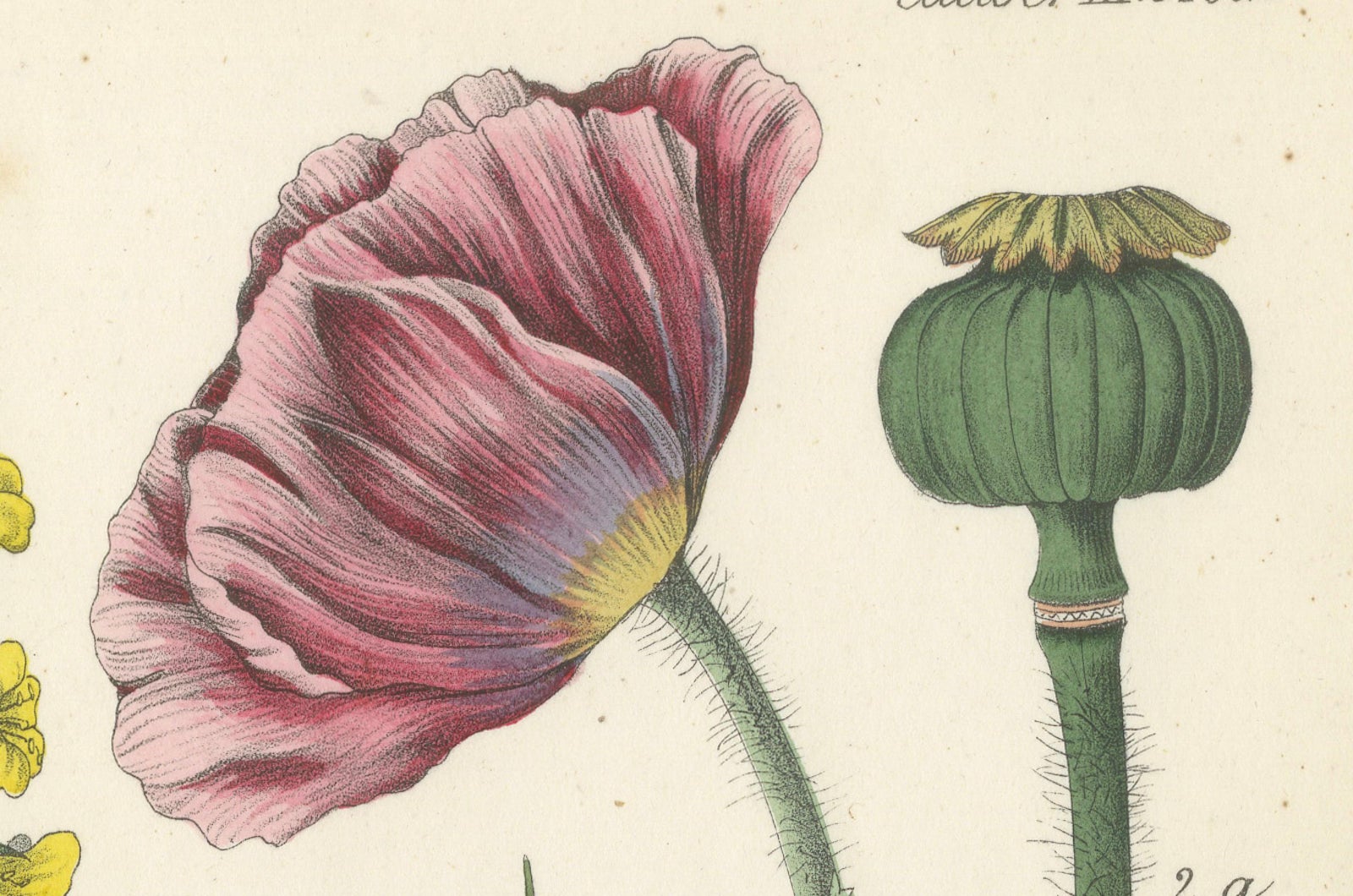
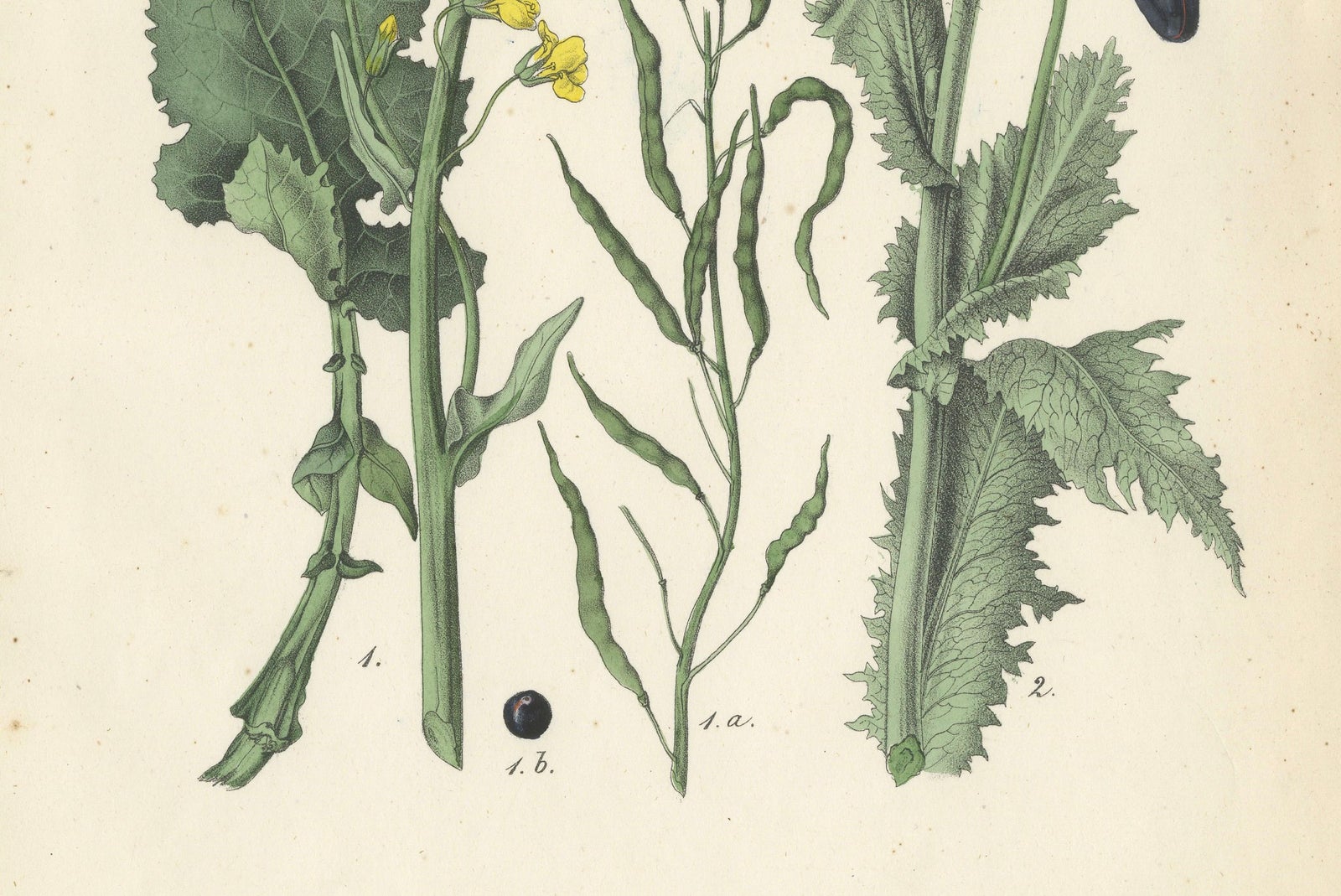
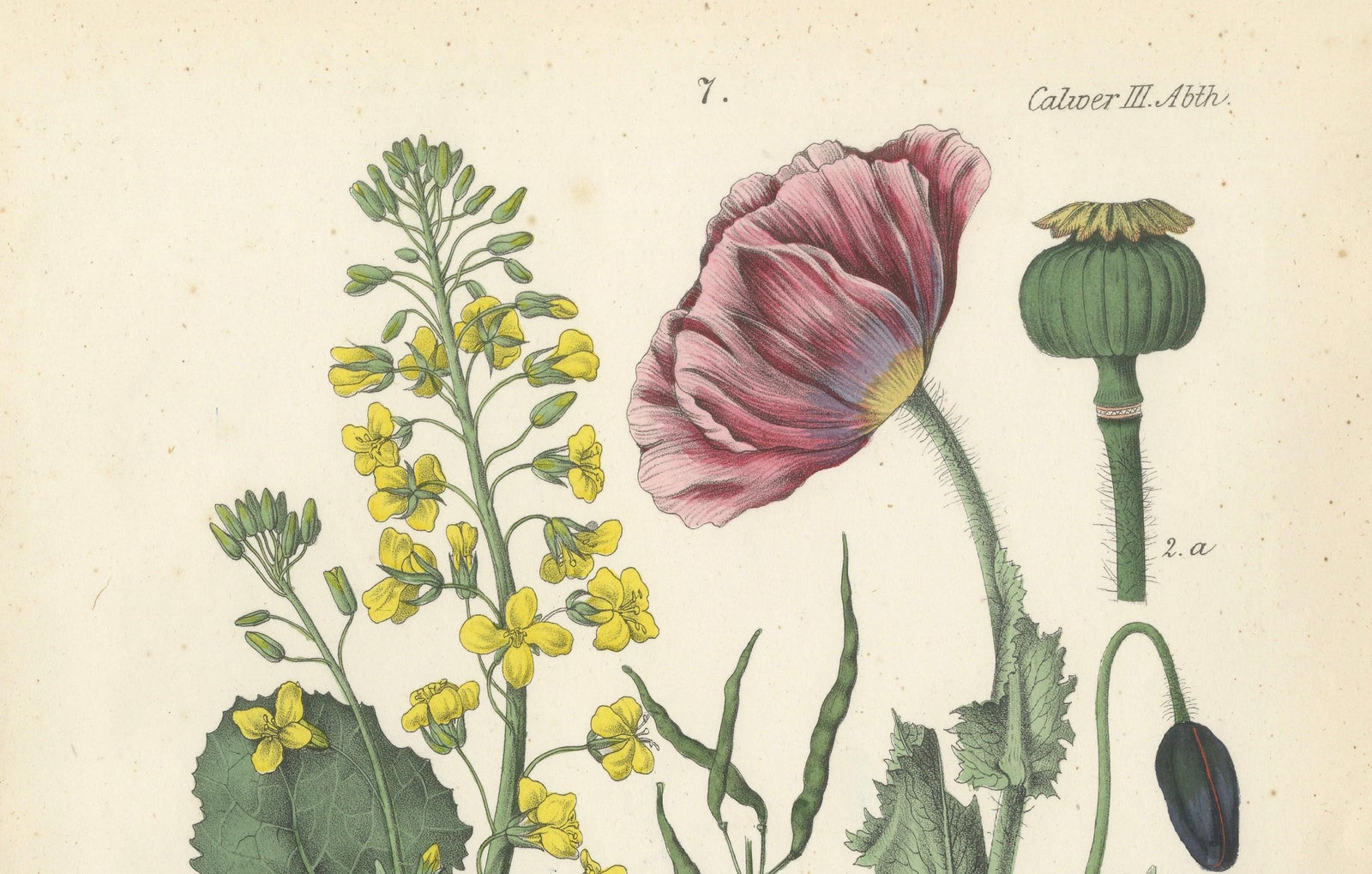
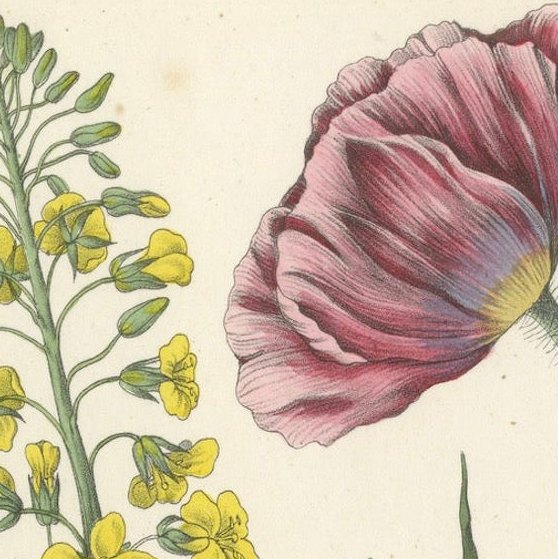
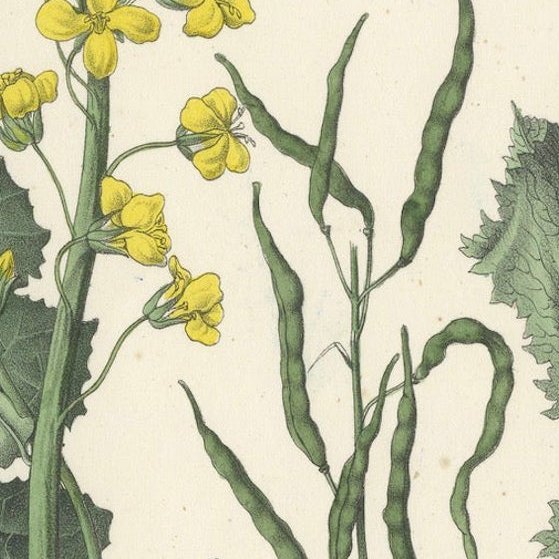
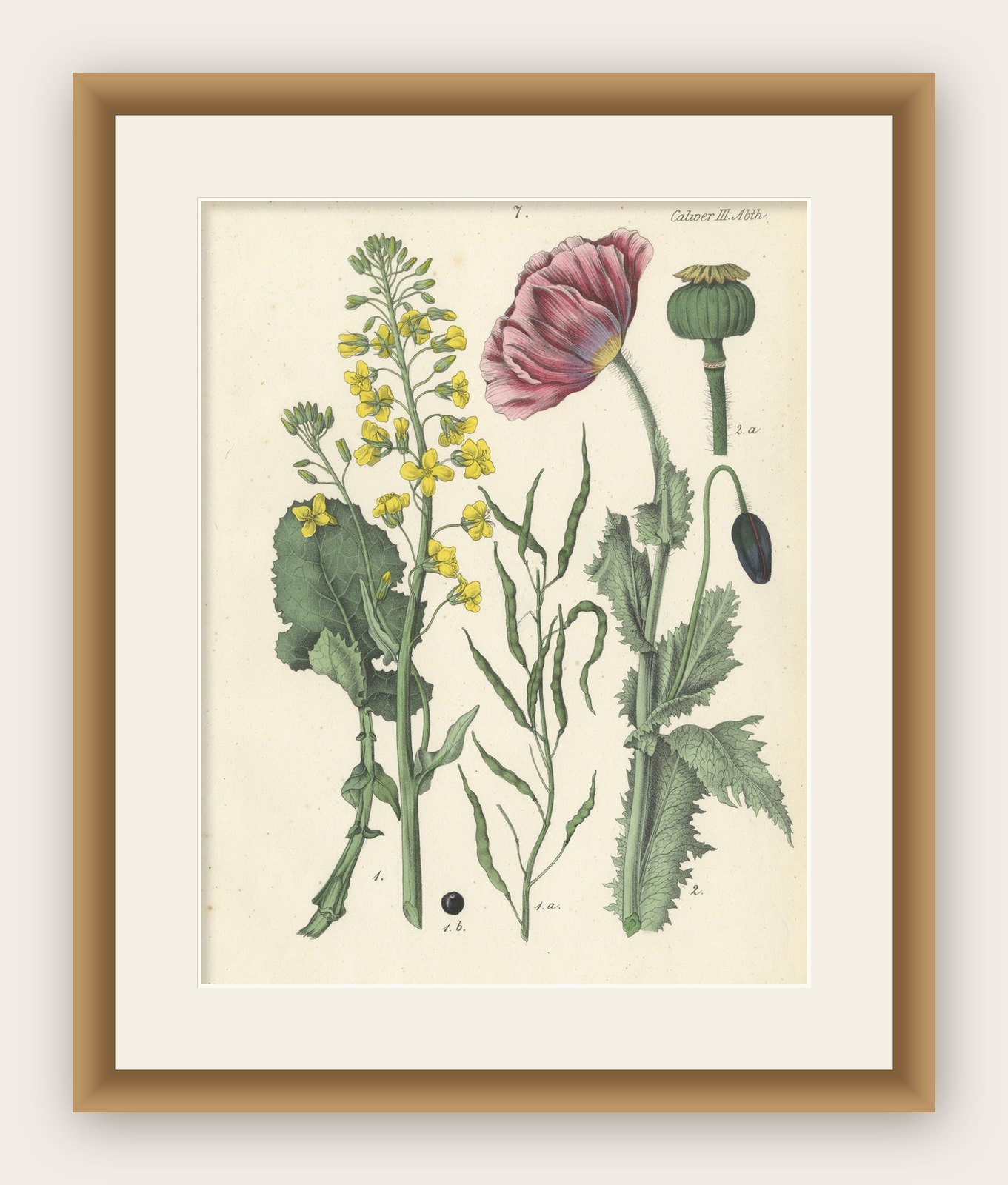
This stunning botanical lithograph is from Carl Georg Calwer’s *Deutschlands Technische Pflanzen* (1854), a distinguished work on Germany’s industrial and agricultural plants. The illustration features Brassica napus (rapeseed) and Papaver somniferum (opium poppy), both beautifully rendered with vibrant hand-applied coloring. Rapeseed, with its bright yellow blossoms and slender seed pods, was widely cultivated for its oil and as fodder. The opium poppy, adorned with striking pink petals and distinctive seed capsules, holds historical significance for its medicinal uses and culinary applications.
The composition showcases the intricate botanical details of the leaves, stems, flowers, and seed structures, reflecting the precision of 19th-century botanical art. Scientific annotations accompany the illustration, offering insight into the practical roles of these plants in agriculture, medicine, and industry.
This lithograph is an excellent choice for collectors of antique botanical art or enthusiasts of natural history. Measuring approximately 24 x 30 cm, it is suitable for framing and display, adding both educational and decorative value to libraries, studies, or galleries. The harmonious blend of artistry and science makes it a timeless representation of botanical heritage.
Condition: The print is in very good condition, with minor foxing and light edge wear. Colors remain vivid, and the details are sharp, preserving its historical and artistic significance.