Close-ups
Framed and on the wall



Frame and rooms are illustrations of how the print could look; the description says what is included.
1805 Hand-Colored Engraving of Fungi Specimens from Bertuch’s Work
$120 (£90, €110)
Period original, not a reproduction.
Shipped from the Netherlands, flat or rolled, insured and tracked, worldwide. Returns accepted within 14 days.
- Date
- 1805
- Size
- 9.1 × 7.5 in (23 × 19 cm)
- Condition
- Minor edge foxing and age-related toning due to age and handling; the colors remain vibrant and visually striking. Study the images carefully.
- Period
- Early 19th century
- Artist or book
- Bertuch
- Section
- Botanical
- Reference
- f_42873522
- Color
- Hand colored
What the condition grades mean
- Excellent
- Bright and clean, with no faults worth mentioning.
- Very good
- Only light signs of age, such as faint toning.
- Good
- Normal signs of age for a sheet of this period: toning, some foxing, small marks or neat old repairs.
- Fair
- Clear faults such as staining, tears or repairs, priced to match.
Every fault we see is written in the condition note, and the whole sheet is shown uncropped in the photos.
Title: 1805 Hand-Colored Engraving of Fungi Specimens from Bertuch’s Work
Description:
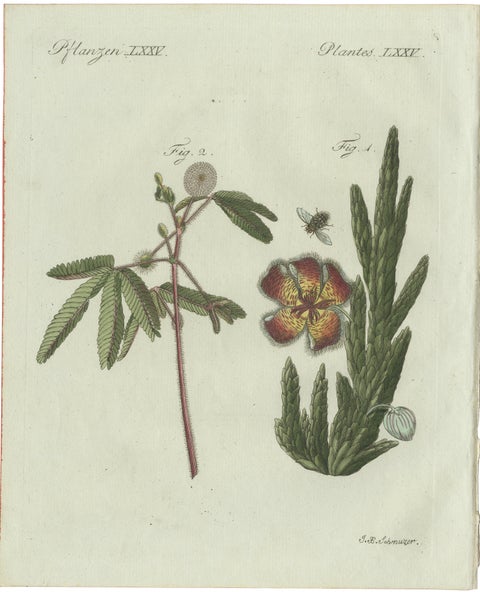
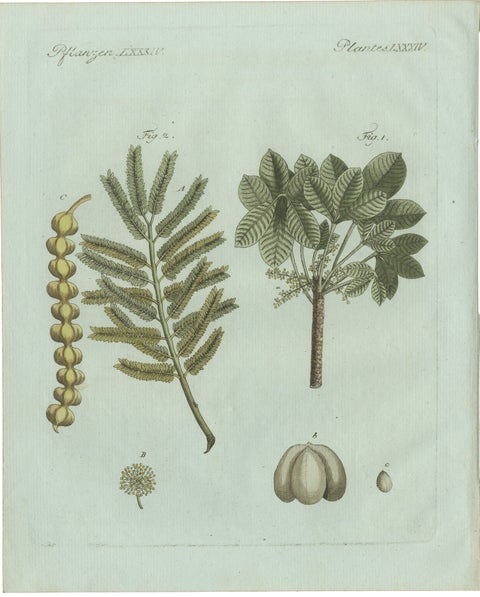
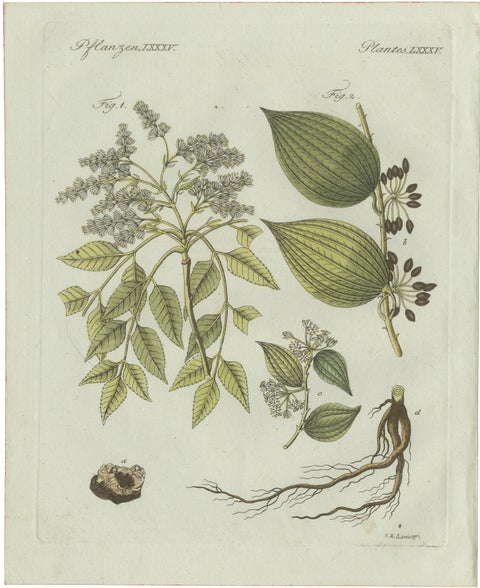
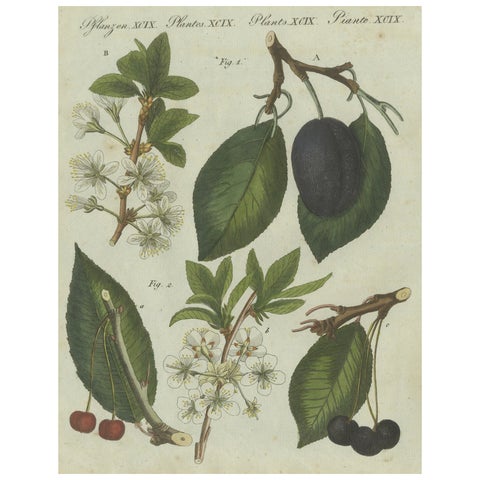
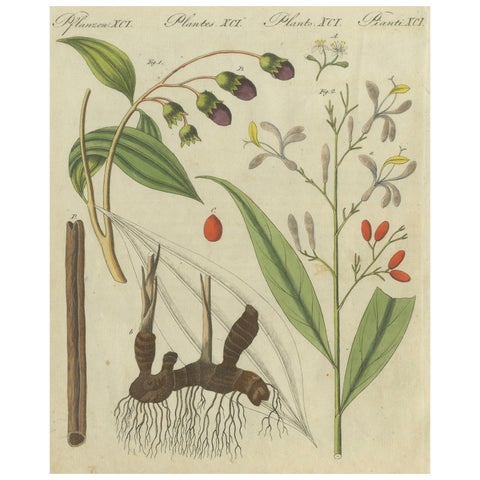
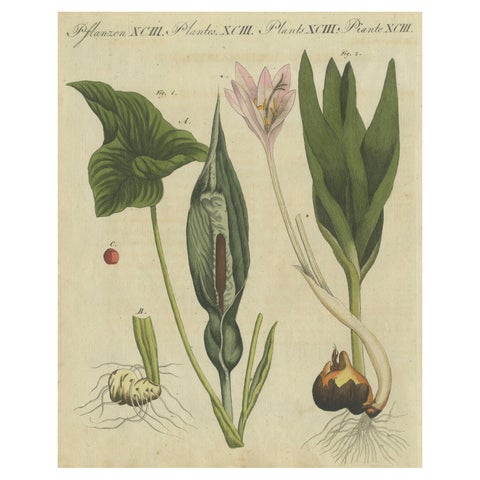
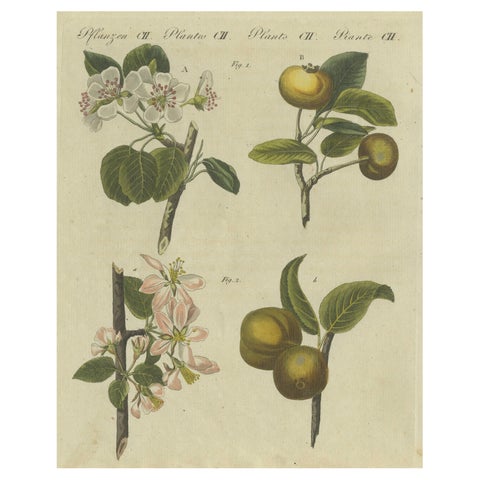
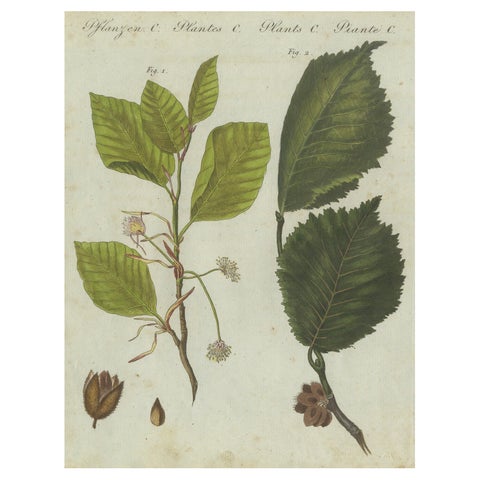
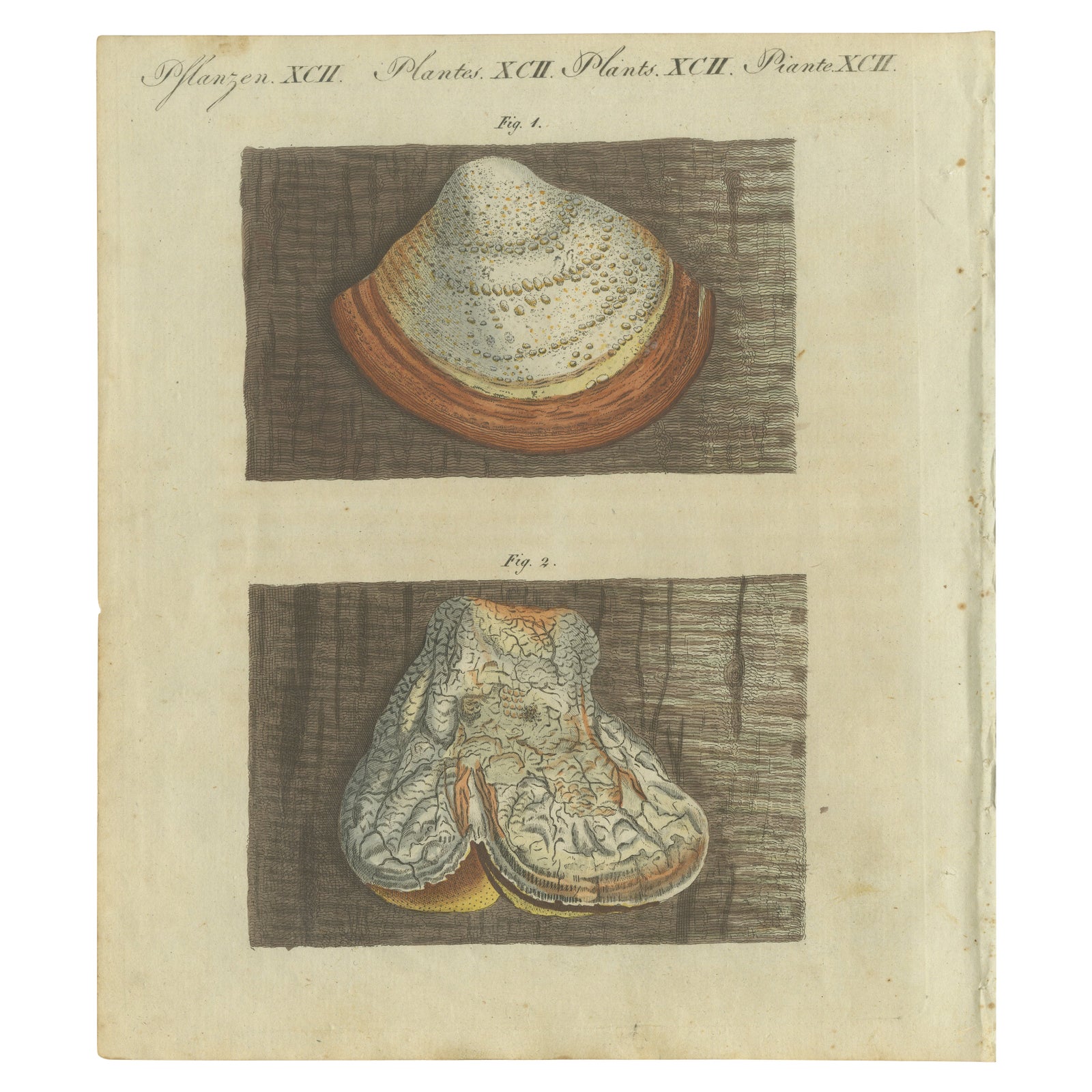
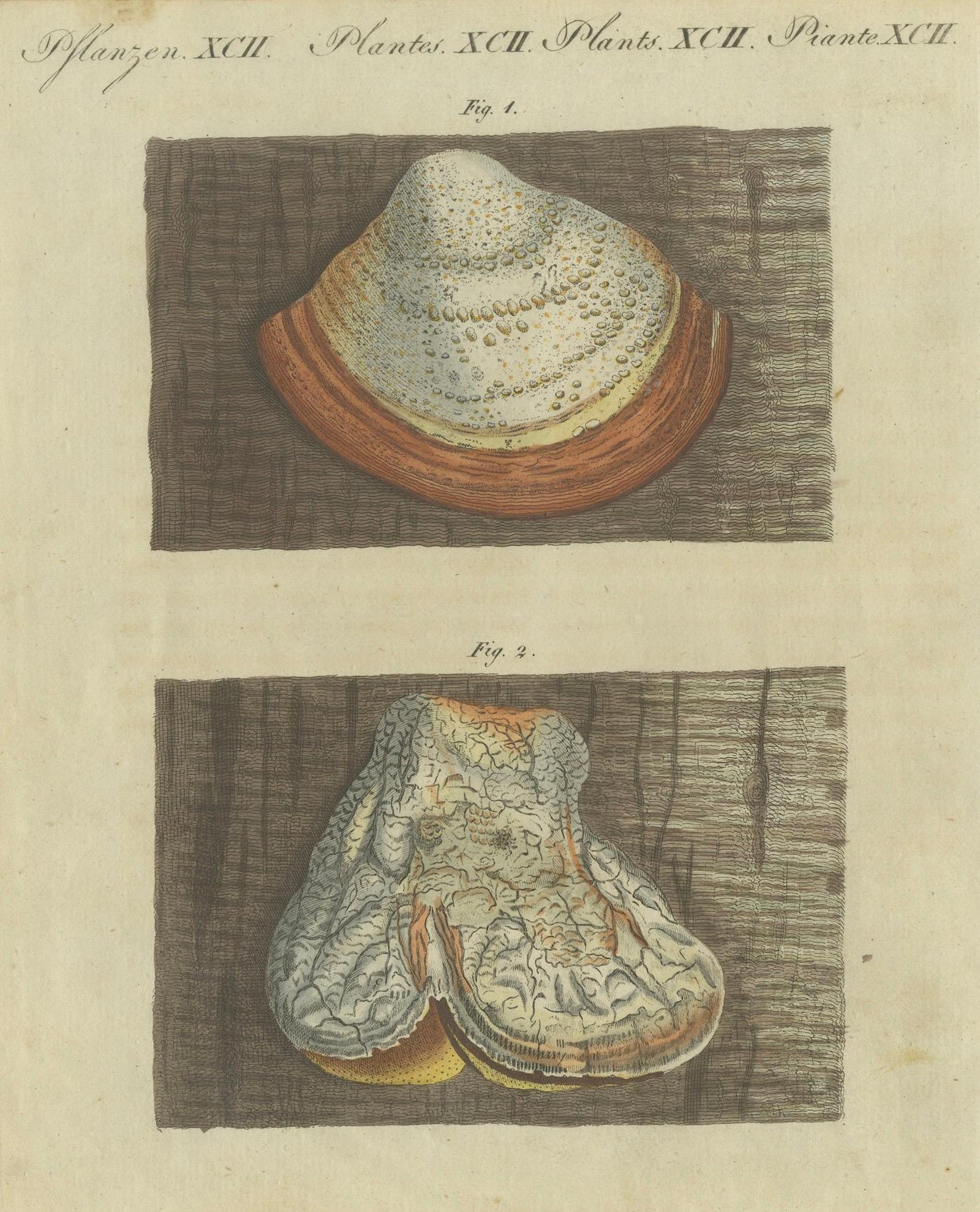
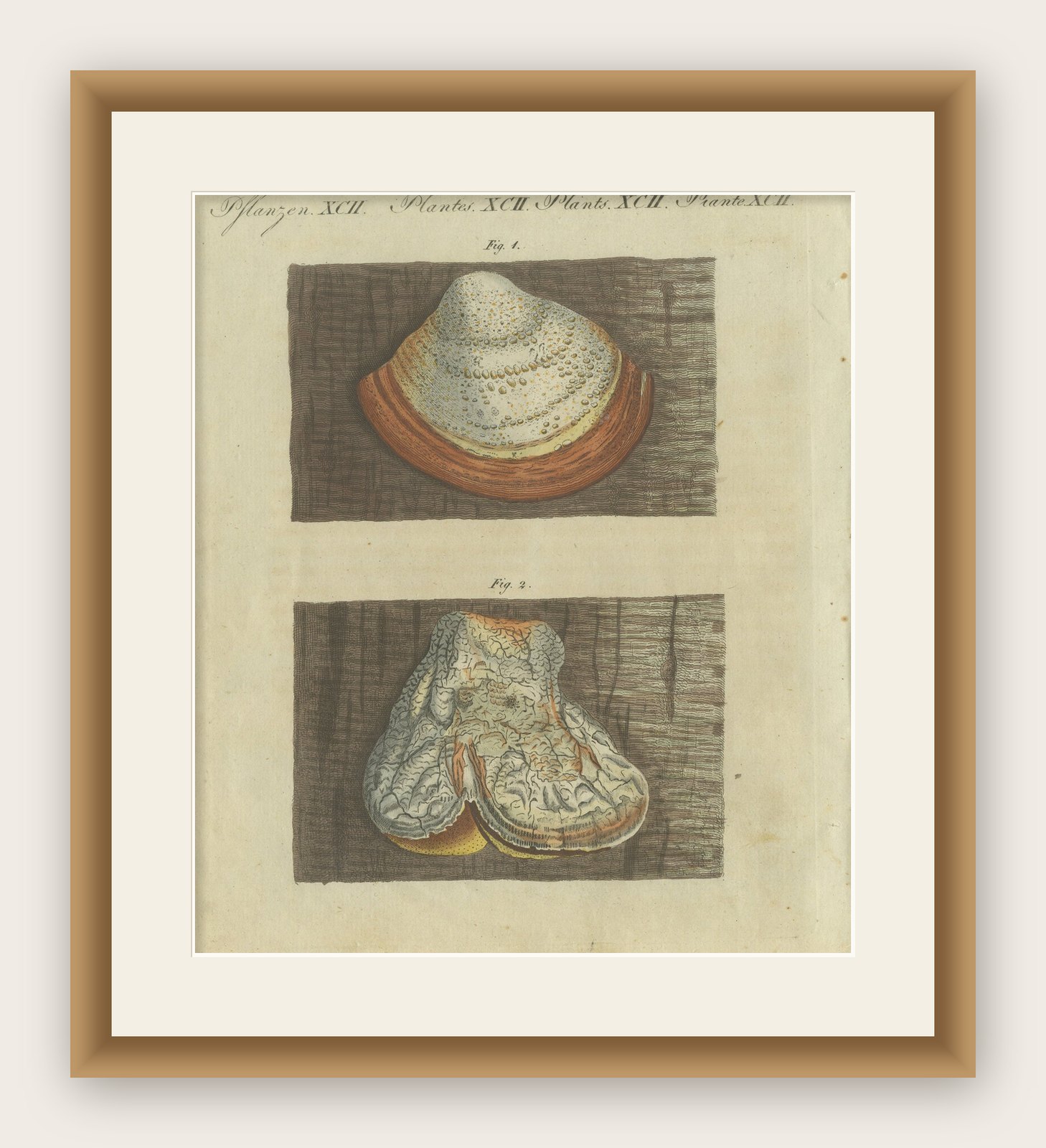
This stunning hand-colored engraving comes from Friedrich Justin Bertuch’s Porte-Feuille des Enfants (Children's Portfolio), published in 1805. The print features two detailed and artistic depictions of fungi specimens, providing a fascinating glimpse into the scientific and artistic approach to natural history during the early 19th century.
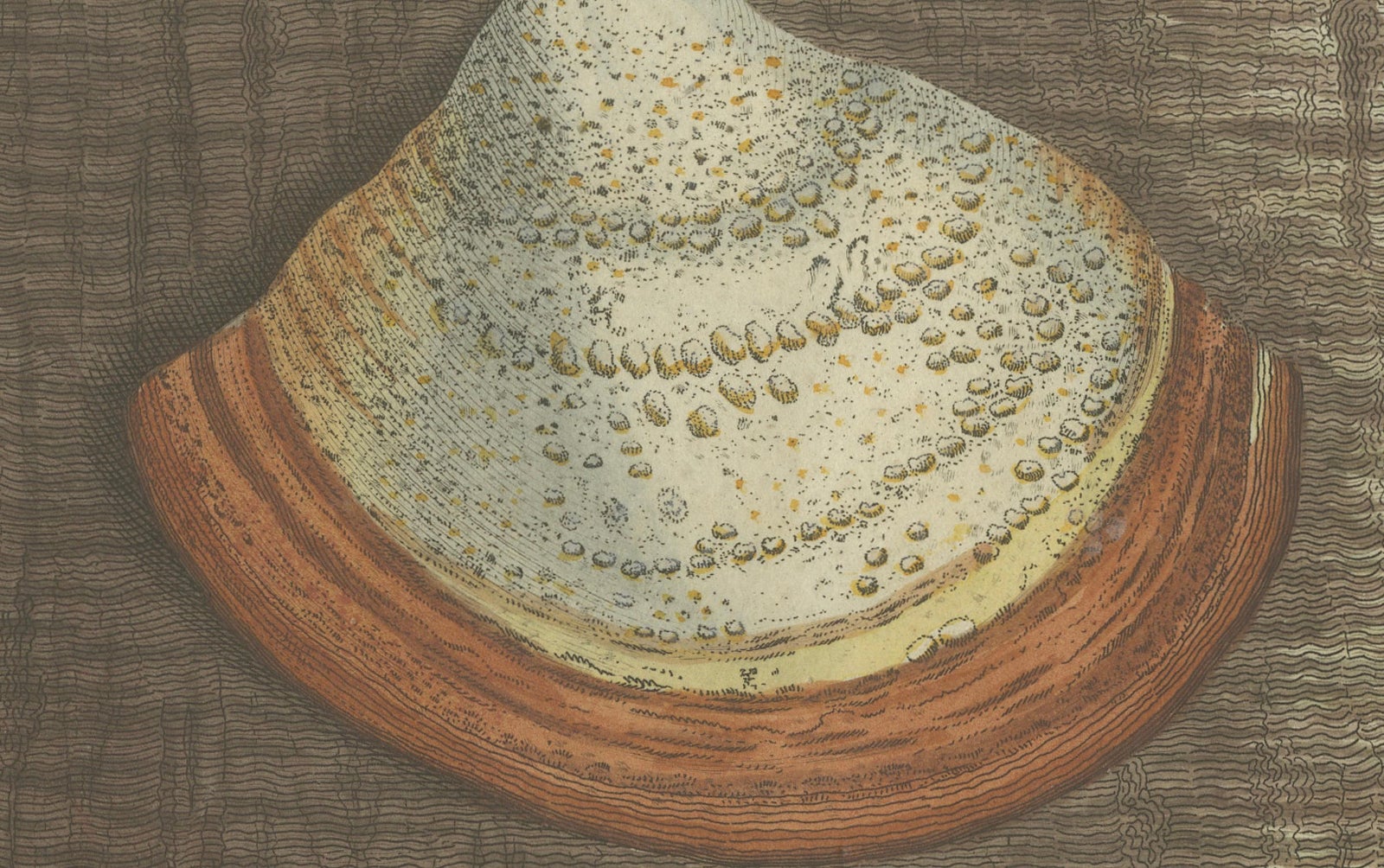
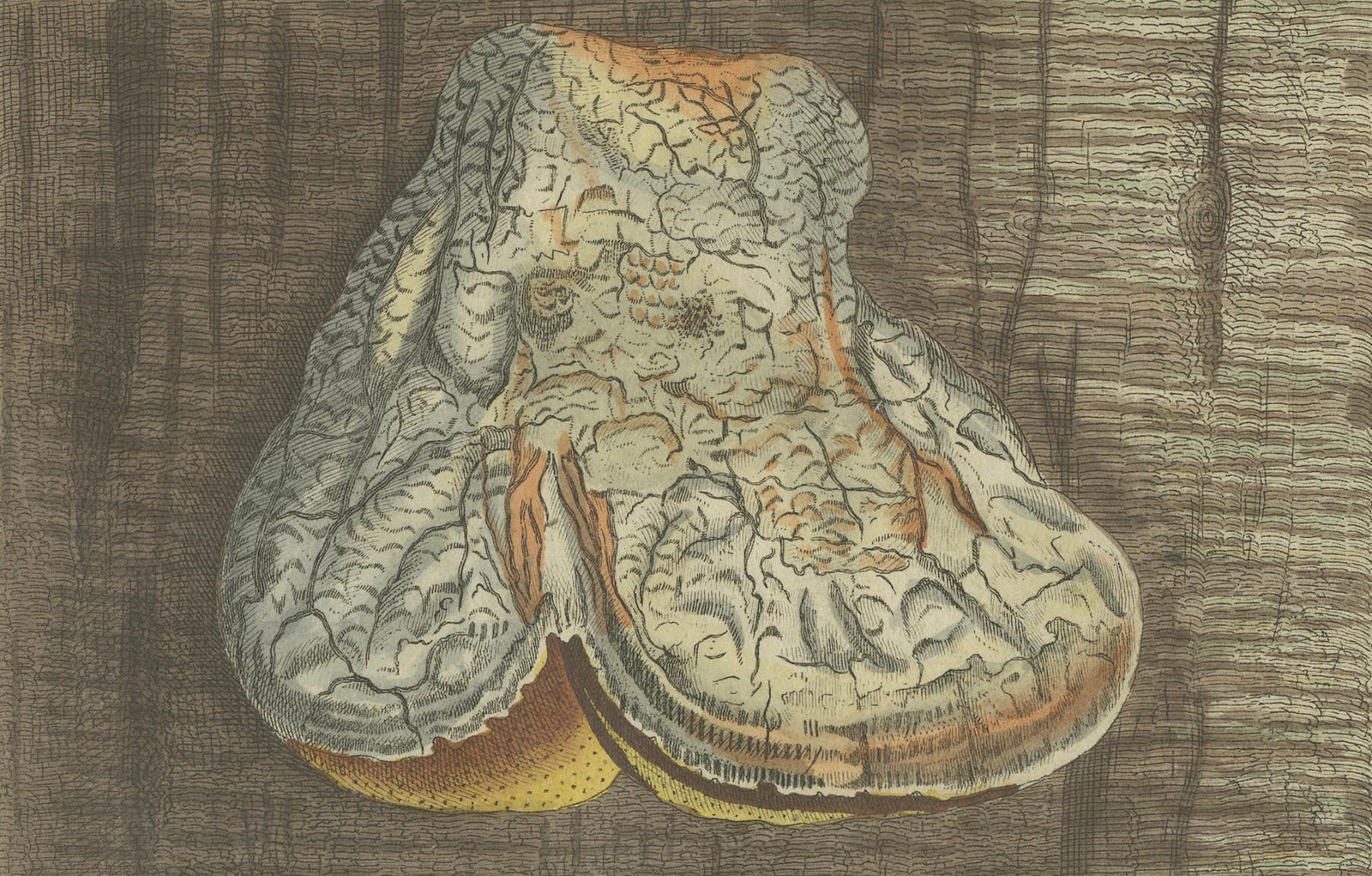
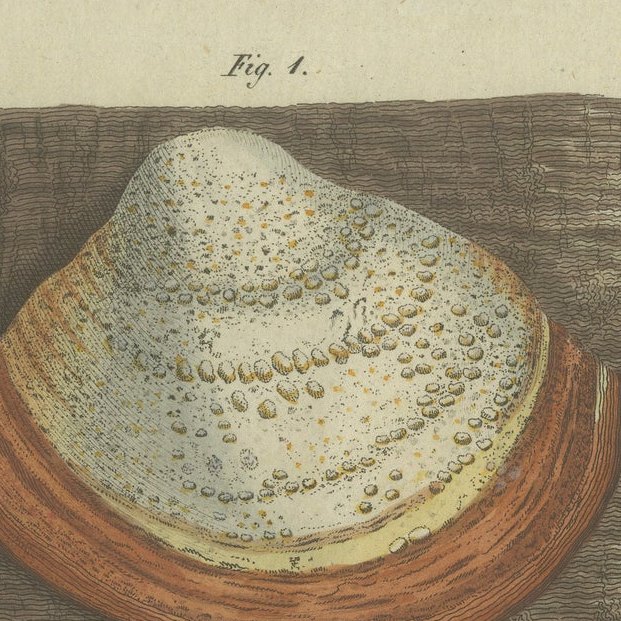
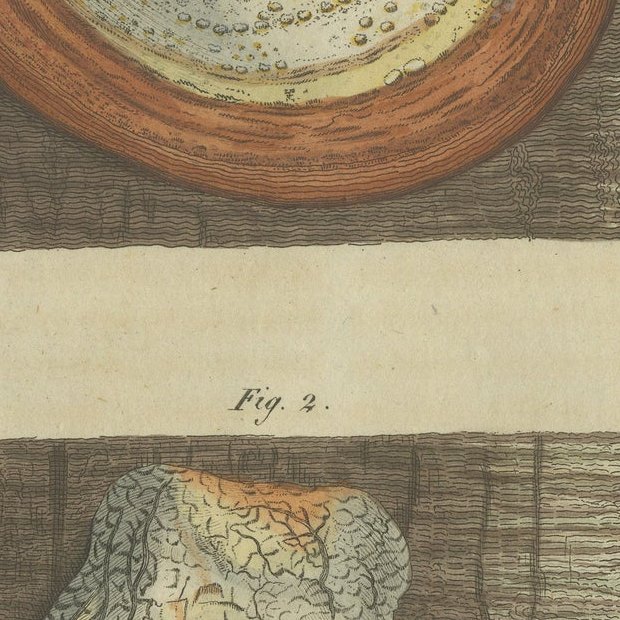
The upper illustration (Fig. 1) showsa bivalve-like fungal growth, likely a bracket fungus, with intricate textures and patterns on its surface. The lower illustration (Fig. 2) portrays a more rugged, layered fungus, possibly a polypore species. Both figures are set against a finely hatched background, emphasizing their three-dimensional qualities and intricate details.
This engraving exemplifies the Enlightenment-era fascination with cataloging and understanding the natural world. Bertuch’s work was widely admired for its ability to educate young readers about the diversity and complexity of nature, blending scientific inquiry with artistic excellence.
Collectors of antique natural history prints will appreciate the vibrant hand-coloring and scientific precision of this piece. It makes a valuable addition to collections focused on botany, fungi, or early educational illustrations.